
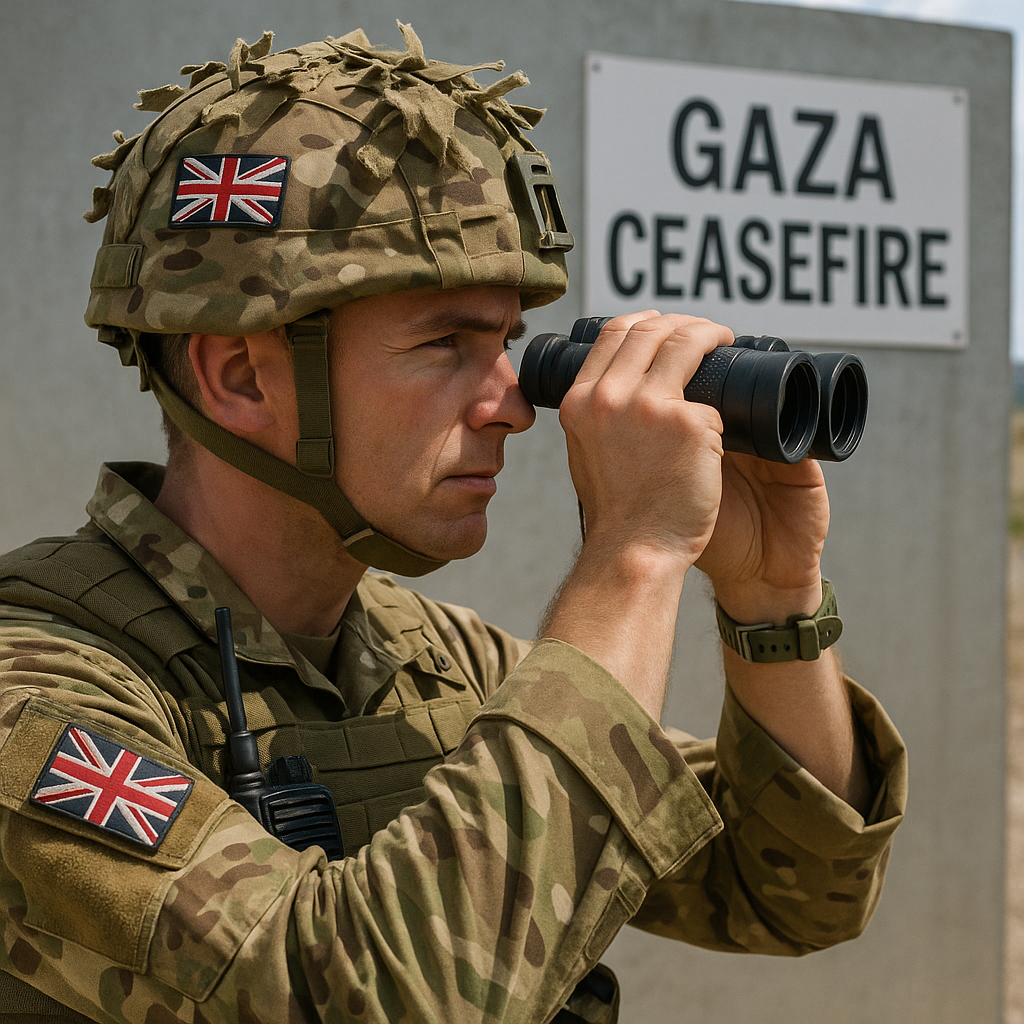
British Troops Deployed to Monitor Gaza Ceasefire

British Troops Deployed to Monitor Gaza Ceasefire
In a notable international development, British troops have been deployed to Israel to monitor the ongoing ceasefire in Gaza, following a request from the United States. While this move is partly seen as a stabilizing effort in a long-standing conflict, it also brings to light various geopolitical ramifications and differing perspectives on the role of foreign troops in sensitive regions.

The Deployment and Its Context
The recent deployment of British military personnel stems from a complex interplay of diplomatic efforts aimed at ensuring a more lasting peace in a region plagued by violence. According to reports from Sky News, the contingent of troops is expected to help oversee ceasefire compliance between Israel and Hamas, which has been intermittently troubled. The anticipated mission underscores the UK’s ongoing commitment to international peacekeeping roles, though the precise scale and operational details of the deployment have not been extensively revealed.


While some see this move as a proactive approach to stabilize the region, critics question the efficacy and ethics of foreign military presence in ongoing conflicts. The challenges faced by peacekeeping forces are well-documented; they often grapple with local distrust and the complexities of partisan politics.


Closing Rifts Through International Presence
One interpretation of the British troop deployment hinges on the U.S. influence in Middle Eastern affairs. As tensions rise and fall, the U.S. often seeks allied support to manage international perceptions while exerting its own geopolitical influence. Articles sourced from Al Jazeera suggest that the presence of British troops could signal a united Western front, potentially leading to broader diplomatic initiatives aimed at resolving longstanding issues in the region.
However, the situation on the ground remains precarious. As RT News highlights, the history of ceasefires in Gaza is fraught with violations, and the effectiveness of outside forces in monitoring such agreements can be severely limited by local unrest and political turmoil. Critics argue that this reliance on foreign troops may detract from the urgent need for genuine dialogue among local factions, a sentiment echoed by various analysts and local advocates.
Diverse Opinions on Military Intervention
The deployment of British troops has ignited a spectrum of reactions among political commentators and humanitarian organizations. While some experts view the military presence as a necessary step for short-term stability, others argue that it risks entrenching foreign involvement in local conflicts, which can lead to unintended consequences.
For instance, a segment of the political spectrum believes that having a neutral force on the ground can facilitate trust between conflicting parties, thereby increasing the chances of a sustainable peace. This perspective is bolstered by historical examples where international monitoring has succeeded in mitigating violence, at least temporarily.
Conversely, other analysts maintain that reliance on foreign troops merely externalizes the conflict and raises questions about sovereignty and self-determination. They argue that previous interventions have often resulted in increased hostilities rather than resolution, framing the conversation around the need for local engagement rather than external oversight.
The Path Forward: Diplomacy or Military Presence?
As the situation in Gaza evolves, the role of British troops will likely come under scrutiny. While the immediate intention behind their deployment is the maintenance of calm, the broader implications for international relations and local governance are still unfolding.
The presence of these troops raises essential questions about the future of peacekeeping missions. What precedent does this set for international military involvement in sovereign conflicts? As global dynamics shift, the interplay of diplomacy and military presence becomes even more complex, necessitating thoughtful deliberation among policymakers.
In a world where conflicts often mirror historical grievances, the hope remains that continued diplomatic engagement, supported by neutral international oversight, can lead to substantive progress. With ongoing discussions surrounding ceasefire agreements, there is much at stake—not just for the parties directly involved, but for the international community striving for stability and harmony.
Conclusion: An Uncertain Future
While the deployment of British troops to monitor the Gaza ceasefire may seem a step toward peace, the context surrounding local politics, historical grievances, and international dynamics adds layers of complexity. The efficacy of foreign military presence in genuinely resolving such entrenched conflicts remains a contentious issue. Observers and analysts alike will be watching closely as events unfold, grappling with the intricate realities of foreign influence in the pursuit of peace.















