
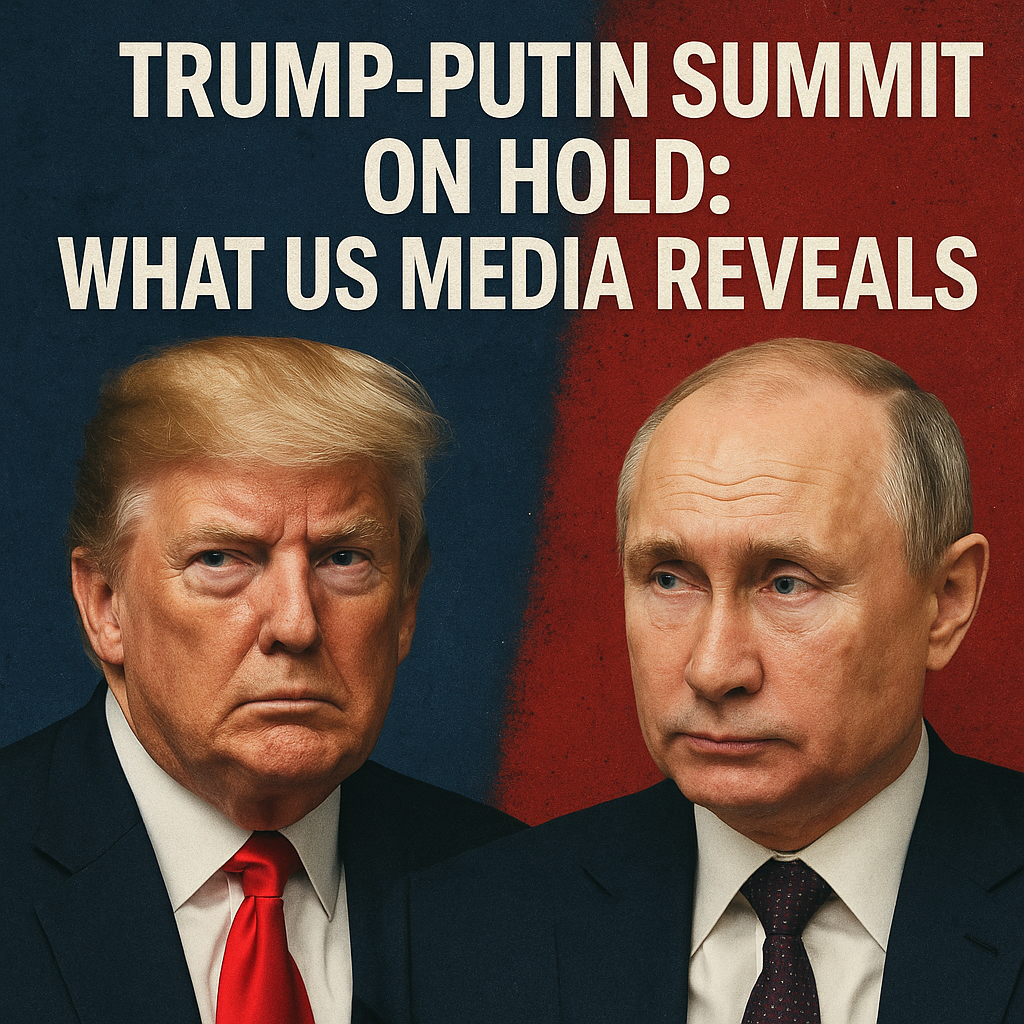
Trump-Putin Summit on Hold: What US Media Reveals

Trump-Putin Summit on Hold: What US Media Reveals
The recent announcement surrounding the postponement of a Trump-Putin summit has sparked intense discussions across various media outlets. The developments hinge on international relations, political strategy, and the complex interplay of current global events.

The Current Landscape
The postponement of the proposed summit between former President Donald Trump and Russian President Vladimir Putin represents a significant moment in U.S.-Russia relations. While both parties have often relied on diplomacy to navigate tensions, this latest pause reflects a more intricate set of circumstances.


Diverging Perspectives
Different media outlets have provided various lenses through which to understand the implications of this pause. For instance, RT, a state-funded broadcaster in Russia, argues that the summit’s delay may stem from a need for consistency in U.S. foreign policy amid changing domestic conditions. Proponents within Trump’s camp suggest that engaging with Putin could bolster Trump’s current political standing as he gears up for another presidential candidacy. They contend that a face-to-face meeting might facilitate constructive dialogue, alleviating tensions that have fluctuated in recent years.


Conversely, Al Jazeera presents a more cautionary perspective, indicating that the absence of an imminent summit could signal a fragility in diplomatic relations. The outlet emphasizes that the postponement might reflect the internal discord surrounding Trump’s administration rather than solely a strategic decision regarding Russia. They note that with the ongoing conflict in Ukraine and increasing geopolitical strain, any delay could further complicate the bilateral engagement that both leaders would ideally pursue.
Underlying Concerns
Echoing sentiments from both RT and Al Jazeera, another layer of complexity lies in the evolving global landscape. The ongoing geopolitical tensions, especially concerning Ukraine and NATO forces’ movements in Eastern Europe, serve as critical backdrops for the summit. Many commentators worry that the hold on talks could lead to missed opportunities for de-escalation, particularly in light of recent military maneuvers reported by international news sources.
Moreover, a section of analysts insists that relations may falter even further if the summit does not materialize. Concerns over military posturing in Eastern Europe and mutual sanctions aggravate fears that without direct dialogue, miscalculations may arise. A diplomatic meet could serve as a platform for clarifying intentions, a vital need in an era marred by accusations and distrust.
What Lies Ahead?
With the postponement hanging in the balance, pundits and political analysts are left pondering the future trajectory of U.S.-Russia relations. The consensus seems to be that while the summit’s hold is not the end of dialogue possibilities, it indicates a pronounced reluctance to engage at this juncture.
Several experts from various media sources suggest that without this high-level meeting, both nations may continue to drift apart in the international arena, especially given the growing alignment of various global players against U.S. interests. For Trump supporters, the idea of a delayed summit could be seen as a setback — a chance to discuss pressing global issues that is slipping away. On the other hand, opponents may view the pause as an opportunity for a deeper reassessment of America’s engagement strategy, balancing whether dialogue or firmness in policy is warranted at such a critical time.
The Bigger Picture
In conclusion, the indefinite postponement of the Trump-Putin summit illuminates the multifaceted nature of international diplomacy. Drivers of political behavior, from internal chaos within the U.S. administration to external pressures such as ongoing military conflicts, create a diverse set of factors influencing decisions. While there is a shared acknowledgment of the need for communication, the path forward remains uncertain. Observers will be keen to see how both leaders adjust their approaches in the wake of this development — whether they choose to push for a future summit or capitalize on alternate diplomatic avenues with global repercussions on the horizon.
Ultimately, this situation encapsulates not just the challenges inherent in U.S.-Russia diplomacy but also offers a mirror to the current state of global politics. The stakes are high, and the implications of these delays may resonate well beyond the meeting room, echoing through the international community in the shaping of upcoming global relationships.















