Burnham Apologises for Labour’s Gaza Response in UK

Burnham’s Apology: Navigating Labour’s Gaza Response in the UK
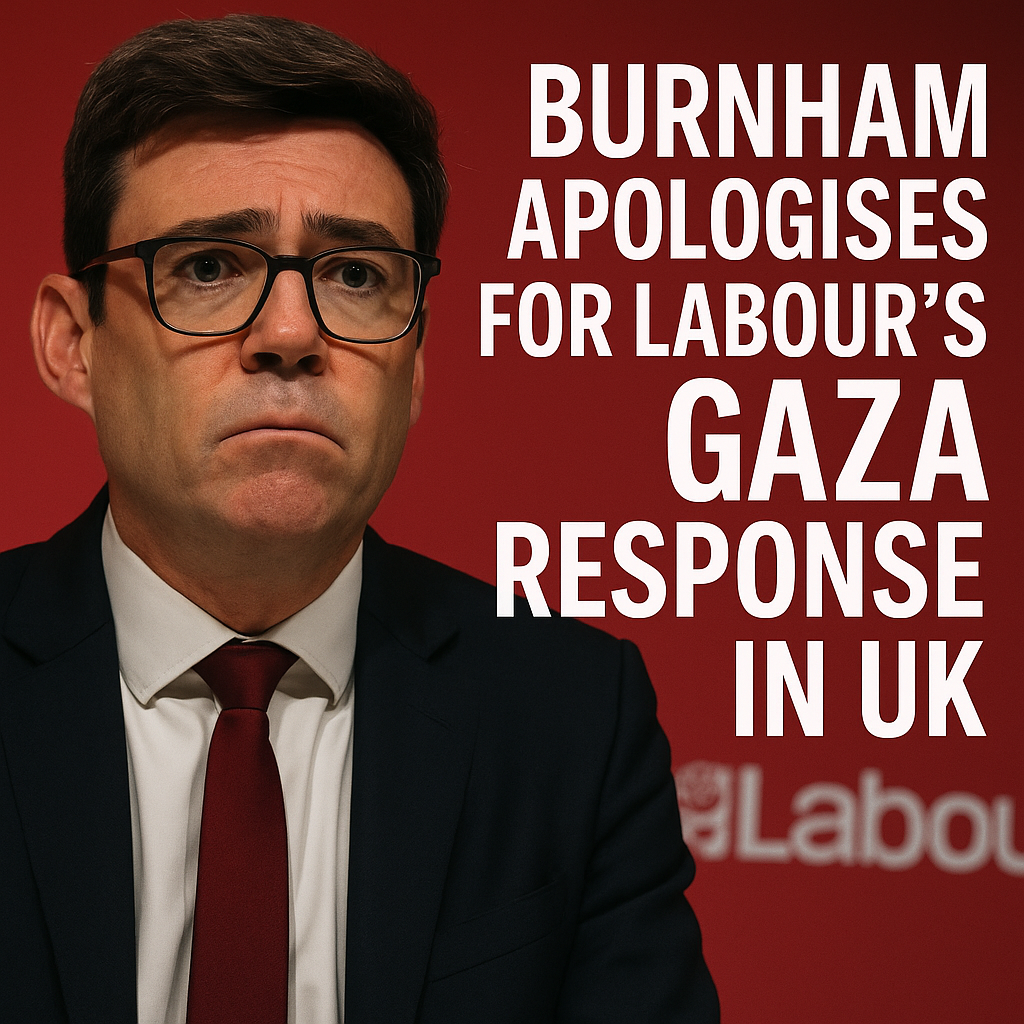
In a politically charged climate, Andy Burnham, the Mayor of Greater Manchester, recently issued an apology regarding the Labour Party’s response to the ongoing Gaza crisis. The remarks have stirred debate not only over the party’s stance on international issues but also the complexities of leadership in times of humanitarian crises.

The Context of Burnham’s Apology
Burnham’s apology comes amid escalating violence in Gaza, where civilian casualties have surged following renewed hostilities between Israel and Hamas. His comments reflect a growing recognition within political circles that the public demands sensitivity and ethical accountability concerning foreign policy. According to reports, Burnham acknowledged that the party’s initial responses were insufficiently considerate of the human toll in the region.


The backdrop of this apology is essential as it encapsulates the dual pressures of domestic constituency expectations and the moral imperatives imposed by international events. Recent statistics reveal a distressing reality in Gaza, with thousands displaced and urgent calls for humanitarian aid growing louder. Burnham’s apology is seen as a direct response to these realities and the widespread criticism faced by Labour leaders from constituents who expect a compassionate and proactive stance.


The Implications of Labour’s Stance
Moving beyond Burnham’s personal acknowledgment, the Labour Party itself finds itself at a crossroads. The party’s response—or lack thereof—to global humanitarian issues like the Gaza violence is scrutinized from various angles. On one hand, some party members argue that a nuanced stance is essential in navigating complex international relations. However, the widespread call for a more robust and unequivocal condemnation of violence, regardless of its source, underscores a shifting political landscape.
According to sources, Labour’s response has been perceived as a balancing act between supporting Palestine’s right to self-determination and maintaining relationships with potential allies among Jewish communities in the UK. Critics have pointed out that this balancing act may come off as indecisive or insincere, thereby weakening the party’s position on human rights issues.
Diverse Perspectives on the Apology
Reactions to Burnham’s apology have varied. Some commentators applaud the move as a necessary step towards empathy and solidarity with the victims of the ongoing conflict. “It is crucial that leaders acknowledge the suffering of those caught in geopolitical battles,” argues a leading activist, underscoring the need for political figures to maintain moral clarity.
On the other hand, some critics have chided Burnham’s apology as too little, too late. They argue that apologies must translate into coherent policy changes and direct actions that demonstrate commitment. Prominent voices within the party believe that apologies alone won’t suffice in swaying public perception or fostering trust among communities affected by the conflict.
Moving Forward: A Call for Clarity
As Burnham and the Labour Party grapple with their messages about the Gaza conflict, a broader conversation is unfolding about how political entities communicate regarding international human rights. A more defined stance that embraces both advocacy for Palestinian welfare and a commitment to peace could be politically beneficial. Burnham’s apology might serve not just as an acknowledgment of mistakes made but also as a catalyst for a more principled approach moving forward.
In this volatile political environment, clarity and responsiveness are critical. Leaders must navigate the complexities of global issues without losing sight of the human aspects at stake. Acknowledge the pain, articulate the need for urgent humanitarian efforts, and galvanize a community around the solution—that’s the multi-faceted approach needed now more than ever.
Conclusion
Burnham’s apology offers a glimpse into the evolving narrative around the Labour Party’s response to the Gaza crisis. While it highlights the need for compassion in political discourse, it also reveals the intricate dynamics of public perception, party ideology, and international obligations. In a world where empathy is crucial, the challenge lies in ensuring that verbal commitments translate into concrete actions to address the humanitarian needs of those affected.