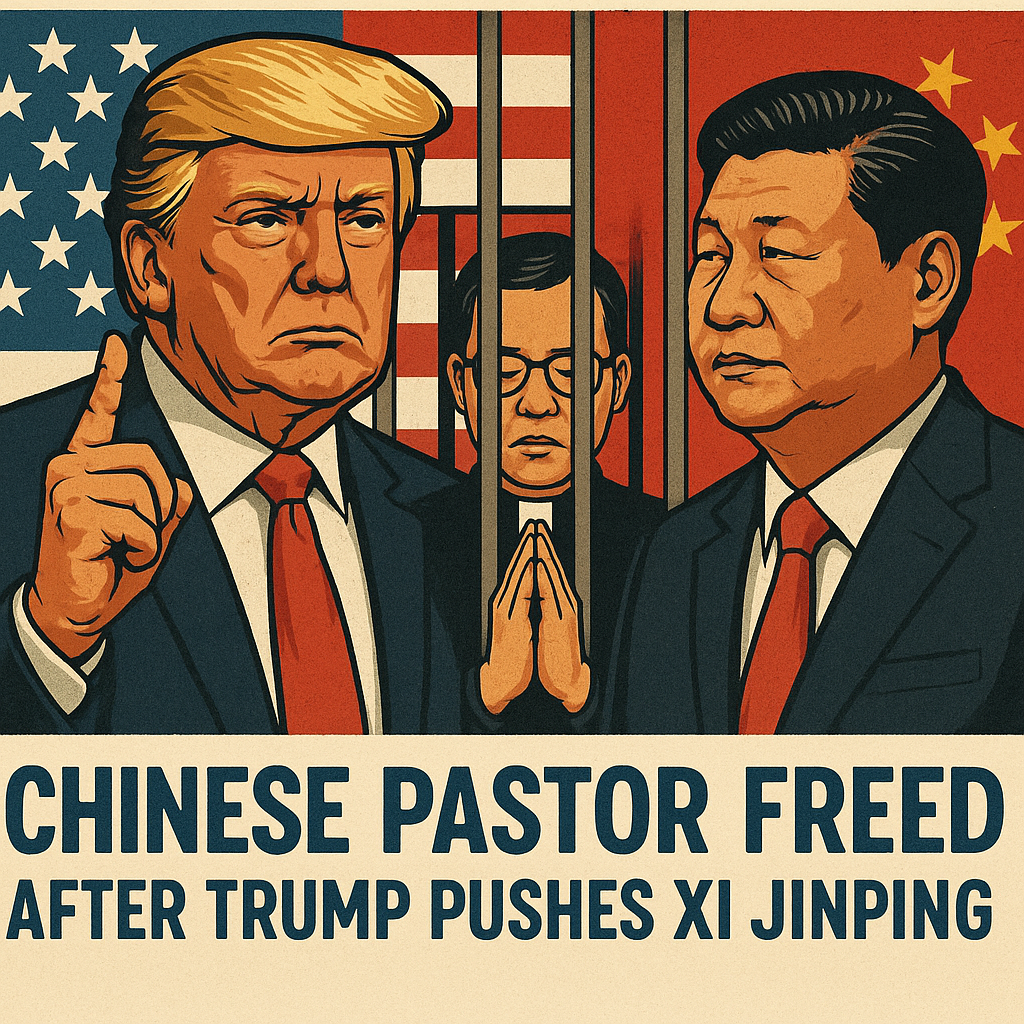
Chinese Pastor Freed After Trump Pushes Xi Jinping

Chinese Pastor Freed After Trump Pushes Xi Jinping
In a remarkable turn of events, a prominent Chinese pastor has been released from detention following intervention reportedly prompted by former U.S. President Donald Trump’s direct discussions with Chinese President Xi Jinping. This development not only highlights the complexities of international diplomacy but also raises questions about the role of external influence in human rights issues within authoritarian regimes.

The Circumstances of the Release
Pastor Wang Yi, a leader of the Early Rain Covenant Church in Chengdu, was sentenced to nine years in prison in December 2019 for “inciting to subvert state power.” His case garnered significant international attention, especially from rights advocates who viewed him as a symbol of religious repression in China. Following his release, various sources reported that Trump discussed Wang’s situation during his meetings with Xi, purportedly urging for the pastor’s liberation.


While some reports suggest that the diplomatic pressure exerted by Trump played a crucial role in Wang’s release, others indicate that such gestures may only scratch the surface of a much deeper issue regarding religious freedoms in China. Journalist analyses from several news outlets illustrate a divide among commentators: some celebrate the intervention as a victory for human rights advocacy, while others caution against attributing too much agency to a single diplomatic interaction.


The Broader Implications of Religious Freedom in China
Despite Wang Yi’s liberation, the persistence of strict regulations governing religious practices in China remains a grave concern. U.S. Secretary of State Antony Blinken and other officials have criticized Xi’s administration for its crackdown on religious freedoms across various faiths, including Christianity, Islam, and Buddhism. The Chinese government maintains that its policies serve to preserve national stability and prevent extremism, yet these justifications often clash with international perceptions of fundamental human rights.
A viewpoint shared by several commentators emphasizes the need for recognition that these diplomatic discussions, while helpful, may ultimately represent a double-edged sword. “The release of one individual doesn’t reflect a broader improvement concerning religious freedom in China. It’s essential to address the systemic challenges that continue for many others,” commented a human rights expert interviewed by various news platforms.
Moreover, there is skepticism regarding whether individual cases can induce substantive policy changes. Xi’s government has shown resilience against external pressures and continues to maintain strict controls over various aspects of daily life within its borders.
The Role of International Diplomacy
Trump’s engagement with Xi over Wang Yi’s case exemplifies how individual narratives can become intertwined with larger geopolitical dialogues. Such interactions are not only about the individuals involved but also about how they fit into the broader international landscape of trade, security, and diplomacy. The dynamics between Washington and Beijing are complex, often influenced by a multitude of factors beyond human rights issues.
As reported by various outlets, the differing views surrounding Trump’s approach highlight the polarized perspectives on American foreign policy. Supporters of Trump’s strategy argue that direct engagement and pressure can lead to results, as seen in Wang’s release. Contrarily, critics suggest that such tactics lack consistency and may undermine efforts to promote long-term change regarding civil liberties.
In conclusion, the release of Pastor Wang Yi illuminates a significant instance of intersection between individual rights advocacy and international diplomacy. While it marks a positive outcome for the pastor and his supporters, it also serves to underscore the ongoing struggles faced by countless individuals in similar circumstances across China. The case remains a poignant reminder that while diplomatic interventions can yield immediate results, the pursuit of broader human rights advancements, essential in building a more equitable society, remains an uphill battle in the face of stringent governmental controls.