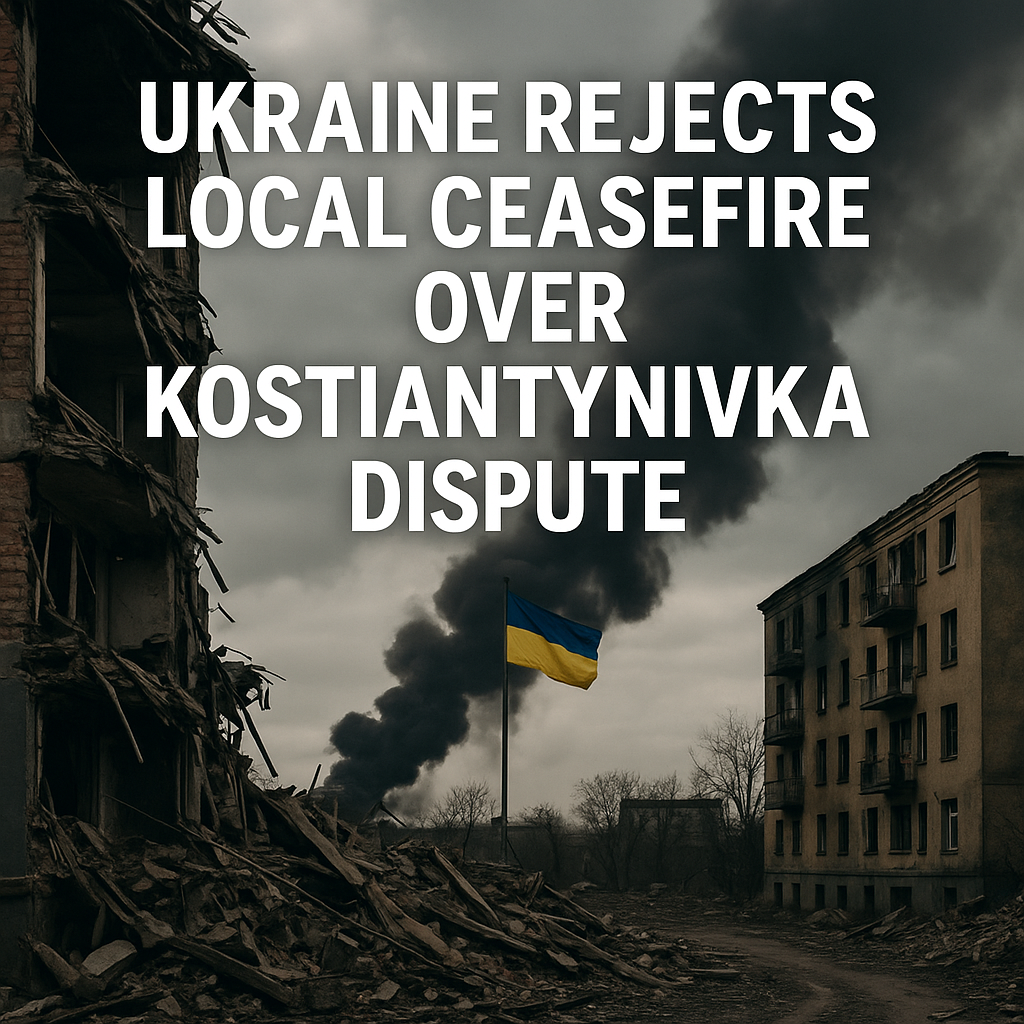
Ukraine Rejects Local Ceasefire Over Kostiantynivka Dispute

Ukraine’s Rejection of Local Ceasefire: The Kostiantynivka Dispute
In the unfolding complexities of the Ukraine-Russia conflict, Ukraine’s decision to reject a proposed local ceasefire in Kostiantynivka has gained considerable attention. This incident not only highlights the ongoing strife in the region but also underscores the myriad layers of military and political calculations at play.

Context of the Dispute
Kostiantynivka, a town that has become emblematic of the war’s devastating effects, has been a focal point for military engagement between Ukrainian forces and pro-Russian separatists. The recent ceasefire suggestion aimed to provide a temporary respite for civilians caught in the crossfire, yet Kyiv’s response was decisive: they turned down the offer, citing concerns over surrendering military positions or potentially giving an advantage to Russian forces.


Officials from Ukraine argue that while they are committed to seeking paths toward peace, they must prioritize national security and territorial integrity. As Ukrainian military spokespersons have elucidated, accepting a ceasefire could result in a precarious pause rather than a definitive solution, risking more bloodshed in the long run without significant concessions from the opposing side.


Divergent Perspectives on the Ceasefire
Opinions about the ceasefire and Ukraine’s rejection of it vary significantly, reflecting broader international sentiments towards the ongoing conflict.
Proponents of Ceasefire
Supporters of the ceasefire point to the immediate humanitarian needs of civilians living in the line of fire. Reports from various humanitarian organizations highlight rising casualties and the deteriorating living conditions in Kostiantynivka. Advocates argue that even short-term ceasefires can create vital windows for aid delivery, allowing medical services and basic necessities to reach those in dire need.
Furthermore, some analysts assert that a ceasefire could lay the groundwork for future negotiations. They emphasize the importance of dialogue and the necessity of finding common grounds to eventually reach a more comprehensive peace agreement.
Critics of Ceasefire
Conversely, critics of the ceasefire contend that the proposal appears lackadaisical given the strategic implications it entails. Some military analysts and government officials warn against viewing the ceasefire as a pathway to lasting peace. They express distrust towards Russia’s intentions, arguing that history has shown ceasefires can be exploited as opportunities for military regrouping rather than genuine efforts to reduce overall hostilities.
Moreover, skeptics emphasize the possibility that any short-term cessation of hostilities might embolden Russian forces, allowing them to reinforce positions and launch future offensives more effectively. They believe that Ukraine’s steadfast stance against local ceasefires is a necessary measure to maintain operational momentum in the ongoing struggle for territorial control.
Conclusion: The Impasse of Peace
The rejection of the local ceasefire by Ukraine over the Kostiantynivka dispute illustrates the intricacies that define the current state of the Ukraine-Russia conflict. On one hand, the humanitarian costs are profound, necessitating urgent international attention and perhaps relief efforts; on the other hand, Ukraine’s security considerations cannot be overlooked.
As the international community watches closely, the stakes remain high. Whether it’s diplomatic solutions or sustained military engagements, what is clear is that any resolution will demand intricate negotiation and an understanding of both sides’ complex motivations. The cold calculus of warfare continues to dominate the narrative, leaving many in the balance as they await a path toward peace that appears, for now, increasingly elusive.