
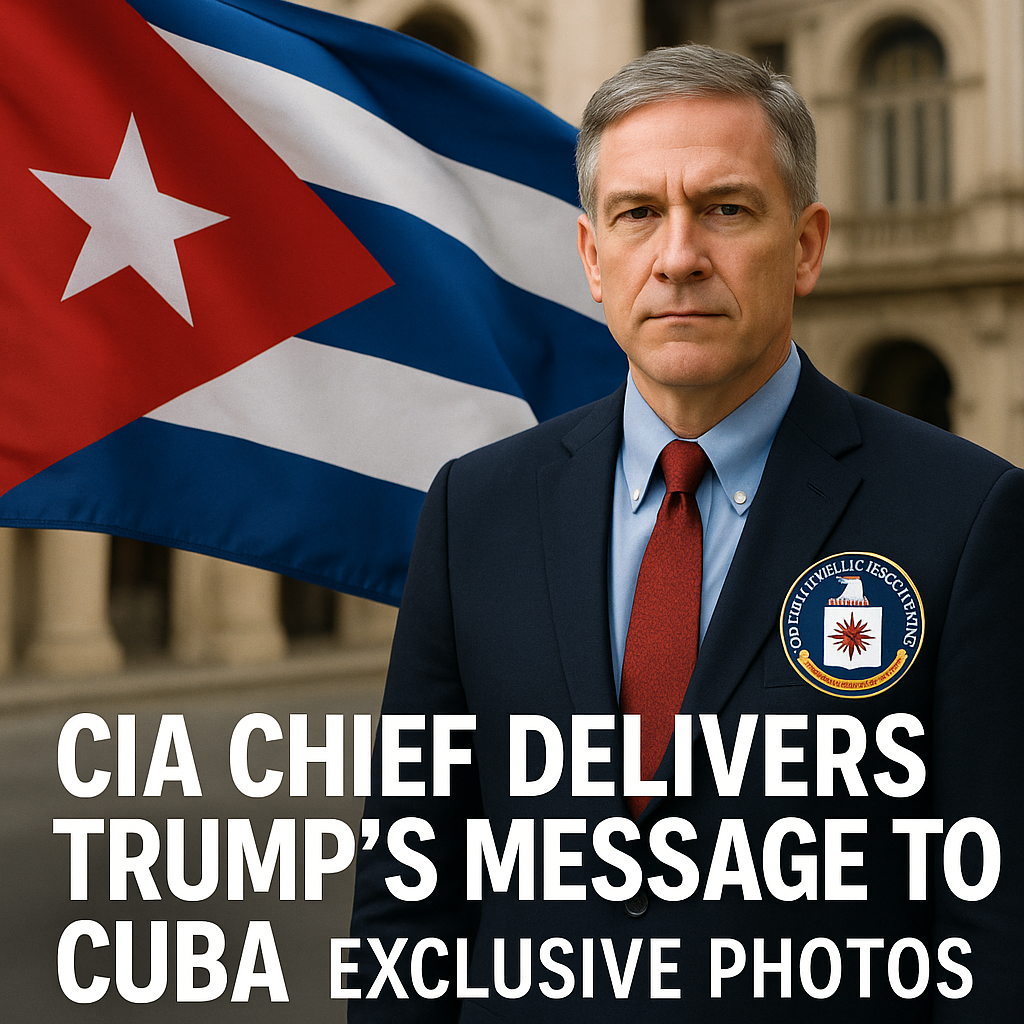
CIA Chief Delivers Trump’s Message to Cuba: Exclusive Photos

CIA Chief Delivers Message to Cuba Amidst Evolving Diplomatic Landscape
The recent visit of CIA Chief William Burns to Cuba encapsulates the complexities of U.S.-Cuba relations during an era marked by shifting political dynamics. This unprecedented meeting aims to address pressing issues and reiterate messages from the Trump administration, underscoring the delicate interplay of diplomacy and intelligence in contemporary international affairs.

Diplomatic Nuances in U.S.-Cuba Relations
Historically, U.S.-Cuba relations have oscillated between hostility and tentative cooperation. The Trump administration adopted a hardline approach, tightening restrictions on Cuba while emphasizing the need to support dissent against the Cuban government. Conversely, the Biden administration has signaled intentions to mend relationships but is challenged by pre-existing policies and internal pressures.


The CIA Chief’s visit last week, as reported by RT, was characterized by exclusive discussions. While the specific agenda remains classified, it’s widely speculated that issues such as migration, public health, and collaborations against drug trafficking were focal points. This visit suggests an attempt to reconcile previous narratives while facilitating dialogue on critical issues affecting both nations.


Contrasting Perspectives on U.S. Policy Towards Cuba
Given the prominence of the CIA in interpreting and influencing foreign policy, opinions diverge on the implications of Burns’ visit. Supporters of diplomatic engagement argue that this move represents a pragmatic approach to resolving long-standing tensions. They posit that addressing humanitarian concerns and public health crises in Cuba can foster a stable relationship beneficial to both parties.
Conversely, skeptics are worried about the potential normalization of relations. Critics point out that without substantial reforms in Cuba, including improvements in human rights, such engagements may inadvertently bolster the ruling regime. This perspective is echoed in various reports, particularly from sources like Al Jazeera, which stress the need for the U.S. to maintain a principled stance in its diplomatic engagements.
Behind the Scenes: What Does This Mean for Future Relations?
While the visit presents opportunities for dialogue, it also raises critical questions about the future trajectory of U.S.-Cuba relations. With a backdrop of historical animosity and recent political shifts, determining the efficacy of these diplomatic overtures is challenging. Both nations have a vested interest in addressing migration crises as hundreds of Cubans seek better opportunities, risking dangerous journeys toward the United States.
Moreover, the response from the Cuban government remains a wildcard in these discussions. Acknowledging this complexity, some analysts suggest that it will be crucial for the U.S. to balance engagement with firmness on values and human rights. Transparency, they argue, must prevail to build trust essential for any lasting resolution.
Conclusion: Navigating a Delicate Diplomacy
As the CIA continues to facilitate communication between the U.S. and Cuba, the long-standing feud enters a new chapter marked by nuances and diverging perspectives. The need for thoughtful dialogue is paramount, especially as both countries navigate their respective internal and external challenges.
Burns’ visit was not simply a formality; rather, it could lay the groundwork for more substantial discussions. Yet, as history has shown, the road to normalized relations is fraught with complexities. Both nations will need to engage with sensitivity and a commitment to fostering a more stable and cooperative future.















