Xi’s Pledge: No Military Aid to Iran Amid Trump Tensions

Xi’s Pledge: No Military Aid to Iran Amid Trump Tensions
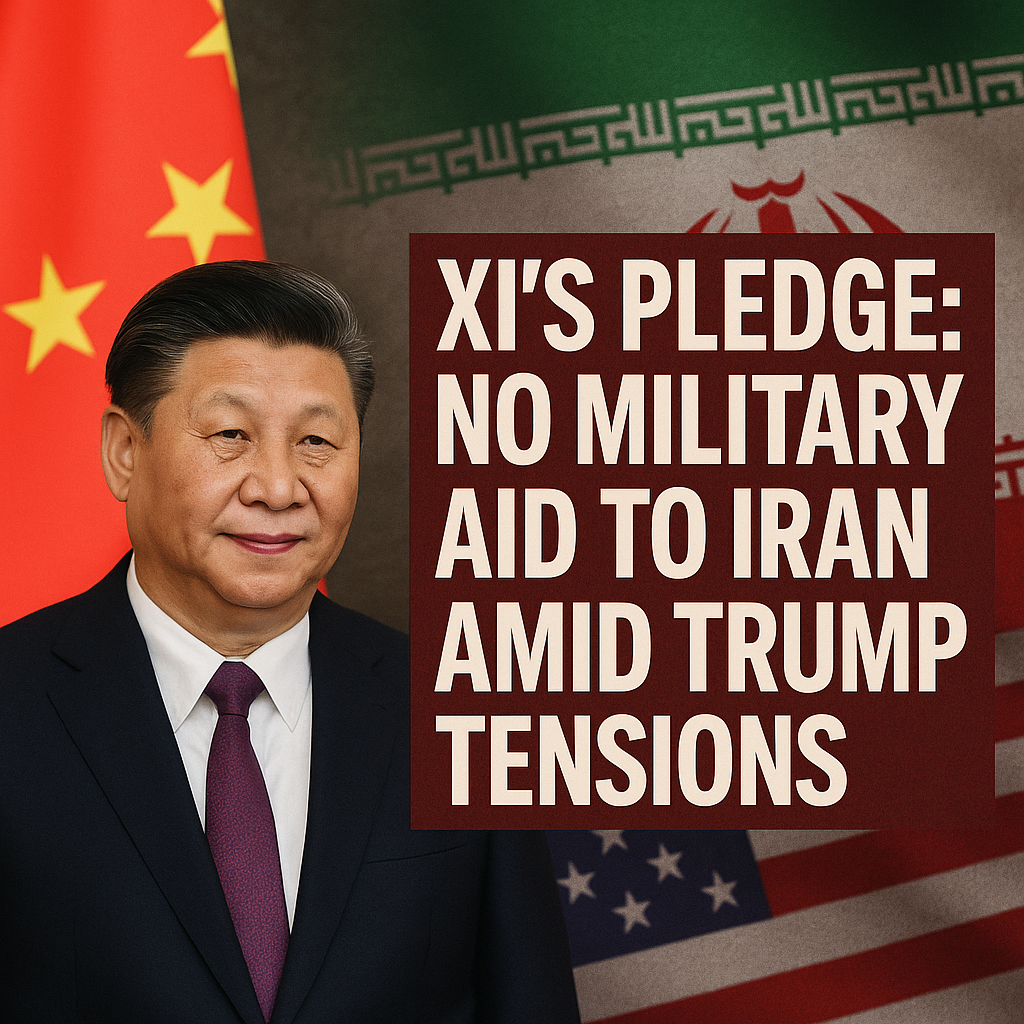
In light of escalating political tensions and complex international relationships, Xi Jinping has made a significant pledge: China will not provide military aid to Iran, despite the backdrop of U.S.-China relations strained by former President Donald Trump’s policies. This decision has sparked discussions about its implications on regional stability, U.S. interests, and the global geopolitical landscape.

The U.S.-China-Iran Triangle
The relationship among the U.S., China, and Iran is fraught with history, diplomacy, and conflict. Under the Trump administration, the U.S. adopted a hardline stance against both Iran and China, seeking to curb Iranian influence in the Middle East and contain China’s growing power on the global stage. Trump’s policies, including the withdrawal from the Iran nuclear deal and the imposition of aggressive tariffs on Chinese goods, have shaped the current relations among these three nations.


During a recent summit, Xi asserted that, while maintaining strong ties with Iran, China would abstain from military cooperation that could further heighten tensions. Analysts suggest that this pledge reflects both a strategic calculation by China to avoid direct confrontation with the U.S. and a desire to maintain stability in the Middle East, which is pivotal for its Belt and Road Initiative.


On one side, some experts argue that China’s pledge may signify a recognition of the complexities involved in aligning with Iran militarily. For instance, Jamie Metzl, a senior fellow at the Atlantic Council, noted, “China is involved in a delicate balancing act, maintaining its economic ties with Iran while avoiding unnecessary escalation with the U.S.”
On the other hand, there is skepticism about Xi’s commitment. Critics point out that China’s support for Iran has often included economic and technological collaborations, which could hint at future military support in more nebulous terms. This viewpoint stems from the fact that relations between the two have been solidified earlier, especially in the wake of U.S. sanctions targeting Iran.
Implications for Regional Stability
Xi’s announcement could have far-reaching consequences for regional security dynamics. By publicly committing to avoid military aid, China may deter potential actions from both Iran and the U.S. designed to provoke military escalation. However, this delicate balance poses its challenges.
Iranian leaders, reacting to internal pressures and existing sanctions, may question whether they can rely on China as an ally if military assistance is off the table. Middle Eastern politics are particularly volatile; any perceived weakness could embolden rival states or non-state actors in the region.
Navigating the Complexity
The complexities surrounding Xi’s pledge suggest a nuanced and multifaceted geopolitical landscape. While it may appear China is distancing itself from Iran’s military capabilities, it also reflects a broader strategy of economic collaboration over direct military engagement. Long-term, this could either be a stabilizing factor for U.S.-China relations or a source of tension if Iran feels cornered and seeks military partnerships elsewhere.
Moreover, the ramifications of this decision are likely to be felt in the broader geopolitical context. As the U.S. wrestles with its domestic and international priorities, the focus may shift back to establishing a unified approach toward Iran that balances diplomacy with deterrence.
In conclusion, Xi’s commitment to refrain from military aid to Iran amid tensions stemming from Trump’s administration demonstrates a complex interplay of strategic interests. While it showcases an intention to avoid direct military confrontations, its effectiveness and implications remain uncertain. The unfolding geopolitical scenario will require vigilant observation, as relationships can change rapidly in the intricate web of international diplomacy.