
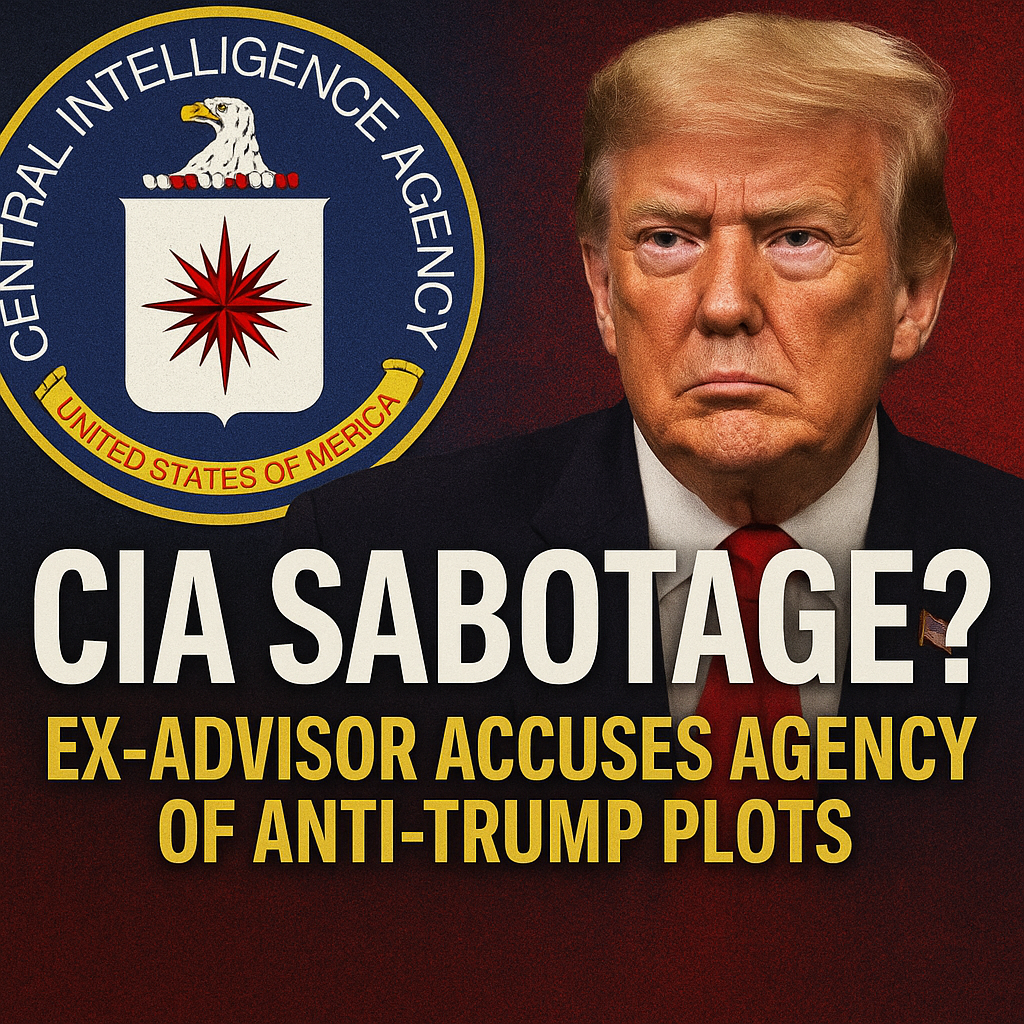
CIA Sabotage? Ex-Advisor Accuses Agency of Anti-Trump Plots

CIA Sabotage? Ex-Advisor Accuses Agency of Anti-Trump Plots
The claim that the CIA engaged in sabotage against Trump’s presidency has sparked fervent debate. This allegation emerged prominently from former national security advisor Michael Flynn, who asserted that the agency was involved in undermining the former president. Such accusations rejuvenate long-standing conversations about the intelligence community’s role in U.S. politics, reflecting a complexity that requires careful examination of multiple viewpoints.

The Allegations and Context
In a recent interview, Michael Flynn articulated accusations suggesting that the CIA sought to delegitimize Trump’s administration in collaboration with foreign entities. He posited that this alleged collusion was aimed at undermining Trump’s policies and successfully erasing his influence on the political landscape. Flynn’s statements echo a broader narrative among some Trump supporters that governmental institutions, particularly the intelligence agencies, have been weaponized against political adversaries.


This won’t be the first time such conspiratorial claims have surfaced. Throughout Trump’s presidency, various actors, including notable Republicans and conservative media outlets, have accused the intelligence community of bias and subversive actions. These sentiments often arise in response to investigations into Russian interference in the 2016 election, suggesting that the CIA’s activities were not merely above-board but influenced by partisan objectives.


The Response from Intelligence Community
Reactions to Flynn’s assertions offer a counter-narrative revealing the complexity of the situation. Officials from the CIA and other intelligence agencies have responded to such claims by emphasizing their commitments to neutrality and professionalism. According to a report from Al Jazeera, current and former intelligence officials cautioned against conflating personal grievances with tangible threats to national security. They highlight the essential role of intelligence agencies in safeguarding democracy and ensuring transparency.
Notably, commentators argue that while intelligence agencies are not infallible, they operate under a set of checks and balances meant to prevent any single group from wielding undue influence. This perspective suggests that accusations like Flynn’s risk undermining public confidence in institutions that are crucial for national stability.
Diverging Perspectives on Political Motivations
The discussions around Flynn’s claims underscore deeper divisions in political discourse. Supporters of Trump often view these allegations as validation of their long-held suspicions regarding a “deep state” conspiracy. They argue that any actions taken by the intelligence community against Trump were politically motivated rather than rooted in factual concerns about public governance or security.
Conversely, critics of Trump argue that such accusations detract from legitimate issues of governance and accountability. They contend that the real danger lies in eroding trust in foundational institutions due to suspicion fueled by political narratives. From this perspective, Flynn’s statements could feed a cycle of misinformation and further contribute to political polarization.
What Lies Beneath the Surface
The interplay between the CIA and political actors signals a crucial exploration of boundaries involving intelligence and politics. While Flynn’s claims resonate among some grassroots supporters, the broader implications suggest a continued struggle over narrative control within American politics. The accusations further magnify existing tensions and raise questions about the intersection of national security and political maneuvering.
Experts emphasize the need for judicial frameworks to handle any allegations of misconduct within intelligence agencies. Ensuring strict oversight and accountability can help restore public trust while also acting as a safeguard against potential abuses.
Conclusion: The Ongoing Debate
As these allegations unfold, it is evident that the discussion surrounding Flynn’s claims touches on various aspects of American governance, from the legitimacy of intelligence operations to the fabric of political discourse. With no consensus emerging clearly on these issues, it becomes imperative for citizens and policymakers alike to engage in open dialogues that foster understanding rather than division.
The allegations speak to the need for transparency, engagement, and a commitment to separating valid concerns from politicized rhetoric. In a climate where accusations can impact public perception radically, navigating these complexities is essential for preserving the integrity of democratic institutions. Whether Flynn’s statements signal a genuine revelation or a politically charged narrative remains a matter of ongoing debate that will likely continue to shape discourse in the years to come.















