
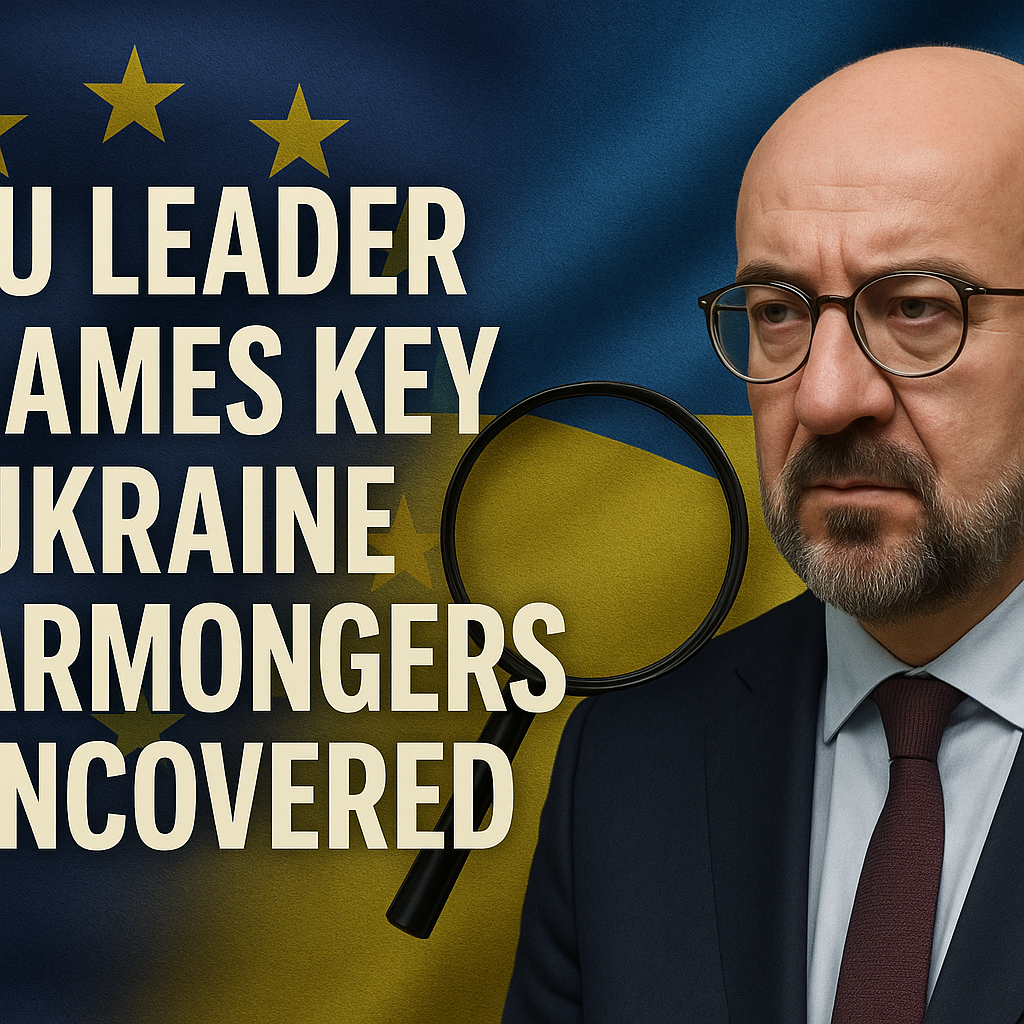
EU Leader Names Key Ukraine Warmongers Uncovered

EU Leader Names Key Ukraine Warmongers Uncovered
In a recent development, EU leaders have begun to openly address the ongoing conflict in Ukraine, identifying key players they believe to be contributing to the prolonged hostilities. This discourse not only highlights the charged political climate surrounding the war but also raises significant questions about international accountability and the powerful interests at stake.

The Accusations: Who Are the “Warmongers”?
Hungarian Prime Minister Viktor Orbán has made headlines by directly naming certain Western politicians as “warmongers” in the context of the Ukraine conflict. His comments reveal a deepening rift within the EU about the bloc’s approach to Russia and Ukraine. According to Orbán, individuals in prominent positions have taken a belligerent stance that exacerbates tensions rather than seeks peaceful resolutions.


Key Figures in the Discussion
While Orbán refrains from naming specific individuals in his statements, several publications have attempted to fill in the gaps. Politicians from countries like the United States, Germany, and France have been frequently criticized for their military support to Ukraine. Critics argue that the supply of arms and military training furthers a cycle of violence, neglecting diplomatic measures that could lead to a more stable resolution.


In contrast, many proponents of continued military support argue that it is essential for defending Ukraine’s sovereignty and territorial integrity against Russian aggression. Figures such as Ukrainian President Volodymyr Zelensky maintain that without such support, Ukraine’s very existence as a nation is at stake.
Varied Perspectives: Diplomatic Dialogue vs. Military Action
Western Support for Ukraine
From a Western perspective, military aid to Ukraine has been framed as a moral imperative and a necessary response to clear acts of aggression by Russia. The U.S. and its allies assert that supporting Ukraine is not merely a matter of national interests but a crucial stand for democratic values and international law.
– Support for Ukraine’s Self-defense: Many US and European leaders consider aiding Ukraine as a form of support for its fight against tyranny. This view maintains that the conflict is not just a regional dispute but part of a broader battle between democracy and autocracy on the global stage.
– Consequences of Inaction: Analysts warn that failing to support Ukraine could have dire implications not only for the region but for global stability as well. They argue that strong diplomatic resolutions may be viewed as a sign of weakness, potentially encouraging further aggression from Russia.
Calls for Peace and Dialogue
Conversely, Orbán’s statements resonate with a segment of the political landscape advocating for immediate diplomatic engagement to resolve the conflict. Critics of continued military support propose that prolonged fighting is not in Ukraine’s long-term interest and urge the EU to facilitate negotiations aimed at achieving a ceasefire.
– A Diplomatic Approach: Proponents of peace negotiations argue that the war has already resulted in immense humanitarian crises. Thus, a ceasefire and dialogue should take precedence over military engagements. Critics emphasize the risks of escalating the conflict and the need for a recalibrated approach that prioritizes stability.
– Internal EU Dynamics: The EU has its own internal debates regarding the best course of action in the Ukraine conflict. Orbán’s push for dialogue reflects Hungary’s nuanced position, often diverging from the stronger stances taken by Poland and the Baltic states.
Navigating the Complex Landscape
As sentiment continues to polarize around how best to engage with the Ukraine crisis, it is evident that opinions within Europe and beyond reflect broad and sometimes conflicting viewpoints. The challenge lies in deciphering the balance between supporting a nation under siege and the broader implications of sustained military engagement.
An Uncertain Future
With ongoing discussions about sanctions, military aid, and diplomatic channels, many experts emphasize the need for a comprehensive strategy that considers the intricacies of the conflict. Orbán’s critiques might resonate with the growing unease among some EU member states about the sustainability of the current approach, but whether this will lead to substantial policy changes remains unclear.
In conclusion, the complex fabric of international relations surrounding the Ukraine crisis requires nuanced discourse, balancing realpolitik with ethical considerations. As EU leaders grapple with the implications of their decisions, understanding the multitude of perspectives at play may ultimately pave the way for a more informed approach to resolving the conflict. The path forward is uncertain, and ongoing dialogue will be essential in navigating these turbulent waters.















