
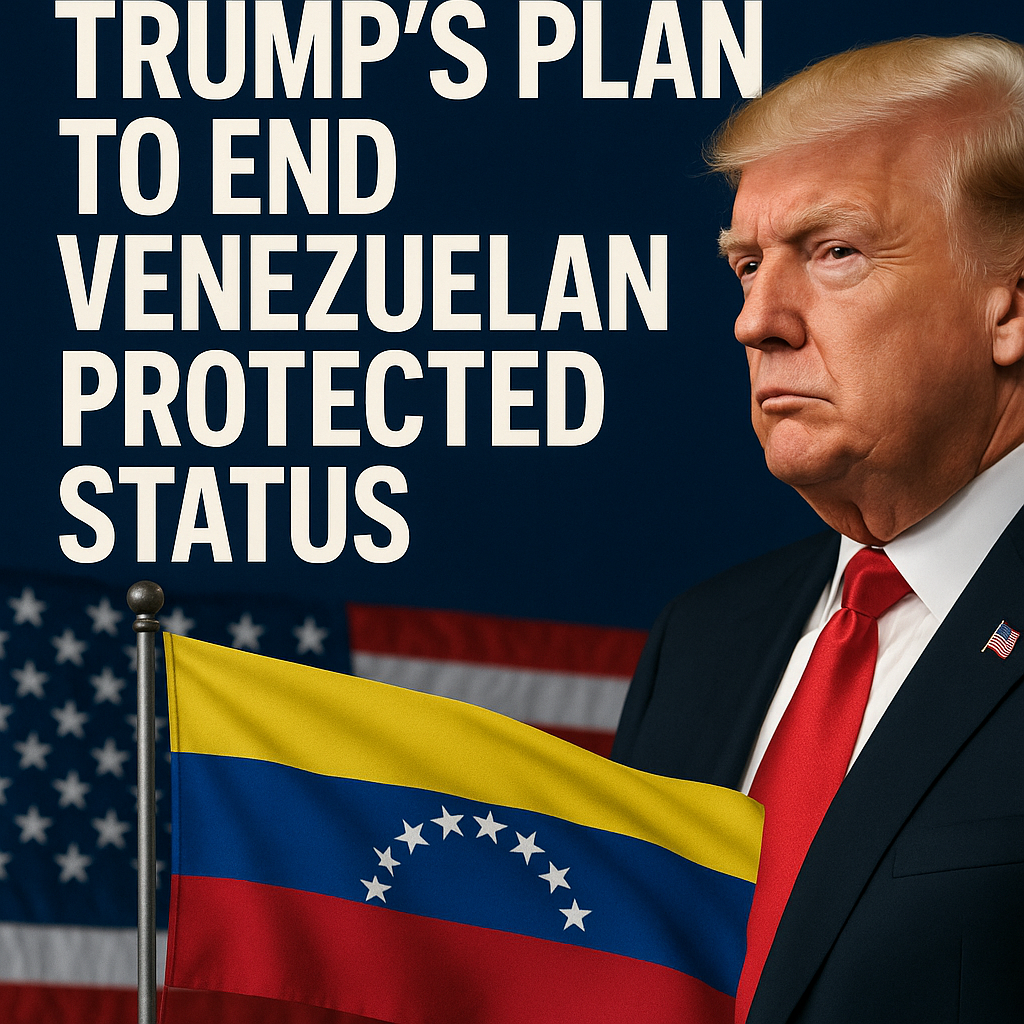
Court Blocks Trump’s Plan to End Venezuelan Protected Status

Court Blocks Trump’s Plan to End Venezuelan Protected Status
In a significant legal ruling, a U.S. Court blocked former President Donald Trump’s effort to terminate the Temporary Protected Status (TPS) for Venezuelans. This decision not only impacts thousands of Venezuelan nationals living in the United States but also sheds light on the complexities surrounding immigration policy and humanitarian considerations.

Understanding Temporary Protected Status (TPS)
Temporary Protected Status is a humanitarian provision that allows individuals from certain countries experiencing crisis—whether due to war, natural disasters, or similar extraordinary conditions—to live and work in the U.S. without the fear of deportation. Venezuelans had been granted TPS in response to their country’s ongoing economic collapse, rampant violence, and violations of human rights which have led millions to flee.


The Trump Administration sought to end TPS for Venezuelans, arguing that the situation in Venezuela had stabilized. However, courts have largely viewed the matter differently. The recent ruling highlighted the ongoing turmoil in Venezuela, with judges emphasizing that the country’s conditions had not improved sufficiently to justify the abrupt withdrawal of protections for Venezuelans in the U.S.


Diverse Perspectives on the Ruling
The court’s decision drew mixed reactions from various stakeholders. Supporters of TPS for Venezuelans praised the ruling as a vital lifeline, underscoring the harsh realities faced by many Venezuelan families. “This ruling acknowledges the undeniable struggles faced by Venezuelans,” said a representative from a prominent immigrant advocacy group. Many advocates argue that TPS is not just a legal necessity but a humanitarian imperative.
Conversely, opponents of expansive TPS policies argue that such provisions encourage extended reliance on government support systems. Some critics, primarily from right-leaning political affiliations, assert that the program may undermine regular immigration processes and financial resources. A spokesperson from a national organization opposed to TPS claimed, “By continuously extending protections without reassessing situations, we risk disregarding the principles of lawful immigration.”
In analyzing this dichotomy, it becomes evident that perspectives on TPS for Venezuelans are often polarizing, influenced by larger narratives regarding immigration and national security.
The Broader Political Landscape
The court’s ruling resonates deeply within the broader context of U.S. immigration policy. Immigration policy in the U.S. has long been a contentious issue—especially given the shift in political sentiment across administrations. Under the Trump administration, there was a significant push to tighten immigration controls; however, this court ruling signals an ongoing commitment from the judiciary to uphold humanitarian protections against politically motivated changes.
Interestingly, the court’s decision may reflect a shifting lens on immigration issues as they relate to humanitarian crises. As the U.S. grapples with various crises around the globe, including ongoing conflicts and disasters that affect thousands of people, the question arises: how should the U.S. balance national interests with global humanitarian responsibilities?
The ongoing support for TPS also draws attention to the evolving views on refugee and immigrant roles in American society. With many Venezuelan nationals contributing significantly to U.S. communities and economies, the importance of this ruling extends beyond just legal safeguards—it reflects the nation’s values concerning compassion and assistance.
Uncertainties and Future Implications
While this ruling marks a win for defenders of TPS, uncertainties remain regarding its long-term implications. As conditions in Venezuela continue to fluctuate—fueled by political instability and economic challenges—questions arise about the program’s future. Will ongoing judicial support sustain TPS in the years to come? Additionally, with discussions around immigration reform intensifying, how will policies adjust in response to both legal decisions and the dire circumstances many Venezuelans still face?
There’s a pressing need for new and effective immigration policies that consider both humanitarian obligations and the complex realities of global migration. It will be critical to observe how lawmakers and the judicial system navigate these complexities moving forward.
Conclusion
The court’s blocking of Trump’s plan to end TPS for Venezuelans underscores a nuanced discussion about immigration in the U.S. While it offers immediate relief for many, it also highlights the divergent opinions surrounding immigration policy—a topic that, given its complexities, is unlikely to be resolved anytime soon. As conversations shift toward a broader understanding of immigration’s humanitarian aspects versus security concerns, it will be crucial for future policies to reflect a balanced approach that honors both U.S. values and practical realities.















