
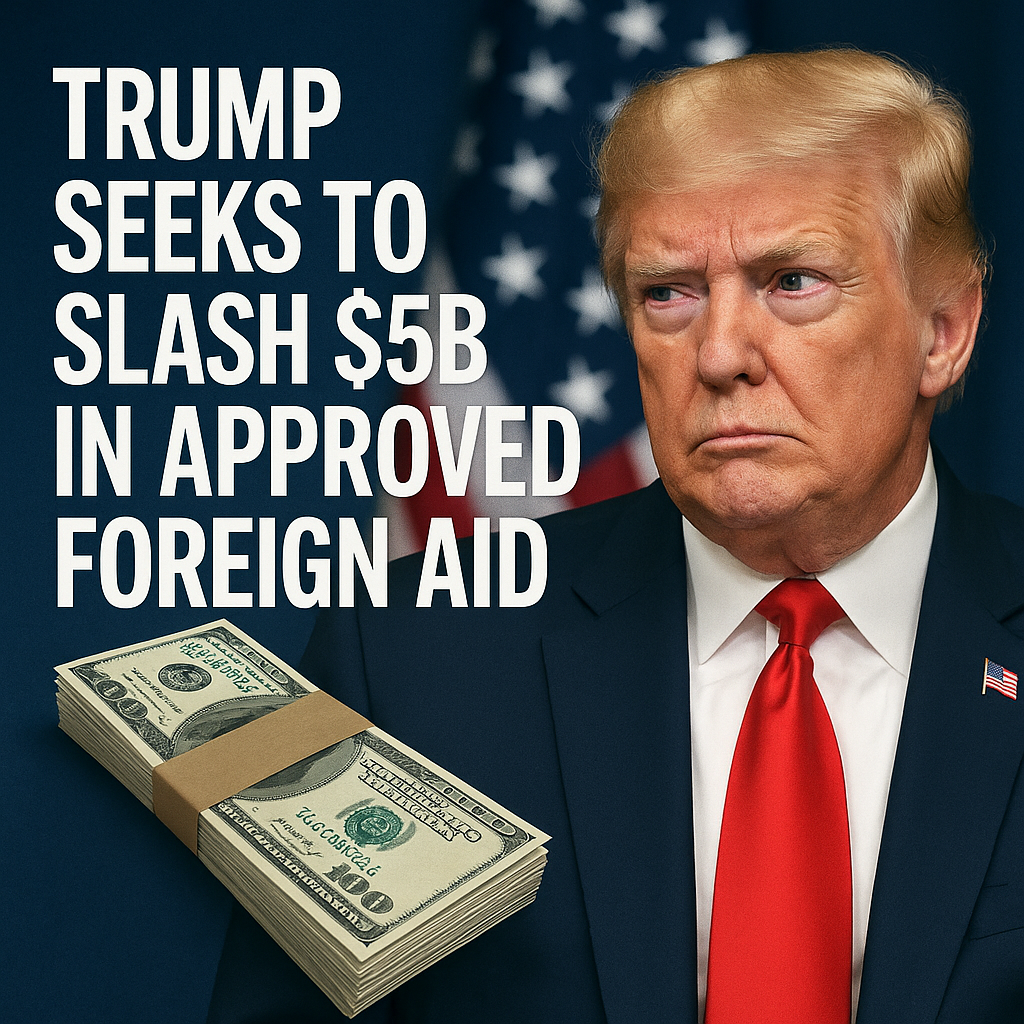
Trump Seeks to Slash $5B in Approved Foreign Aid

Trump Seeks to Slash $5B in Approved Foreign Aid
In recent news, former President Donald Trump has announced his intention to cut $5 billion in foreign aid that has already been approved by Congress. This development has sparked a flurry of debates surrounding the implications of such a drastic move on both international relations and domestic welfare.

Understanding the Proposal
Trump’s proposal is set against a backdrop of a broader conversation about government spending and national budget priorities. The funds in question are earmarked for various global initiatives, including humanitarian assistance, development programs, and strategic military cooperation. Critics argue that slashing these funds could disturb international stability and damage America’s credibility as a world leader. Conversely, supporters of the cut argue that the money could be better spent on domestic issues.


Potential Impacts on International Relationships
One immediate concern raised by analysts is how cutting foreign aid could affect U.S. relationships with allied nations. Historically, foreign aid has served as a tool for diplomacy, helping to foster goodwill and mitigate conflicts before they escalate. According to an article by Al Jazeera, organizations in countries relying on U.S. support fear that losing these funds could jeopardize their progress in education, health, and infrastructure. This sentiment is echoed by various leaders and NGOs who argue that such cuts may lead to increased instability in vulnerable regions.


On the other hand, proponents of Trump’s stance suggest that foreign aid often fails to yield the intended results, arguing that these funds can perpetuate dependency rather than fostering self-sufficiency. A report from RT outlines a viewpoint held by some budget-conscious fiscal conservatives who advocate for a refocus on domestic spending over foreign obligations. They argue that as national debts rise, prioritizing spending at home can promote economic growth and public welfare.
Domestic Implications of Cutting Foreign Aid
The dialogue surrounding the proposed cuts also raises questions about how reallocating these funds could impact domestic priorities. According to reports from Sky News, advocates of increasing domestic spending argue that the funds from foreign aid should instead be redirected to improve healthcare, infrastructure, and education systems within the U.S. They assert that American taxpayers should see responsible management of their money, particularly in light of recent economic strains.
However, it’s crucial to consider the counterargument: federal budgets are complex, and immediate redirection of funds may not be straightforward. Experts warn that while there is a legitimate need for domestic investment, sudden cuts to established programs may not hit the reset button as intended. Without careful planning, such actions could lead to unintended downstream effects that could potentially harm American interests abroad and create a vacuum that adversarial nations might fill.
The Divided Opinions
As with many of Trump’s policy proposals, the plan to slash foreign aid has divided opinions sharply. Advocates and analysts offer contrasting perspectives on the efficacy and morality of foreign aid. While proponents argue that it fulfills a global obligation and serves national interests, critics contend that it often results in wasted taxpayer dollars without delivering on promised outcomes.
Public opinion also plays a significant role in shaping these policy discussions. Polls generally indicate that while many Americans support reducing spending, there is less consensus when it comes to gutting foreign aid. Citizens often express a desire for a more judicious and well-monitored allocation rather than outright elimination.
Conclusion: Navigating a Complex Issue
In summary, Trump’s initiative to cut $5 billion in approved foreign aid captures a multitude of perspectives and complex implications. The discussion reflects a balance between commitment to international leadership and the pressing need to address internal priorities. While advocates argue that slashing these funds could serve to bolster domestic investments, opponents raise legitimate concerns surrounding the consequences on global stability and U.S. credibility.
This issue will undoubtedly remain contentious as both political leaders and the public continue to weigh the costs and benefits of foreign aid in the context of a rapidly shifting geopolitical landscape. As debates continue, finding common ground may be essential for crafting solutions that address both domestic and international needs effectively.















