
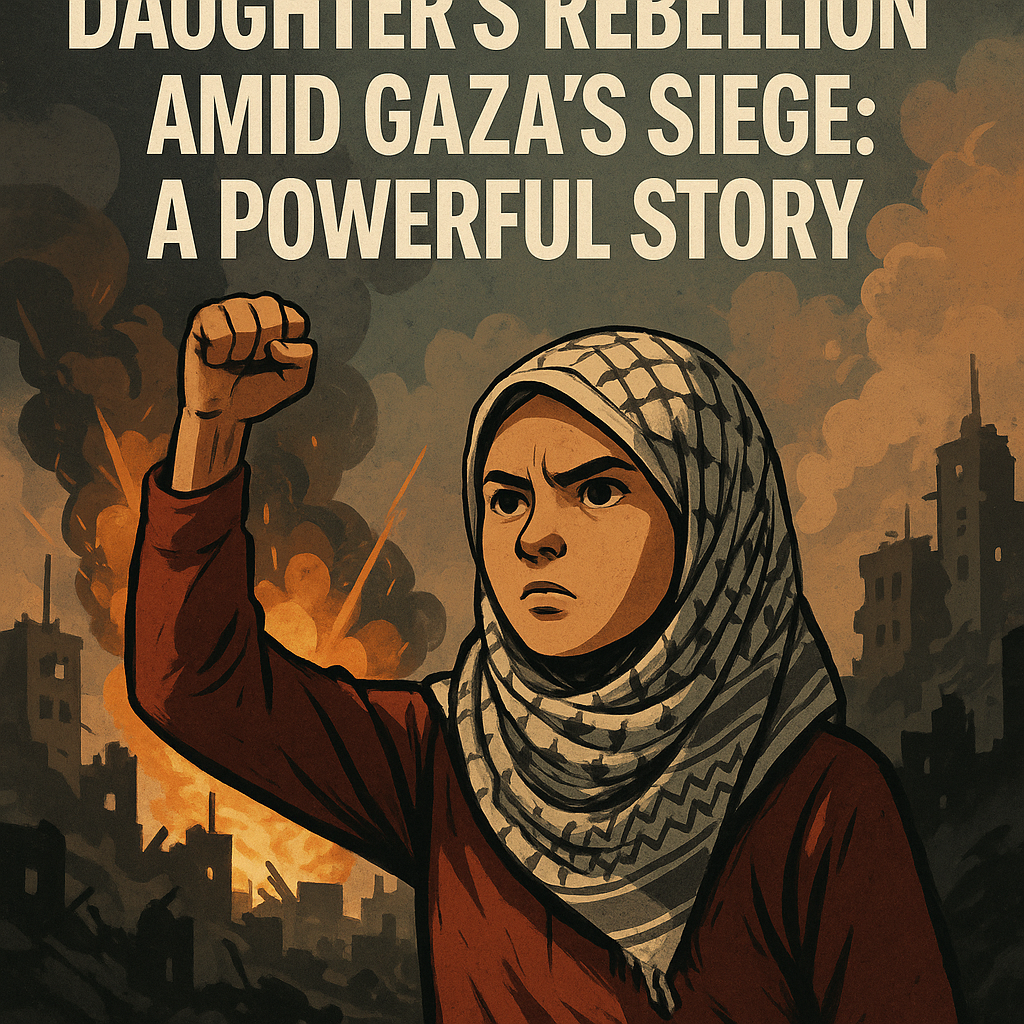
Daughter’s Rebellion Amid Gaza’s Siege: A Powerful Story

Daughter’s Rebellion Amid Gaza’s Siege: A Powerful Story

The ongoing conflict in Gaza presents a complex landscape where humanity’s resilience often shines through even the darkest times. The recent narrative surrounding a young girl’s rebellion against oppressive conditions in besieged Gaza is a poignant reminder of the strength of the human spirit, even in desperate circumstances.


The Context of Gaza’s Siege
Gaza has been under a blockade for over a decade, with severe repercussions for daily life, including restricted movement, limited access to healthcare, and dwindling supplies of basic necessities. Reports highlight that access to food, clean water, and medical resources is increasingly compromised, making life unbearable for many. In this context, the actions of individuals—especially young people—become symbolic acts of defiance and hope.


Amidst such harsh realities, stories emerge that showcase both despair and resilience.
While Al Jazeera’s commentary delves into personal narratives, capturing the intimate struggles of families like the one described in the story of a father and his rebellious daughter, other sources offer broader political and social perspectives. For instance, RT’s coverage emphasizes the systematic challenges and governmental policies that perpetuate the conditions leading to such rebellions.
A Daughter’s Defiance: Personal Narrative
The emotional core of the narrative revolves around a father reflecting on his daughter’s growing desire for autonomy, which he sees as an act of defiance in a restricted society. In his poignant recounting, the father expresses a sense of both pride and concern. His daughter’s desire to challenge societal norms and expectations, especially as a young girl in a patriarchal framework, illuminates a crucial aspect of the human condition—striving for agency, even when faced with overwhelming challenges.
– Empowerment through Rebellion:
The daughter’s actions—whether they be small acts of defiance or more significant gestures of protest—represent a form of empowerment. She embodies the youth of Gaza, largely affected by the siege but also determined to find her voice amidst chaos.
– Impact on Family Dynamics:
The father’s struggle is echoed across countless households in Gaza, where traditional expectations collide with emerging desires for personal freedom. This narrative format highlights the interplay between personal experiences and wider societal realities, illustrating how individual stories can serve to represent larger movements.
Political Implications and Collective Sentiment
While personal stories provide a vital connection to the struggles faced by those in Gaza, the broader political discourse continues to shape the context in which these personal rebellions occur. Different viewpoints emerge on the implications of such acts.
– Support for Autonomous Expression:
Various commentators advocate for recognizing these acts of rebellion as not only personal expressions but as vital components of the larger resistance against oppression. They argue that fostering an environment where young people can express dissent is crucial for any hope of future peace and resolution.
– Global Response Variations:
Meanwhile, others point out the international political climate’s failure to adequately address the humanitarian crisis that fuels such rebellions. Both RT and Al Jazeera underscore concerns regarding global apathy, suggesting that as young girls like the one in the discussed narrative challenge oppressive norms, they also demand a global response that acknowledges and supports their agency.
Conclusion: The Complexity of Rebellion
The story of a young girl rebelling in the midst of Gaza’s siege serves as a microcosm of triumph and struggle within a besieged populace. It reveals the intricate layers of human emotion and societal pressure that shape not just the personal narratives but the broader socio-political landscape.
As these personal stories circulate, they invite a deeper understanding of the complexities involved. Factoring in diverse perspectives allows for a more nuanced conversation about the realities of life in Gaza and the ways individuals and families navigate oppression.
In a world where stories often get overshadowed by broader narratives, it’s essential to listen to these voices. Each act of rebellion, whether against familial expectations or oppressive regimes, not only shapes individual destinies but also contributes to a collective pursuit of dignity, autonomy, and eventual peace.
By reflecting on both the intimate and the political, we foster a narrative that embraces the depth of human experience amidst crisis and celebrates the undying hope for a better future.















