
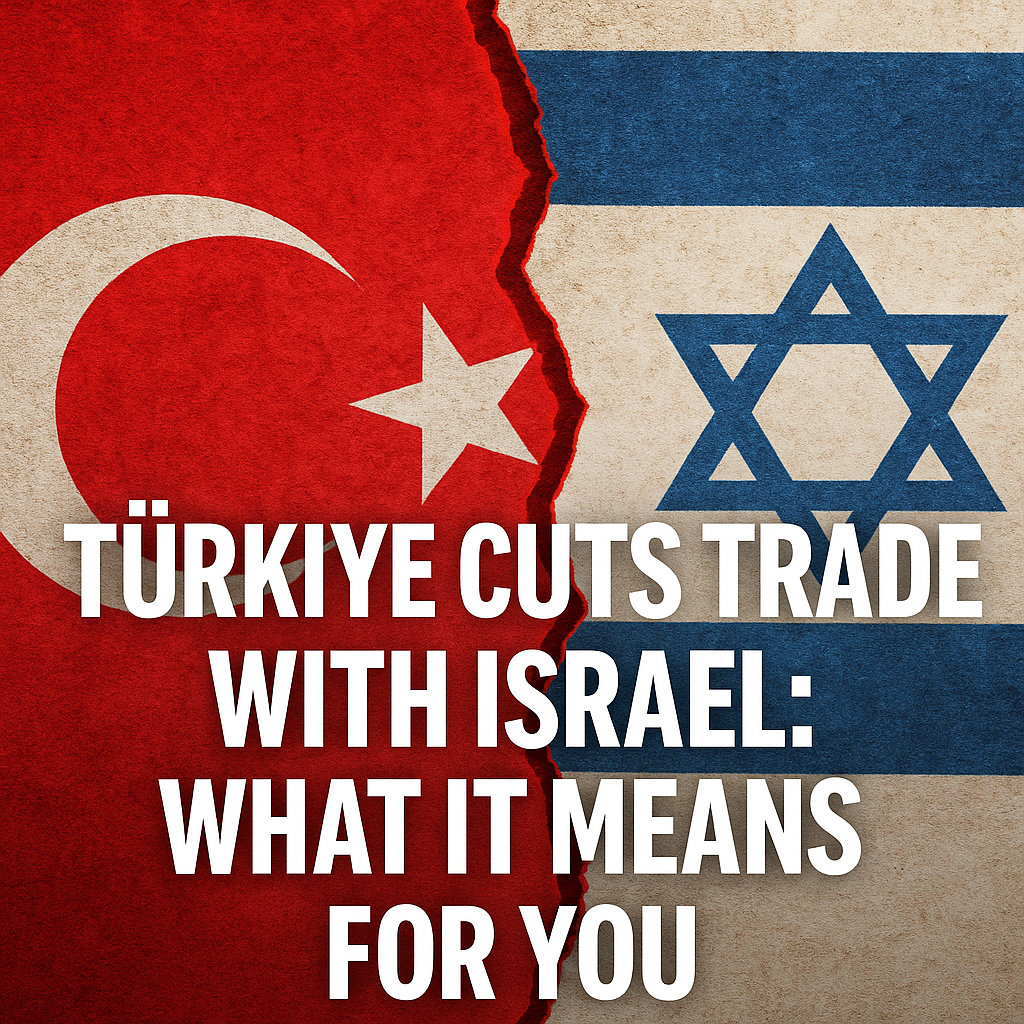
Türkiye Cuts Trade with Israel: What It Means for You

Türkiye Cuts Trade with Israel: What It Means for You
In a significant geopolitical development, Türkiye has announced a decision to cut trade ties with Israel, marking a potential shift in diplomatic relations that may impact various sectors on both sides. The implications of this move extend beyond mere economics, reflecting deeper historical and political grievances that could reshape alliances in the region.

Context and Background
The decision to sever trade agreements is rooted in a long-standing tension between Türkiye and Israel, exacerbated by various socio-political issues. Recent reports indicate that Türkiye is responding to perceived provocations from Israel, particularly regarding the treatment of Palestinians and broader regional policies that Türkiye finds objectionable.


Historically, relations between these two nations have oscillated between cooperation and confrontation. Following a period of burgeoning economic partnerships, recent conflicts, particularly relating to the Israeli-Palestinian situation, have caused Türkiye to reassess its diplomatic stance.


Economic Ramifications
The move to cut trade with Israel is expected to have immediate economic implications. Türkiye has become increasingly dependent on various international partnerships to bolster its economy, particularly in sectors such as agriculture, textiles, and technology. Trade with Israel has been significant, with billions of dollars exchanged annually.
1. Trade Figures: In 2022, Türkiye’s trade volume with Israel was approximately $5 billion, highlighting the stakes involved in this diplomatic showdown. Experts now warn that the abrupt severing of these ties could cripple sectors in Türkiye that have relied heavily on Israeli technology and agricultural exports.
2. Impact on Consumers: For everyday consumers, the fallout from this decision may not be immediately visible, but in the medium to long term, it could lead to market volatility. Prices for certain goods may rise, particularly in the agricultural sector, as Türkiye seeks alternative markets while attempting to mitigate losses.
Diverse Perspectives on the Decision
Responses to Türkiye’s decision have been varied, with analysts noting a spectrum of viewpoints from the international community.
– Supporters of the Move: Some proponents argue that Türkiye’s decision to cut ties is a necessary stance on human rights issues. They believe it positions Türkiye as a regional leader that prioritizes ethical concerns over economic benefits. Key actors within Türkiye have emphasized solidarity with the Palestinian plight, viewing this decision as a principled stand.
– Critics Raise Concerns: Conversely, critics warn that severing trade may isolate Türkiye internationally, particularly among Western allies. As one analyst pointed out, “This could lead to a geopolitical fallout, hurting Türkiye’s chances for cooperation with EU and NATO partners on various critical fronts.” The ripple effect of such isolation could impact Türkiye’s strategic military and economic alliances.
The Bigger Picture: Regional Geopolitics
The decision to cut trade ties fits into a larger narrative of shifting alignments in the Middle East. As Türkiye reassesses its relationships, it joins a multitude of other countries that have similarly recalibrated their foreign policies in light of broad geopolitical changes.
– Changing Alliances: Countries in the region are increasingly looking toward new alliances that align with their national interests. For instance, Türkiye’s relationships with other Middle Eastern nations and non-state actors could strengthen in response to perceived threats from Israel and its allies.
– Human Rights Advocacy: Beyond immediate economic implications, this move also aligns with a growing trend across the globe where nations are increasingly advocating for human rights and ethical governance. The consequences of these advocacy efforts will likely influence diplomatic relations worldwide.
Conclusion: What Lies Ahead
The future of Türkiye-Israel relations remains uncertain, marked by deep-rooted historical grievances and complex geopolitical dynamics. While Türkiye’s decision to halt trade could be seen as a moral stance on human rights, it also opens up questions related to economic stability and international alliances.
For consumers and businesses in Türkiye, preparing for fluctuating markets and potential increases in prices may be wise. On a broader scale, the international community will be watching closely how this significant shift affects regional geopolitics. As Türkiye navigates this complex landscape, the reverberations of its trade decision will echo well beyond its borders, influencing both domestic policy and international relations in the years to come.















