
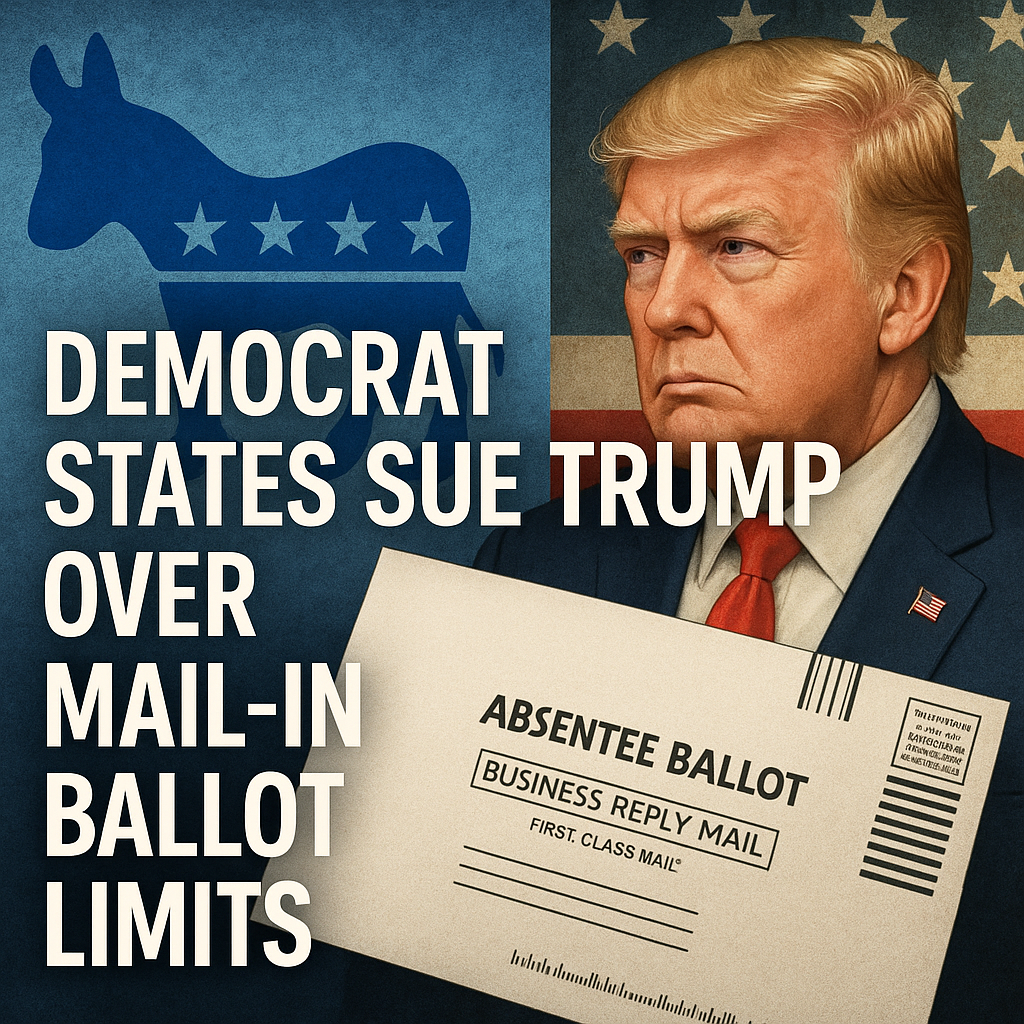
Democrat States Sue Trump Over Mail-In Ballot Limits

Democrat States Sue Trump Over Mail-In Ballot Limits
In recent weeks, a coalition of Democrat-led states has initiated legal action against former President Donald Trump concerning mail-in ballot restrictions. This multi-state lawsuit underscores the ongoing tensions surrounding voting rights and electoral processes in the United States.

The Legal Landscape: A Growing Concern
The lawsuit, involving nearly two dozen states, highlights fears that Trump’s administration’s limitations on mail-in voting could disenfranchise millions of voters, particularly those in vulnerable demographics. According to Al Jazeera, the states allege that these restrictions disproportionately affect communities of color, seniors, and low-income populations. Critics argue that mail-in ballots are not only a right but also a necessity during times of crisis, exemplified by the COVID-19 pandemic.


Furthermore, the attorneys general representing these states assert that the imposition of such limits violates both state and federal laws aimed at protecting voting rights. They claim that Trump’s administration is overstepping its boundaries, infringing upon the states’ rights to manage their electoral processes independently. As articulated by legal experts, the outcomes of this lawsuit could set a significant precedent for how voting is regulated in the future.


Impacts on Voter Participation
The implications of the lawsuit are far-reaching. Proponents of mail-in voting highlight that historically, absentee ballots have increased voter turnout, particularly among demographics that face obstacles to in-person voting. With an upcoming election on the horizon, the timing of this lawsuit raises crucial questions regarding voter accessibility and the integrity of the electoral system.
Moreover, as reported by RT, there’s a considerable divide in public opinion surrounding mail-in voting. Some view it as a potential avenue for fraud while others argue that it is an essential mechanism for ensuring every voice is heard—especially given the ongoing pandemic. This polarization not only complicates the legal aspects of the lawsuit but also feeds into the broader national narrative regarding electoral integrity.
Weighing Evidence: Diverging Perspectives
At the heart of the debate is the difference in perspectives on the legitimacy and effectiveness of mail-in voting. Supporters argue that mail-in ballots provide a safe and accessible method for all voters, enabling participation without fear of health risks. They point to successful implementations in various states as evidence that these systems can function without widespread issues.
In contrast, some politicians and entities aligned with Trump express concerns about potential voter fraud, positing that mail-in ballots could be manipulated if adequate safeguards aren’t in place. This argument resonated strongly in certain voter bases and has fueled legislative efforts in some states to tighten restrictions on mail-in voting.
Adding complexity to the discourse, reports from Sky News reveal that many states have experienced a surge in voter registration and participation fueled by mail-in ballots. This push toward accessibility has garnered bipartisan support in various areas, creating a patchwork of legislative responses that highlight the intricacies of state governance and electoral reform.
The Road Ahead: An Uncertain Future
As the states move forward with their lawsuit, the question of what constitutes fair and equitable voting practices remains open for debate. The legal arguments will unfold in the coming months, likely headed toward further court challenges and appeals. Ultimately, this case could have lasting ramifications for the balance between federal and state authority over voting rights.
Additionally, the lawsuit brings to light a pivotal aspect in American politics: the need for comprehensive electoral reform that genuinely addresses the myriad challenges faced by voters. The dialogue surrounding mail-in voting reflects broader societal concerns about access, equality, and representation.
In conclusion, while the legal battle against Trump over mail-in ballot limitations is just beginning, it already illuminates critical issues afflicting the American electoral system. Given the polarized views on mail-in voting, the implications of this case may reverberate far beyond the courtroom, shaping the landscape of American democracy for years to come.















