
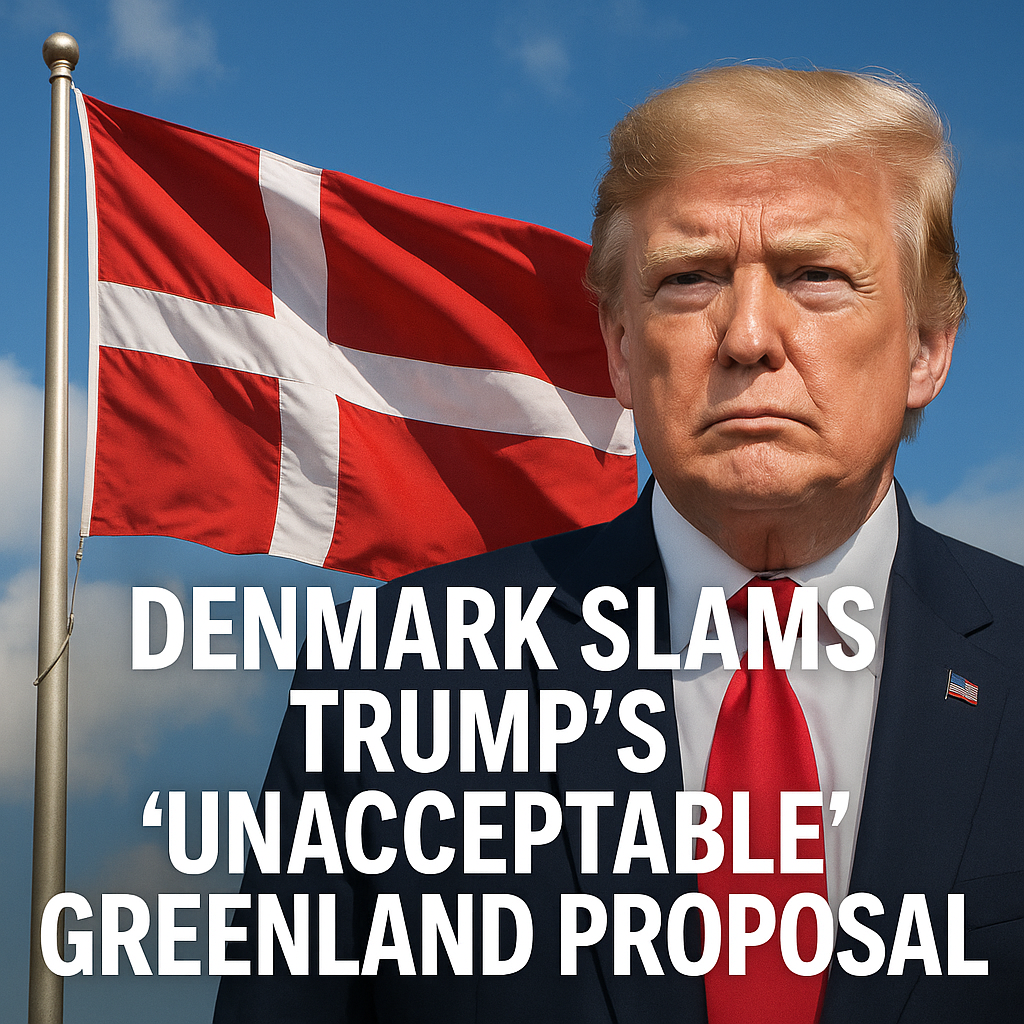
Denmark Slams Trump’s ‘Unacceptable’ Greenland Proposal

Denmark Slams Trump’s ‘Unacceptable’ Greenland Proposal
The controversy surrounding former President Donald Trump’s proposal to buy Greenland has resurfaced, drawing sharp reactions from various corners of the globe. Denmark, a nation historically connected to Greenland, has described Trump’s suggestion as “unacceptable,” reflecting a complex relationship involving social, political, and economic factors.

The Proposal: A Closer Look
Trump’s interest in purchasing Greenland—a vast, largely uninhabited island that is rich in natural resources—originated during his presidency and continues to spark debate. Proponents of his proposal argue that Greenland’s strategic location and abundant resources could enhance U.S. interests, particularly regarding military presence and resource extraction.


Here’s a breakdown of key points surrounding the proposal:


– Historical Context: The U.S. has long recognized Greenland’s importance, having previously attempted to buy the territory in the 1940s.
– Strategic Interests: The melting Arctic ice due to climate change has opened new shipping routes and potential resource exploitation, making Greenland increasingly significant on the global stage.
– Economic Features: Supporters highlight that integrating Greenland’s economy into the U.S. could stimulate job growth and investment, benefiting both regions.
Despite these arguments, Denmark’s government quickly dismissed the notion, declaring it not for sale and labeling the proposal as inappropriate.
Denmark’s Response: A Matter of Sovereignty
Denmark’s firm stance against the proposal emphasizes its sovereignty over Greenland. Danish politicians, including Foreign Minister Jeppe Kofod, have been unequivocal in their condemnation. “Greenland is not for sale,” Kofod stated, asserting that the island has strong ties to Denmark that transcend commercial interests.
A Complex Relationship
The relationship between Denmark and Greenland is multifaceted, encompassing cultural, political, and social dimensions. Greenland is an autonomous territory within the Kingdom of Denmark, having gained self-rule in 2009. While it shares a strategic relationship with the U.S., it also seeks to develop independently, particularly regarding its natural resources.
1. Cultural Ties: Greenlandic identity is deeply connected to Danish culture, history, and language, fostering a sense of unity—a sentiment that stands firmly against commercializing this connection.
2. Political Consequences: The implications of such a proposal can lead to strains in diplomatic ties not just between the U.S. and Denmark, but also across the Arctic, a sensitive geopolitical region.
Diverse Perspectives
The opinions on the Greenland proposal aren’t one-dimensional. Critics argue that this concept reflects a broader pattern of colonial thinking, where large powers attempt to exert control over less powerful nations. In contrast, some analysts suggest there is a legitimate strategic rationale behind the interest in purchasing the territory.
– Critique: The idea of purchasing Greenland could be seen as a neo-colonial move, undermining the self-determination of the Greenlandic people.
– Support: Some view this as a pragmatic approach to securing U.S. interests amid a changing global landscape, emphasizing the need for foresight in an era of climate change.
The Bigger Picture: Geopolitical Ramifications
As the Arctic continues to warm, competition over its resources and strategic passages intensifies. The Greenland proposal surfaces amidst growing tensions between the U.S., Russia, and China. Each nation is vying for dominance in an area that is becoming increasingly critical for global commerce and national security.
1. Military Implications: With the potential for increased military presence in the Arctic, nations are recalibrating their strategies. This leads to international concerns regarding security and territorial integrity.
2. Environmental Concerns: Resource extraction poses environmental risks, prompting questions about the sustainability of exploiting Greenland’s resources, which remain integral to its indigenous inhabitants.
Remaining Unresolved
In essence, the discussions surrounding Trump’s Greenland proposal reflect broader geopolitical, environmental, and ethical concerns. The path forward remains unclear, with Denmark standing firm on its territory’s sovereignty while the U.S. navigates its intentions and global aspirations.
The complexities inherent in this scenario present a challenge to achieving a consensus, making it a topic ripe for further exploration as global dynamics evolve. While some see potential, others emphasize rights and history, revealing a tapestry of interests that will shape future dialogues on a global stage.















