
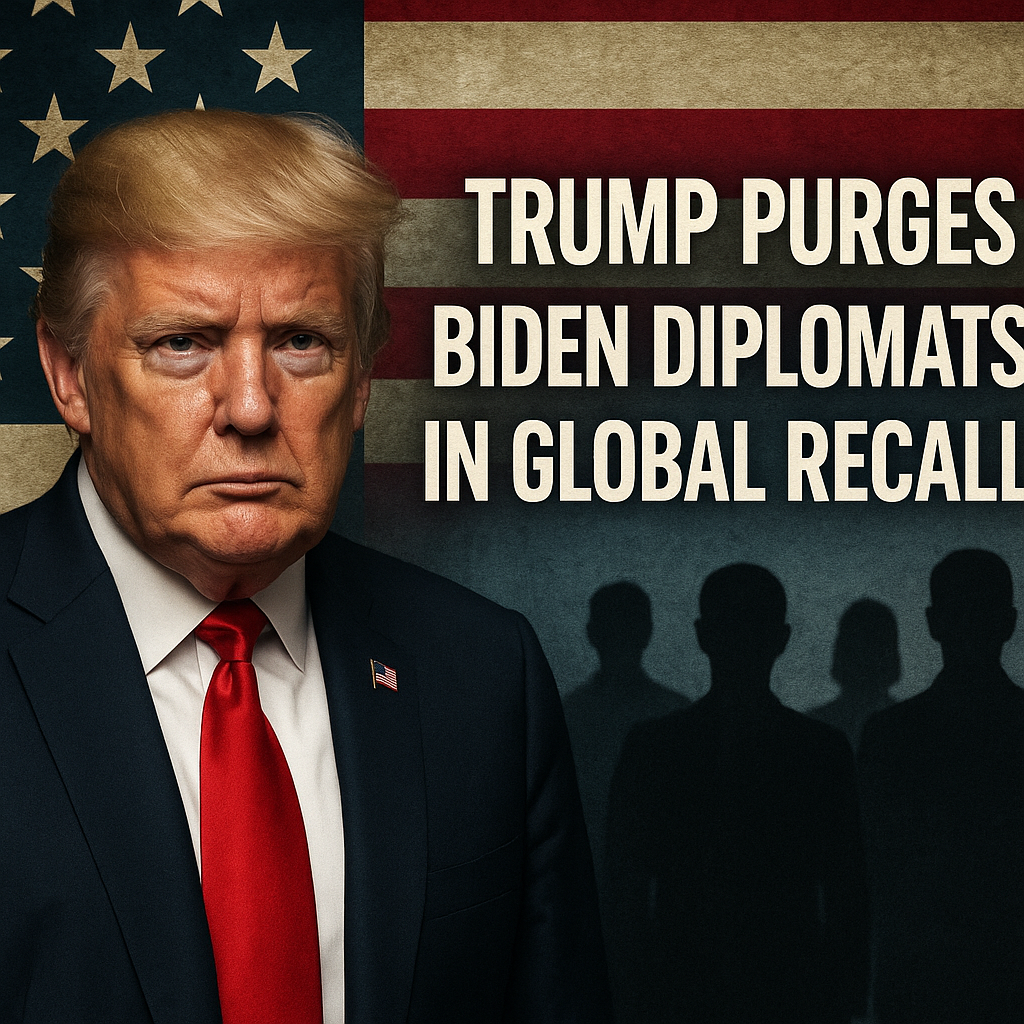
Trump Purges Biden Diplomats in Global Recall

Trump Purges Biden Diplomats in Global Recall: A Complex Diplomatic Shift
The recent recall of diplomats appointed by President Biden signifies a notable shift in U.S. foreign policy under former President Donald Trump. As he positions himself for a potential 2024 presidential run, the ramifications of this purge extend beyond personnel turnover; they highlight a broader debate about diplomatic continuity and effectiveness in international relations.

The Premise of the Diplomatic Recall
Trump’s decision to remove numerous career diplomats associated with the Biden administration has drawn both praise and criticism. Supporters argue that this move is essential for restoring a more aggressive stance in U.S. foreign policy, presenting an opportunity to inject new ideas and priorities into diplomatic relations. Conversely, critics warn that this could undermine long-standing relationships with allies and destabilize existing agreements.


As reported by RT, Trump’s administration views these recalls as a necessary reassertion of American interests on the global stage. In the words of spokespersons from his camp, it’s critical to fill key positions with individuals who align with their ‘America First’ doctrine. They argue that professionals who may have thrived in previous administrations might not align with their vision, suggesting the need for new leadership that embodies Trump’s last term priorities.


The Impact Contextualized
The tension around this recall comes at a pivotal moment for several global issues, including climate change diplomacy, trade relations, and geopolitical tensions with China and Russia. Critics highlight the potential instability this could create, especially considering how quickly U.S. foreign policy has shifted over recent years.
For instance, Al Jazeera notes the anxiety among allies regarding the reliability of U.S. commitments. With a Trump-led administration likely to pursue a more isolationist and transactional approach, partners may be hesitant to engage in negotiations that were built upon the foundations laid by the Biden administration.
Moreover, opinions from experts reveal that the implications of this purge could go beyond personnel changes. Scholars in international relations caution that a lack of continuity can lead to significant disruptions in diplomacy, particularly when many experts argue that consistent engagement is vital for resolving complex issues.
Divergent Perspectives on Diplomatic Strategy
Opinions differ sharply regarding whether this recall could lead to a positive or negative outcome. Proponents of Trump’s strategy emphasize that a refreshed diplomatic corps aligned with his policies could re-engage allies in new ways, potentially fostering innovative solutions to longstanding problems. They see a potential for revitalization, arguing that the diplomatic establishment’s traditional approaches may have become stagnant, causing the U.S. to miss opportunities for genuine advancements.
On the flip side, critics point to historical contexts where political purges in diplomacy led to negative repercussions. For example, changes in leadership can often create gaps in knowledge and experience that may impede effective policy implementation. Sky News highlighted a similar precedent in U.S. history during the early 2000s, where rapid changes in diplomatic personnel contributed to instability in foreign engagements.
Uncertainties and Considerations Ahead
The path forward remains fraught with uncertainty. Engaging diplomatic discussions relies on a deep understanding of global contexts—ones that may waver under the weight of evolving personnel.
While Trump’s stance is aimed at reinvigorating U.S. foreign policy, the complex web of international relations means that no swift conclusions can be drawn. As the political landscape shifts toward the 2024 elections, the long-term implications of these recalls will take time to manifest fully.
In essence, the divergent views on this diplomatic purge highlight the complexity of international relations today. Balancing a robust national interest with the need for collaborative diplomacy is a delicate dance; both sides of the spectrum present valuable insights into how the U.S. can navigate this increasingly interconnected world.
Conclusion: The Bigger Picture
Ultimately, as Trump seeks to reshape American diplomacy pre-election, the debate surrounding the recall of Biden’s diplomats emphasizes the challenges facing U.S. foreign policy. Striking a balance between aggressive national interests and fostering strong international alliances will be crucial for any administration moving forward. The coming years promise to reflect not only the outcomes of these shifts but also the fundamental questions they raise about America’s role and identity on the global stage.















