
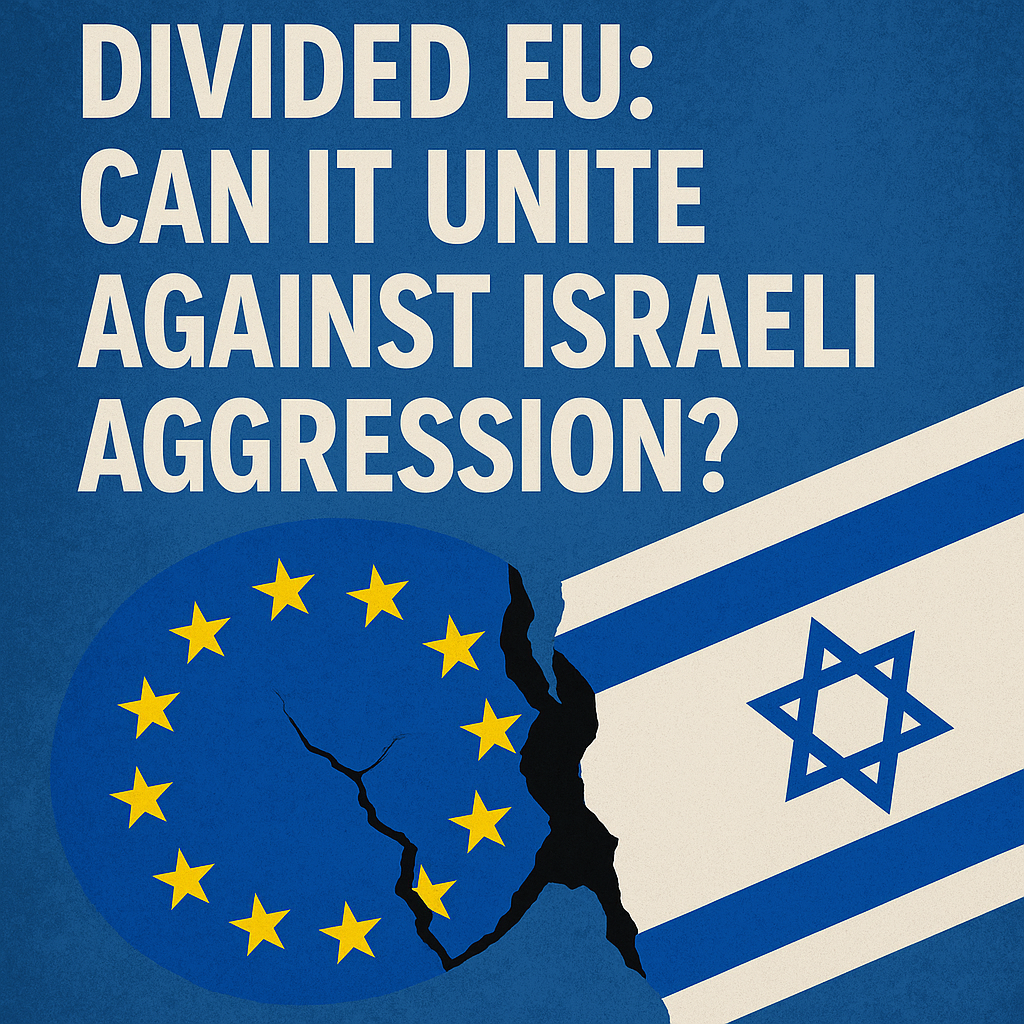
Divided EU: Can It Unite Against Israeli Aggression?

Divided EU: Can It Unite Against Israeli Aggression?
The recent escalation of violence in the Israeli-Palestinian conflict has reignited discussions within the European Union regarding its collective stance on Israel’s military actions. As tensions mount, the question remains: can the EU present a united front against perceived Israeli aggression that resonates within its member states and compromises their varied international relationships?

Historical Context and Current Dynamics
In the past, the EU has maintained a complex and often divided relationship with Israel. While some member states advocate for strong ties with Israel based on strategic interests, others are increasingly vocal about human rights concerns. This divergence is particularly stark in light of the recent developments in Gaza, where military actions have resulted in significant civilian casualties.


Countries like France and Germany have historically supported Israel, citing its right to self-defense while calling for restraint during escalations. On the other hand, nations such as Ireland and Sweden have been more critical, urging for accountability over actions that they view as aggressive and disproportionate.


Diverse Perspectives Within the EU
One of the most prominent challenges the EU faces in forming a united stance is its member states’ differing political landscapes.
– Pro-Israel Advocacy: As pointed out by various leaders, including those from Eastern European countries, there is a strong sentiment toward supporting Israel not only due to historical ties but also due to geopolitical considerations. These states often view Israel as a bulwark against extremism, aligning with their broader security concerns.
– Human Rights Advocacy: Conversely, countries like Belgium and the Netherlands are advocating for a more robust response to what they perceive as systemic violations of human rights in the occupied territories. These nations argue that inaction sends a detrimental message about the EU’s commitment to uphold international laws and humanitarian principles.
This division has prompted calls for summits and emergency meetings among EU leaders, as seen in the diverse reactions reported across various news outlets. Attempts to reach a consensus on the issue have often stalled, highlighting the complexity of unifying 27 countries with varying agendas.
The Role of Public Opinion and Civil Society
Public sentiment within EU countries plays a crucial role in shaping governmental responses to the Israeli-Palestinian conflict. Recent protests across Europe, especially in capitals like London, Paris, and Berlin, indicate a rising tide of civil discontent against Israeli policies. Activists and citizens alike are pushing for their governments to take stronger stances, which dramatically contrasts the traditionally cautious diplomatic rhetoric.
The impact of social media has amplified these voices, making it increasingly difficult for governments to ignore calls for action that align with public opinion. Some leaders, recognizing this shift, are beginning to reevaluate their positions, calling for a more cohesive approach to foreign policy that reflects both moral imperatives and public sentiment.
Potential Paths Forward
The EU’s ability to unify in its response to Israeli actions will likely depend on several critical factors. These include:
– Enhanced Diplomatic Engagement: Some analysts argue that the EU should proactively engage in mediating the conflict. By showcasing its commitment to a peaceful resolution, the EU could reposition itself as a legitimate broker rather than being perceived as a passive observer.
– Strengthening Human Rights Frameworks: Advocating for stronger human rights protections and making it clear that violations will meet resistance from member states could help establish a more united front. This approach aligns with the EU’s foundational principles and legal frameworks.
– Integrating Civil Society Voices: Policymakers could engage more closely with NGOs and civil rights organizations that provide insights into public sentiment and humanitarian concerns, ensuring that policies reflect the voices of those most affected by the conflict.
In synthesizing these complex narratives, it becomes clear that a unified EU response is not merely a matter of political will but also of balancing internal pressures and the need for a cohesive foreign policy. As the situation continues to evolve, the EU faces a crucial crossroads: whether to stand firm in its principles or risk further fragmentation in its response to a conflict that affects countless lives.
Conclusion: The Way Forward
The path toward a united EU response to Israeli aggression remains unclear and fraught with challenges. A factionalized stance not only undermines the EU’s credibility on the global stage but also raises questions about its commitment to upholding human rights. As discussions continue, the hold of diverse perspectives within the EU reveals both a challenge to unity and an opportunity to redefine its shared values. The world watches closely as the EU navigates this historic moment.















