
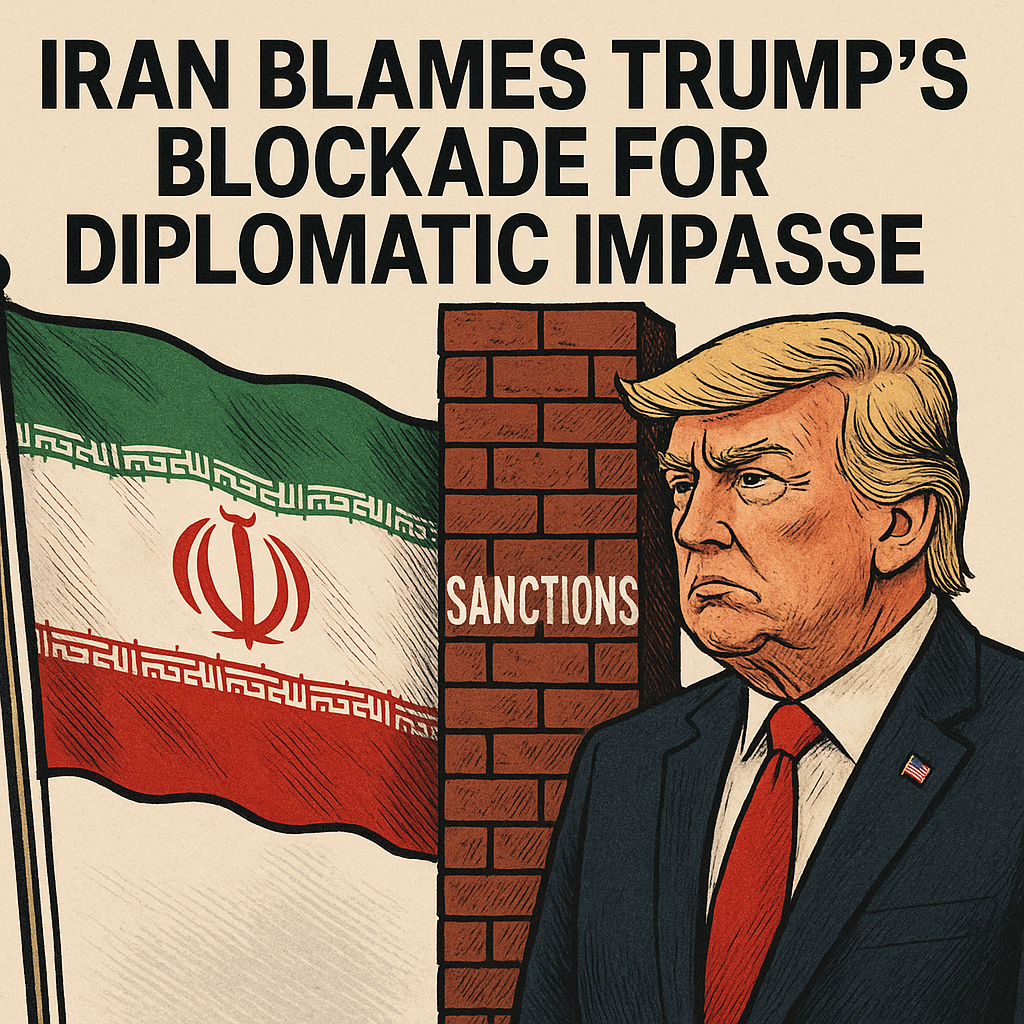
Iran Blames Trump’s Blockade for Diplomatic Impasse

Iran Blames Trump’s Blockade for Diplomatic Impasse
Iran’s diplomatic relations have faced significant strain in recent years, with many observers attributing part of this to the economic and political fallout from former President Donald Trump’s policies. Amid a backdrop of fragile truce talks, Iran has recently pointed to Trump’s blockade as a primary factor exacerbating their current diplomatic impasse.

The Impact of Sanctions
Economic sanctions are often a double-edged sword, intended as a tool of foreign policy to force a change in behavior but frequently leading to complex repercussions. According to a report from Al Jazeera, Iran has openly criticized the blockade imposed by the Trump administration, claiming that it not only damaged their economy but also severely impacted diplomatic efforts. The sanctions, which targeted various sectors, from oil exports to financial transactions, were part of a broader strategy to isolate Iran on the global stage.


A Strained Economy and Diplomatic Relations
The Iranian economy, already strained by years of sanctions prior to Trump’s administration, saw further deterioration that many experts argue has rendered diplomacy nearly impossible. Iran’s Foreign Minister, Hossein Amir-Abdollahian, stated, “The effects of the imposed blockade still linger, making it harder to achieve a comprehensive agreement.” This sentiment was echoed in several reports, highlighting a consensus among Iranian officials that the blockade has significantly hampered their ability to engage meaningfully in international discourse.


On the other hand, supporters of Trump’s sanctions argue, as per comments in various RT articles, that these measures were necessary to curb Iran’s nuclear ambitions. They contend that the tough stance served to protect regional allies and necessary checks on Iran’s influence. Thus, while some see Trump’s blockade as a misguided decision that has led to unfortunate consequences, others view it as a justified measure aimed at ensuring national and regional security.
The Truce That Holds Yet Hangs by a Thread
As discussions surrounding Iran’s nuclear program continue, the situation remains highly volatile. Fragile agreements have been brokered at various times, but the underlying distrust remains palpable. Reporting from Sky News indicates that despite ongoing efforts to stabilize relations, both sides face significant hurdles rooted in past grievances and divergent political ideologies.
Diverging Perspectives on Diplomatic Pathways
The Iranian government has placed the onus on the United States to lift the sanctions if any meaningful dialogue is to occur. However, political factions within the U.S. maintain different views on how to approach negotiations with Iran, leading to an even more complicated diplomatic landscape. Numerous politicians advocate for a strategy that blends negotiation with strict oversight on Iran’s nuclear activities, while others firmly oppose any concessions until Iran shows compliance with international expectations.
Furthermore, public sentiment in Iran reflects frustrations beyond the sanctions themselves, encompassing the perceived intransigence of Western powers in negotiations. Many Iranians feel that the sanctions have only solidified mistrust, arguing that a lack of good faith from the U.S. side has left them in a position where constructive dialogue seems elusive.
Conclusion: A Path Forward?
The complexity of Iran’s diplomatic situation and the role of Trump’s sanctions cannot be overstated. While there is a clear acknowledgment from Iranian officials about the devastating impact of the blockade on their economy and diplomacy, the situation is further mired in geopolitical realities that bring various interests into sharp conflict.
As both sides grapple with the past, the future of U.S.-Iran relations remains uncertain. For substantial progress to occur, a multifaceted approach that considers not only the lifting of sanctions but also broader regional stability and Iranian compliance is essential. The path forward, it seems, is as fraught with challenges as it is rich with potential—an acknowledgment that true diplomacy requires both courage and compromise.















