
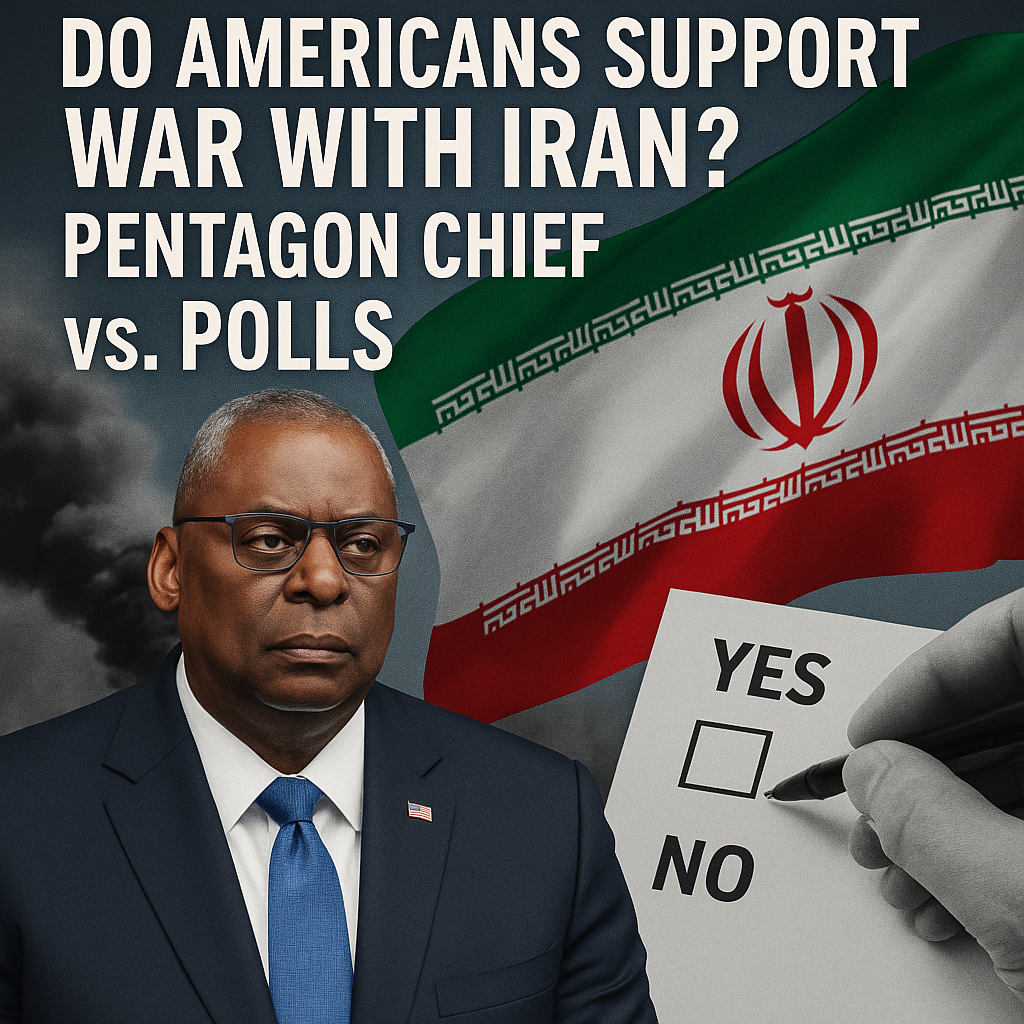
Do Americans Support War with Iran? Pentagon Chief vs. Polls

Do Americans Support War with Iran? Pentagon Chief vs. Polls
In recent discussions regarding the U.S.’s tense relationship with Iran, the question of whether Americans support war with Iran has garnered considerable attention. As rhetoric escalates, particularly from government officials, understanding public sentiment becomes crucial.

Diverging Views: Pentagon Chief vs. Public Opinion
Statements from key government officials, such as the Pentagon Chief, suggest a robust national strategy toward Iran, emphasizing a defensive posture and readiness to engage militarily if necessary. This stance aligns with a broader framework of U.S. foreign policy that considers Iran a significant threat, particularly concerning its nuclear ambitions and regional influence. For instance, Defense Secretary Lloyd Austin has outlined strategies for countering perceived threats emanating from Tehran, reflecting a firm governmental resolve.


However, recent polling data reveals a more complex picture. Many Americans seem hesitant to endorse military action against Iran. According to a recent survey by Al Jazeera, a significant majority of respondents expressed that they oppose military intervention, preferring diplomatic channels over potential conflict. This discrepancy highlights the gap between governmental policy and public sentiment.


Public Sentiment on Military Engagement
Polling results reflect a wariness among the American populace regarding military conflicts. A predictable war fatigue continues to pervade, stemming from extended engagements in Afghanistan and Iraq. Many citizens are increasingly inclined to question the efficacy of military interventions, often viewing them as counterproductive. According to the same Al Jazeera report, nearly three-quarters of Americans favor negotiations rather than military action to resolve tensions with Iran.
This public skepticism is echoed across various segments of the population, including younger demographics who tend to prioritize diplomacy. Factors such as economic considerations, a growing interest in international cooperation, and previous military experiences collectively reinforce this inclination against aggressive military postures.
Political Landscape and Military Rhetoric
Despite the public’s reservations, the political landscape reflects a different narrative. Some political leaders continue to advocate for a hardline approach. This is partially driven by geopolitical considerations and pressures from allied nations that share concerns over Iran’s nuclear capabilities and potential disruptions to regional stability.
Additionally, a faction within U.S. politics emphasizes the necessity of demonstrating military strength. Proponents of this view argue that showing readiness for conflict could deter Iranian ambitions. Conversely, critics assert that such rhetoric may provoke unnecessary hostilities and escalate tensions, ultimately contradicting broader strategic goals of peace and stability in the region.
The Complexity of American Perspectives
Interestingly, some polls also indicate nuanced perspectives. While a significant portion opposes outright war, there is a recognition of the need for a robust American response to any direct threats from Iran. This sentiment reveals a balancing act; Americans are not uniformly against the idea of military action, but rather seek a calculated and measured approach.
Furthermore, the misinformation landscape complicates public opinion. The portrayal of international relations in media can skew perceptions, influencing how Americans perceive threats and potential responses. Engagement through credible sources and platforms becomes essential as people strive to form opinions grounded in facts.
Conclusion: Bridging the Divide
As tensions rise, understanding the dissonance between government rhetoric and public opinion towards war with Iran is vital. While Pentagon officials maintain a readiness for military action, the sentiment among Americans leans towards diplomacy and negotiation. This dichotomy highlights the complexities of contemporary U.S. foreign policy, where caution and restraint are increasingly valued by the populace.
While future actions remain uncertain, the overarching consensus is clear: many Americans prefer diplomatic solutions to military engagements. Moving forward, it will be crucial for policymakers to navigate this divide thoughtfully—balancing national security interests with the desires of the electorate—ensuring that any steps taken reflect the true sentiment of the American people.















