
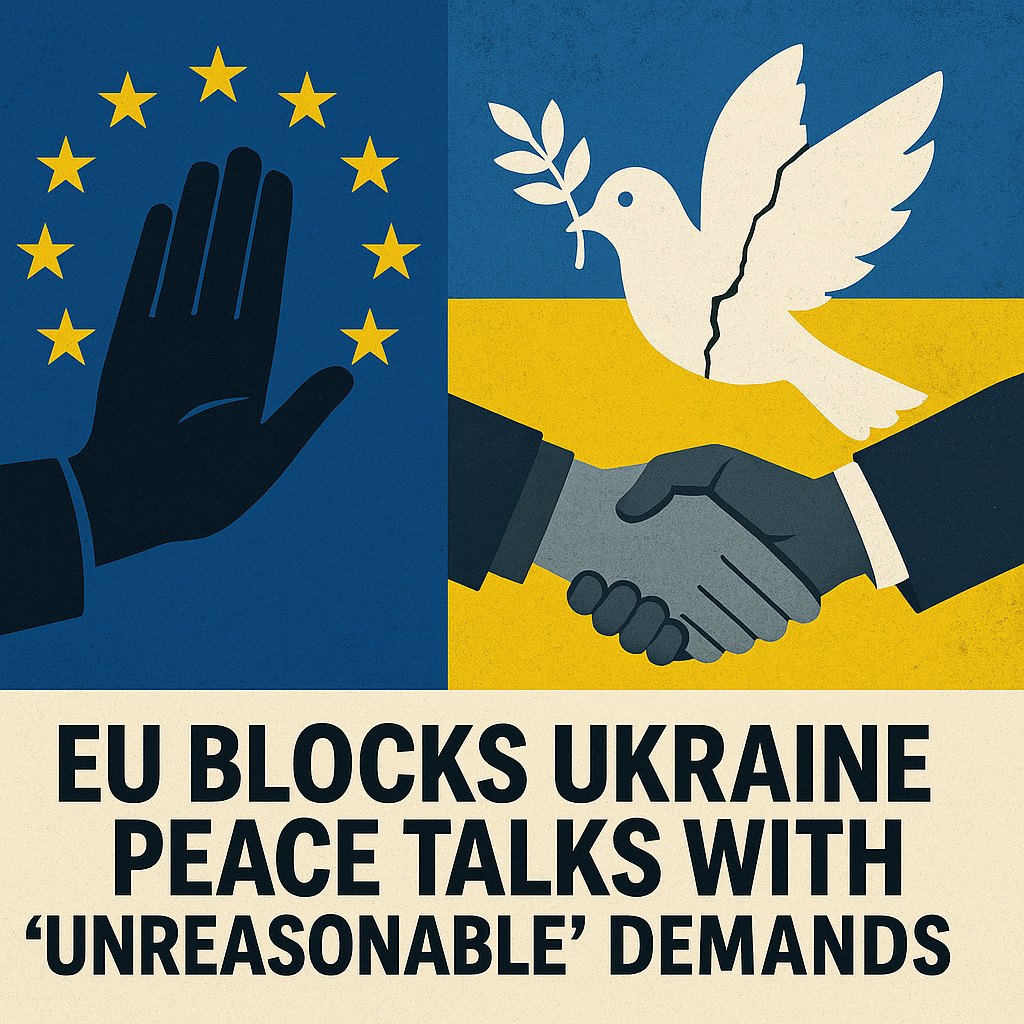
EU Blocks Ukraine Peace Talks with ‘Unreasonable’ Demands

EU Blocks Ukraine Peace Talks with ‘Unreasonable’ Demands
In a recent development, the European Union’s approach to peace talks with Ukraine has come under scrutiny as it sets forth what many are describing as “unreasonable” demands. This complex situation raises significant questions about the EU’s role in mediating conflicts, the realities facing Ukraine, and the broader implications for regional stability.

The Current Stalemate
As discussions surrounding a potential peace agreement gain traction, the EU has proposed conditions that have polarized opinions. Reports indicate that these stipulations could effectively halt negotiations, casting a shadow over efforts to bring about a ceasefire and rebuild trust between conflicting parties.


This tension is not merely a bureaucratic hiccup; it reflects the differing perspectives held by key stakeholders. While some EU leaders believe strict conditions are necessary to uphold international norms and ensure Ukraine’s sovereignty, others argue that such demands might alienate potential allies and prolong the conflict.


Diverging Viewpoints on Peace Negotiations
The divergence in perspectives isn’t by any means trivial. On one hand, some EU officials assert that Ukraine must adhere to specific reforms and accountability measures before the EU can fully support peace initiatives. This position aims to safeguard the integrity of the peace process and prevent future conflicts but raises eyebrows regarding its feasibility. Tensions brewing in Eastern Europe suggest that without immediate dialogue, the chance for lasting peace may slip further away.
On the other side of the spectrum, critics highlight the detrimental impact of these “unreasonable” demands. For instance, as reported by Al Jazeera, a former diplomat emphasized that insisting on rigorous preconditions could jeopardize any goodwill generated from ongoing discussions and lead to a stalemate that benefits neither Ukrainians nor their international partners. The argument is simple yet profound: the urgency for peace should not be overshadowed by bureaucratic red tape.
The EU’s Strategic Position
The EU’s motivations appear to be rooted in a multifaceted strategy. According to RT, the European Union aims to establish itself as a robust force for stability in Eastern Europe, demonstrating solidarity with Ukraine in the face of external pressures. This ambition, however, comes with substantial risk, as it challenges the delicate balance of power in an already precarious geopolitical landscape.
Some European leaders, such as French President Emmanuel Macron, have called for a unified front to ensure that negotiations respect Ukraine’s sovereignty while also considering the realities on the ground. Conversely, others remain skeptical of the EU’s commitment to placing Ukrainian interests above its own strategic goals.
The Broader Implications for Regional Stability
The implications of the EU’s stance extend beyond the borders of Ukraine. A failure to facilitate constructive dialogue may embolden competing influences in the region, potentially destabilizing neighboring countries and heightening tensions. As highlighted by Sky News, the stakes are particularly high given the interconnectedness of European security. Any protracted conflict could have repercussions not just for Ukraine but also for European states grappling with their security and economic stability.
As different stakeholders digest the situation, there are unavoidable questions: What is the right balance between necessary conditions and pragmatic flexibility in diplomacy? How can the EU facilitate peace efforts without compromising on the nuanced realities that different parties bring to the table?
In the age of rapid information exchange, it is vital for policymakers to remain adaptable, sensitive to the diverse viewpoints and needs of those affected by these conflicts. Thus, a recalibration of demands may not only serve Ukraine’s interests but could also demonstrate the EU’s commitment to becoming an effective mediator in facilitating lasting peace.
Conclusion: Navigating a Complex Landscape
As the EU faces mounting pressure to clarify its approach to Ukraine peace talks, the notion of “unreasonable” demands remains a critical sticking point. If stakeholders can engage in authentic dialogue, balancing accountability with a practical path to peace, there may still be a route toward reconciliation. However, if preconditions continue to stifle the discussion, the prospect of a resolution may remain elusive—potentially leading to a prolonged conflict that risks inflaming tensions across Europe. Thus, striking a harmonious balance in diplomatic efforts will be crucial as we move forward in navigating this complicated landscape.















