
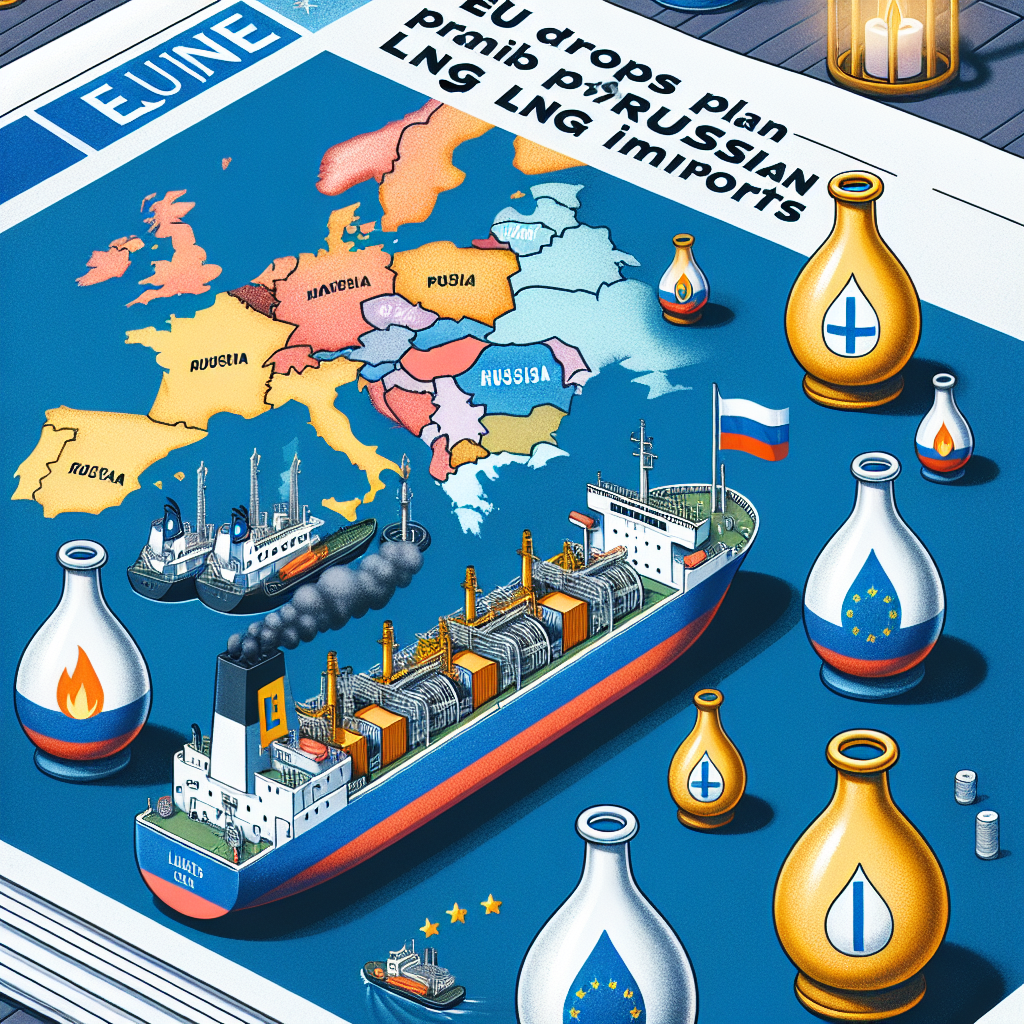
EU Drops Plans to Prohibit Russian LNG Imports – Reuters

EU Drops Plans to Prohibit Russian LNG Imports
Background
The European Union (EU) has decided not to move forward with a proposed ban on imports of liquefied natural gas (LNG) from Russia. This decision comes amid ongoing geopolitical tensions and energy security concerns following Russia’s actions in Ukraine.

Key Reasons for the Decision
- Energy Security: The EU is heavily reliant on Russian LNG to meet its energy needs, especially during the winter months.
- Economic Considerations: A ban could lead to increased energy prices and economic instability within member states.
- Diplomatic Strategy: The EU aims to maintain a balanced approach in its diplomatic relations with Russia while addressing energy dependencies.
Implications for the EU
The decision to continue importing Russian LNG has several implications for the EU:
Ads


- Short-term Relief: Ensures a stable energy supply for the upcoming winter, alleviating immediate energy shortages.
- Long-term Challenges: Highlights the need for the EU to diversify its energy sources and reduce dependency on Russian energy.
- Political Reactions: The decision may face criticism from member states advocating for stronger sanctions against Russia.
Conclusion
The EU’s choice to drop plans for a Russian LNG import ban underscores the complex balance between energy security and geopolitical strategy. While it provides short-term stability, it also emphasizes the urgent need for the EU to explore alternative energy sources to ensure long-term resilience and independence.
Ads

Ads

Ads

Ads

Ads

Ads

Ads

Ads

Ads

Ads

Ads

Ads

Ads


