
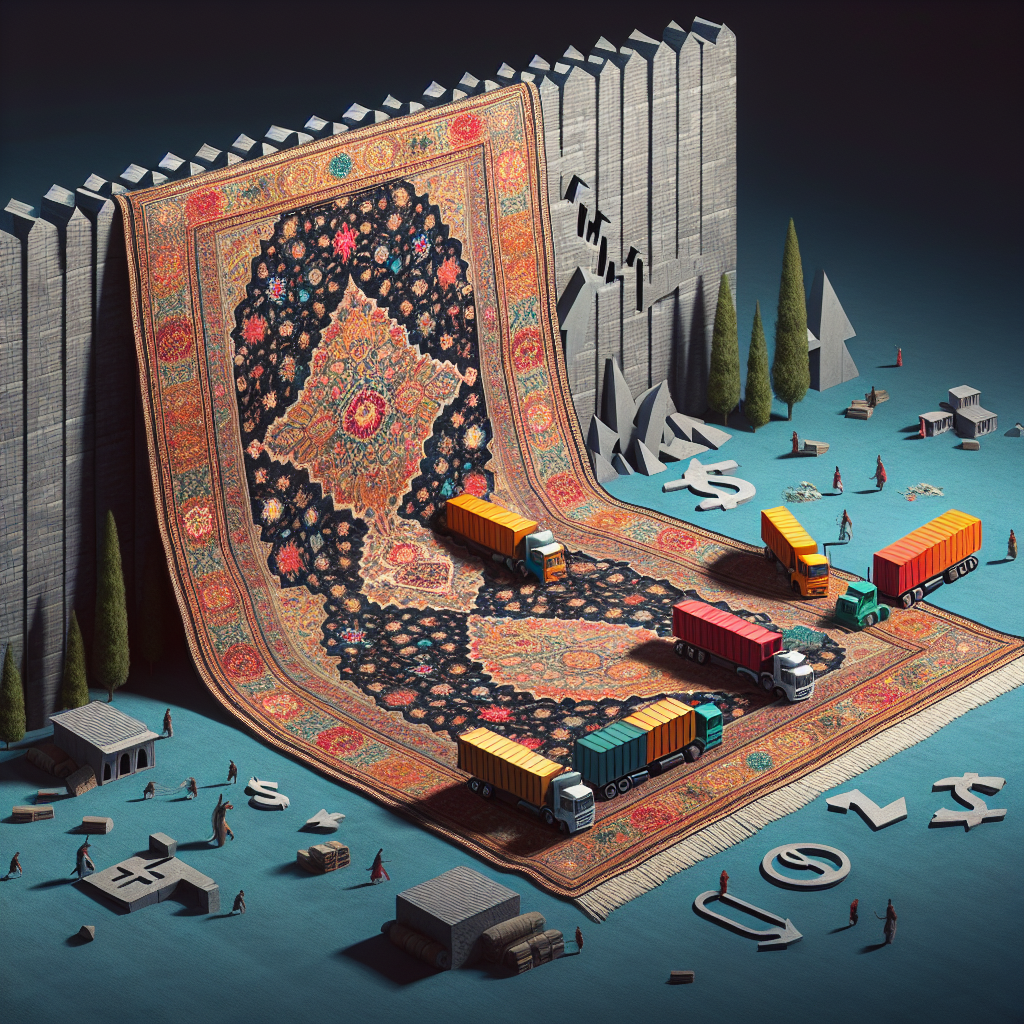
Tariffs on Kashmir Carpets: A Looming Threat to a Timeless Tradition

Tariffs on Kashmir Carpets: A Looming Threat to a Timeless Tradition
Introduction
The imposition of tariffs on Kashmir carpets is raising concerns about the future of this age-old craft. Known for their intricate designs and exceptional craftsmanship, these carpets are a significant cultural and economic asset for the region. However, new trade barriers threaten to disrupt this traditional industry.

Impact of Tariffs
Tariffs on Kashmir carpets could have far-reaching consequences, affecting various aspects of the industry:


- Economic Strain: Increased costs could lead to reduced demand, impacting the livelihoods of artisans.
- Global Competition: Higher prices may make Kashmir carpets less competitive in the international market.
- Cultural Erosion: The decline in demand could result in the loss of traditional weaving skills.
Artisans at Risk
The artisans, who are the backbone of this industry, face significant challenges due to these tariffs:


- Job Losses: Many artisans may lose their jobs if the industry contracts.
- Skill Devaluation: The unique skills passed down through generations may become obsolete.
Potential Solutions
To mitigate the impact of tariffs, several strategies could be considered:
- Government Support: Subsidies or tax relief could help cushion the blow for artisans and exporters.
- Market Diversification: Exploring new markets could reduce dependency on tariff-affected regions.
- Promotion of Heritage: Highlighting the cultural significance of Kashmir carpets could boost demand.
Conclusion
The imposition of tariffs on Kashmir carpets poses a significant threat to this timeless tradition. Without intervention, the economic and cultural repercussions could be severe. It is crucial for stakeholders to collaborate on solutions that preserve both the livelihoods of artisans and the rich heritage of Kashmir carpets.















