
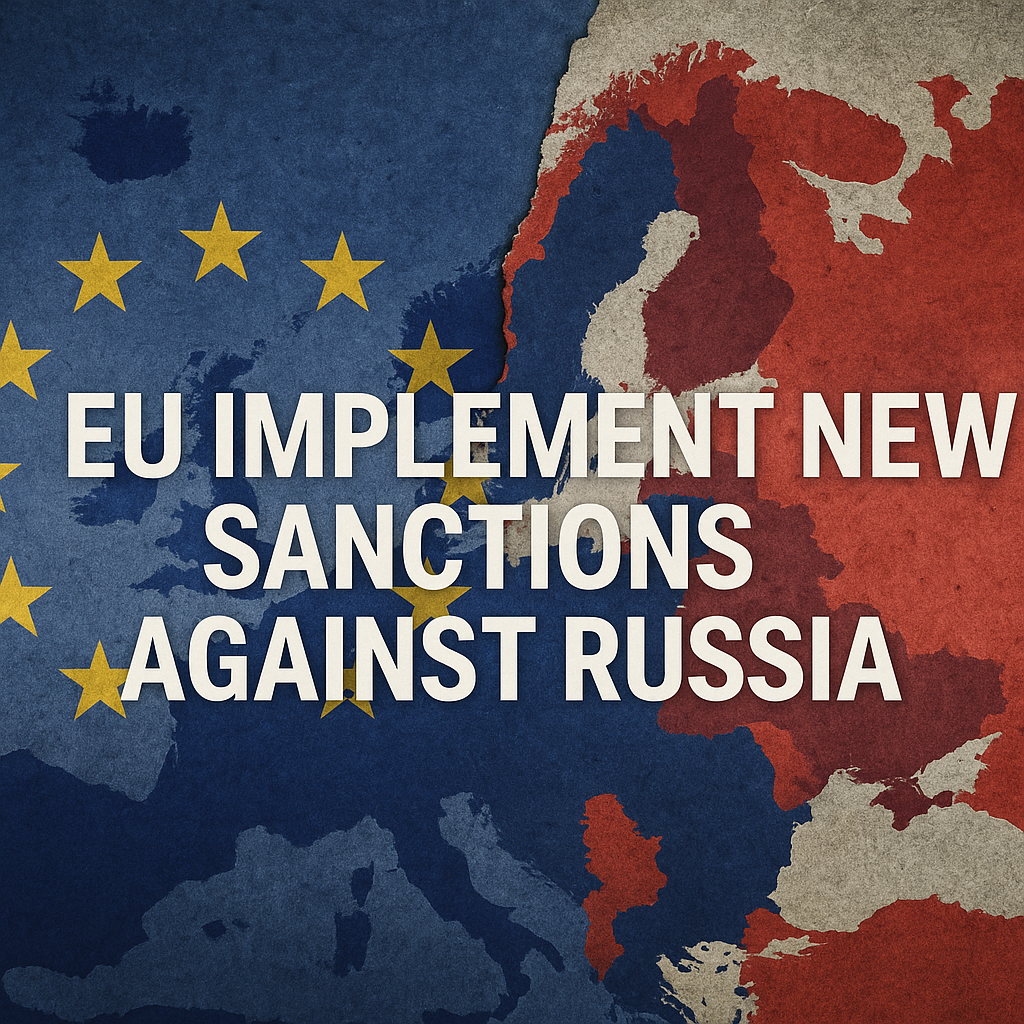
EU Implements New Sanctions Against Russia

EU Implements New Sanctions Against Russia
The European Union (EU) has initiated a new round of sanctions against Russia, reflecting the ongoing tensions stemming from the country’s military actions in Ukraine. These sanctions are part of a broader strategy aiming to hold Russia accountable for its aggression while attempting to minimize the consequences for the European nations themselves.

Understanding the Sanctions
The latest sanctions package from the EU is integral to its response to the ongoing conflict in Ukraine. It includes stringent measures targeting various sectors of the Russian economy, particularly focusing on technology exports, financial transactions, and energy dependencies.


Key Elements of the Sanctions
1. Targeted Sectors:
– Energy: The sanctions aim to curb Russia’s fossil fuel revenues, which are crucial for funding its military operations. By restricting imports of certain oil products and limiting trade in other energy resources, the EU hopes to weaken Russia’s economic foundation.
– Finance: Measures have been implemented to limit Russian banks’ access to EU markets. This includes prohibiting transactions with specific financial institutions, thus tightening Russia’s financial landscape and restricting its capacity to obtain foreign investments.


2. Technology Export Controls:
The EU has also introduced bans on exporting certain goods, including advanced technology used in military and dual-use applications. This aims to inhibit Russia’s capability to modernize its military equipment and infrastructure.
3. Designations and Restrictions:
Numerous individuals and entities close to the Kremlin have been designated for targeted sanctions, which entail asset freezes and travel bans. These restrictions are designed to influence those in power and affect their decision-making capacities directly.
Diverse Perspectives on the Sanctions
Supportive Views
Supporters of the sanctions argue that they play a critical role in demonstrating unity among EU member states and reinforcing a collective stance against Russia’s actions. As stated by officials in several EU nations, such measures are essential to signal that aggression will have consequences. “By implementing these targeted sanctions, we are sending a clear message to Moscow that its actions will not go unanswered,” noted a spokesperson from the European Council.
Additionally, proponents contend that these sanctions, when applied consistently, can effectively weaken Russia’s economy over time. By reducing revenues from key sectors and cutting off access to crucial technologies, the EU can leverage substantial pressure on the Kremlin to alter its course in Ukraine.
Critical Perspectives
Conversely, critics of the sanctions caution that they could unintentionally harm the EU’s own economies while failing to achieve their intended goals. Some analysts suggest that Russian leaders may be insulated from the economic impacts, as they can adapt over time and find new markets for their exports outside the EU.
Additionally, there are concerns over the economic consequences these sanctions pose for EU member states. Nations with significant trade relationships with Russia, particularly those dependent on gas and oil imports, may face higher energy costs and supply chain disruptions. For instance, countries like Germany and Italy have expressed apprehensions about the potential for energy crises resulting from reduced Russian supplies.
The Uncertain Future of Sanctions
Despite these differing viewpoints, a palpable consensus exists regarding the necessity for ongoing dialogue and potential adjustments to the sanctions framework. As the situation in Ukraine evolves, it remains imperative that the EU continuously evaluates the effectiveness of its sanctions and their broader implications.
Notably, some policymakers advocate for more comprehensive strategies that encompass diplomatic efforts alongside economic measures. They argue that isolating Russia entirely could lead to a more adversarial stance and possibly escalate tensions further, suggesting that a balanced approach is crucial.
Conclusion
The EU’s new sanctions against Russia illustrate a complex interplay of solidarity, strategy, and national interests. While aimed at curbing aggression, these measures also raise significant questions about economic impacts on EU member nations and the ability of the sanctions to prompt policy changes in Moscow.
As this situation continues to unfold, stakeholders from various spheres—be it economics, politics, or international relations—will need to keep a close eye on the effectiveness and consequences of these sanctions. The balance between maintaining a firm stance and ensuring stability within the EU will be a delicate one to navigate in this ongoing geopolitical challenge.















