
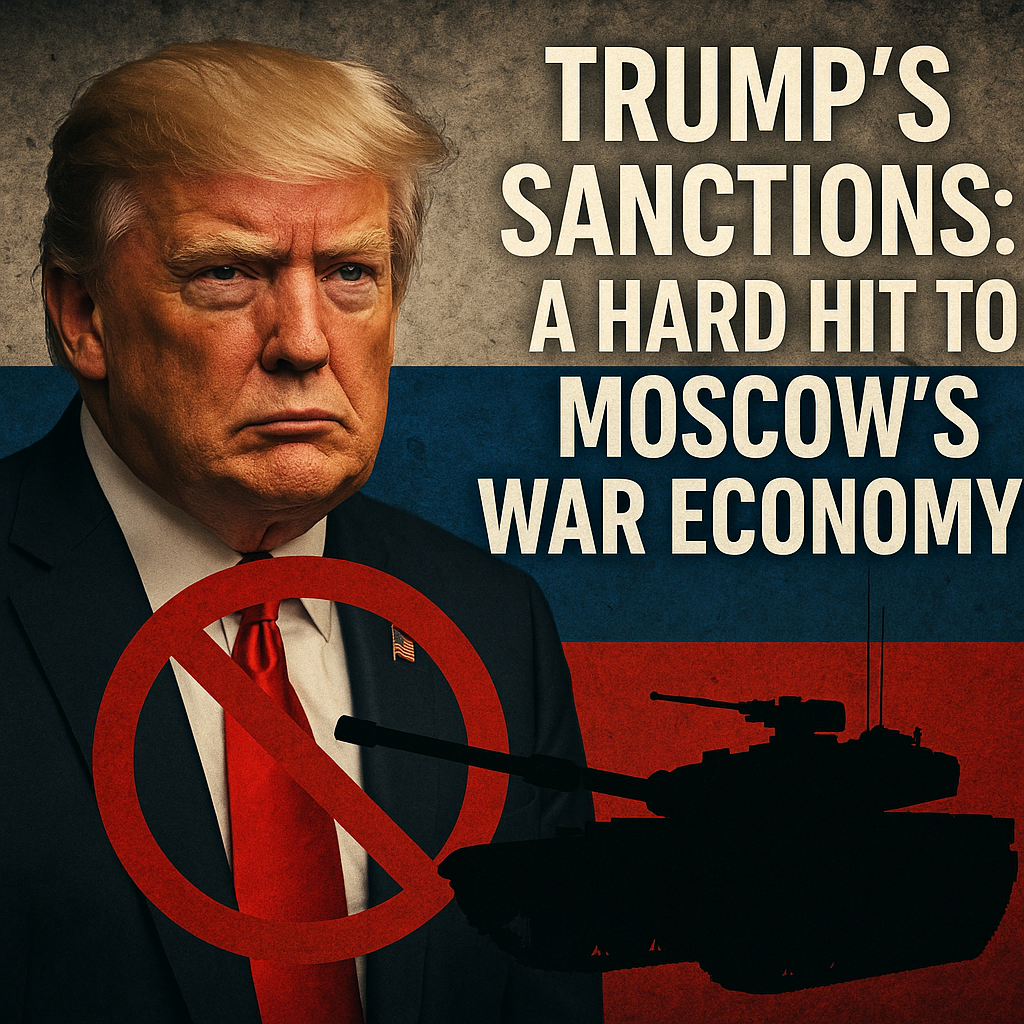
Trump’s Sanctions: A Hard Hit to Moscow’s War Economy

Trump’s Sanctions: A Hard Hit to Moscow’s War Economy
Former President Donald Trump’s recent sanctions targeting Russia have been described as more than just symbolic gestures; they represent a substantial economic blow to Moscow amid rising tensions in Eastern Europe. These measures have sparked significant discussions about their effectiveness and broader implications for the ongoing geopolitical landscape.

The Nature and Intent of Sanctions
The sanctions imposed by Trump aim to challenge Russia’s ambitions and support for military operations in Ukraine. Analysts argue that these restrictions on key sectors of the Russian economy—especially oil and gas—along with targeted penalties against specific individuals, signal a more aggressive U.S. posture towards Moscow. According to a report from Sky News, these sanctions are “no slap on the wrist; they’re a punch to the gut of Moscow’s war economy.” This rhetoric underscores the seriousness of the sanctions, indicating their intended purpose: to hinder Russia’s military capabilities and its economic underpinnings.


Conversely, critics within Russia view these sanctions not merely as punitive measures but as provocations. RT’s coverage reflects a sentiment of resilience, suggesting that the sanctions may strengthen the Russian government’s resolve against perceived Western intrusions. This viewpoint emphasizes a rallying effect, whereby public sentiment may align more closely with nationalistic ideals, thus complicating the effectiveness of the sanctions.


Economic Fallout for Russia
The economic ramifications of Trump’s sanctions extend deep into the Russian economy, primarily affecting industries crucial to its financial stability. Immediate impacts have been felt in the oil sector, which constitutes a significant portion of Russia’s export revenue. As Al Jazeera reports, the sanctions restrict access to advanced technologies and foreign markets, making it increasingly challenging for Russia to maintain its oil production levels.
In addition to the energy sector, the sanctions target finance and technology industries, drastically limiting Russia’s ability to conduct international business. The cumulative effect is expected to lead to a contraction in Russia’s GDP and exacerbate inflation rates, which were already problematic due to pre-existing conditions exacerbated by the pandemic.
Diverse Perspectives on Effectiveness
While there is consensus about the potential immediate impacts, opinions diverge significantly regarding the long-term effectiveness of the sanctions. Proponents argue that economic pressure will force a recalibration of Russia’s foreign policy, potentially leading to diplomatic resolutions. The sanctions can isolate Russia from essential global resources, forcing it to reconsider its military aggressions.
On the other hand, skeptics highlight that history shows sanctions often fail to achieve their intended outcomes. For instance, the long-standing sanctions against Iran have arguably only entrenched resistance against U.S. policies rather than eliciting compliance. Critics of the current sanctions might assert that, instead of weakening the Russian administration, such measures could reinforce anti-Western sentiments among the populace, potentially rallying them around the flag rather than fostering dissent against their leaders.
Conclusion: A Complex Impact
As the U.S. pushes forward with its foreign policy strategy regarding Russia, the nuances surrounding Trump’s sanctions will be pivotal to watch. While they represent a significant attempt to weaken Moscow’s operational capabilities, the multifaceted nature of international relations and domestic responses within Russia complicate a straightforward assessment of their potential impact.
In sum, Trump’s sanctions indeed pose a hard hit to Russia’s war economy, but their ultimate efficacy remains murky. As global dynamics continue to evolve, the overall success of these sanctions will depend not only on the economic metrics but also on the geopolitical responses they elicit. The road ahead is fraught with uncertainties, but one thing remains clear: the implications of these economic measures will be felt for years to come, reshaping the international dialogue around sanctions and their role in global peacekeeping efforts.















