
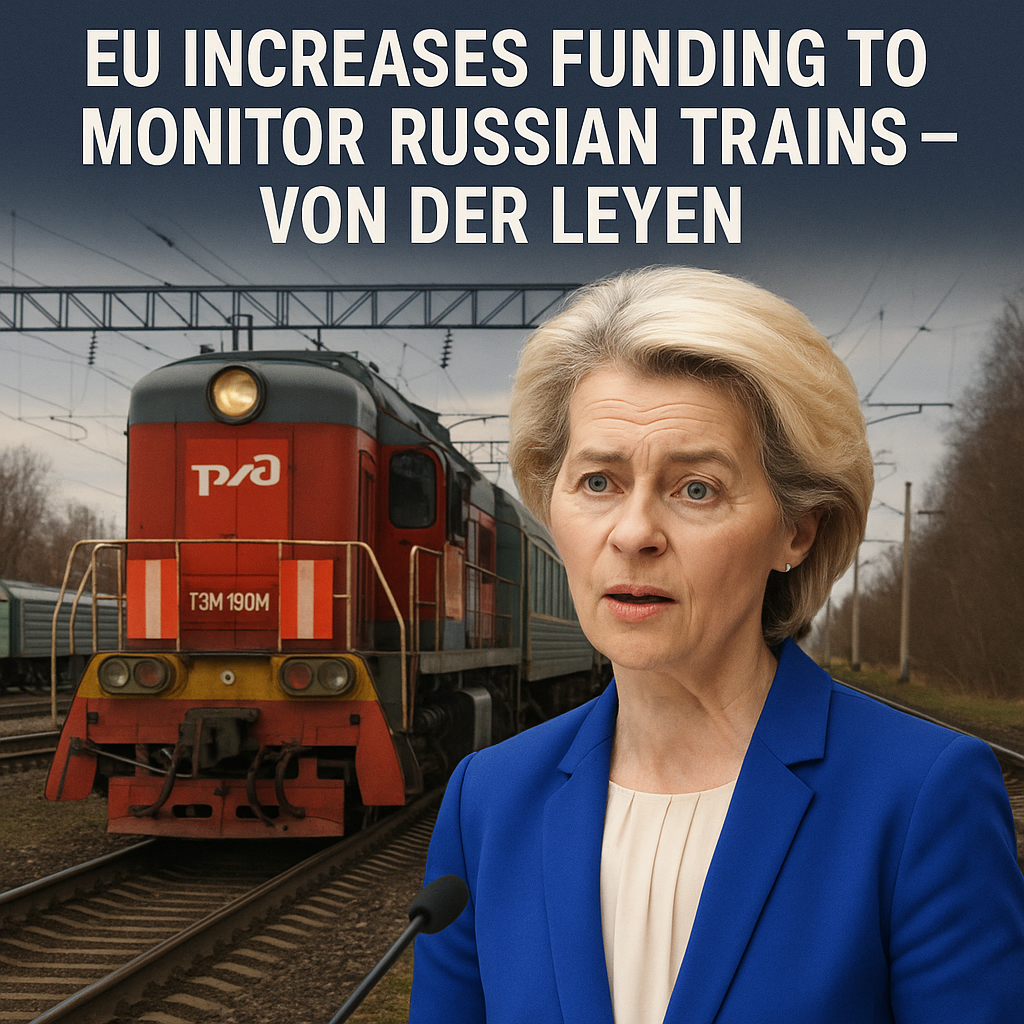
EU Increases Funding to Monitor Russian Trains – von der Leyen

EU Increases Funding to Monitor Russian Trains – von der Leyen
In a strategic move aimed at enhancing security and oversight in Eastern Europe, the European Union has significantly increased its funding allocated for monitoring Russian train movements, particularly those heading towards Kaliningrad. This decision, spearheaded by EU Commission President Ursula von der Leyen, highlights the EU’s enduring commitment to maintaining vigilance regarding its eastern borders amid rising geopolitical tensions.

The Context of Increased Surveillance
The funding boost comes against a backdrop of heightened concerns regarding Russia’s military activities, especially following the ongoing conflict in Ukraine. The EU’s decision underscores a broader strategy of fortifying national and collective defense against perceived threats. Von der Leyen noted that this initiative is part of a multifaceted approach to ensuring that EU member states are prepared and informed about potential risks emanating from Russian territories.


Assessment of Security Implications
The move to monitor Russian trains is significant for several reasons:


1. Geopolitical Tensions: As the relationship between Russia and the EU strains further, monitoring logistics that could support military movements becomes essential. This is particularly relevant given the historical context of Kaliningrad as a military stronghold for Russia.
2. Information Gathering: Enhanced surveillance capabilities could facilitate more informed decision-making among EU member states regarding security protocols and military readiness.
3. Regional Stability: By ensuring a closer watch on train movements, the EU aims to mitigate the risks of sudden military actions that could destabilize the region.
However, while some view this as a logical and necessary response, others raise concerns about escalating tensions further.
Diverse Perspectives on the Initiative
Support for Increased Surveillance
Supporters of the increased funding argue that it is a proactive measure essential for safeguarding the EU’s borders. Reports from various sources highlight that this initiative aligns with the EU’s broader defense posture. According to Al Jazeera, such measures are not merely reactive but part of a comprehensive strategy to deter Russian aggression.
Furthermore, a piece from Sky News emphasizes that monitoring infrastructure could be crucial for swiftly detecting any unauthorized military mobilizations, thereby allowing for timely responses.
Criticism and Concerns
Conversely, critics argue that such escalations could incite provocation rather than peace. The focus on monitoring could be seen as an escalation of military rhetoric and an invitation for retaliatory actions from Russia. An analysis from RT points out that while increased monitoring is intended to enhance security, it might also contribute to a cycle of tension that could lead to unintended consequences.
There’s also the concern about how this increased funding will be allocated and managed. Critics urge transparency and a clear framework for how the data collected will be used, emphasizing that oversight should not breach the sovereignty of member states or infringe on privacy rights.
Balancing Security and Diplomacy
The balance between ensuring security and fostering diplomatic relationships with Russia remains a challenging undertaking for the EU. The decision to increase funding for monitoring trains shows a clear focus on the former, but also raises essential questions about how this may impact future diplomatic engagements. There exists a fine line between vigilance and provocation, and many are watching closely to see how EU officials navigate this complex landscape.
Public Opinion and Political Dynamics
Public response within EU member states shows a divide. In countries sharing direct borders with Russia, support for increased funding and surveillance is strong, reflecting a heightened sense of vulnerability. In contrast, other EU nations advocate for a more diplomatic approach, favoring dialogue over military preparedness.
Political dynamics within the EU may complicate the issue further, as member states seek to balance their national security needs with collective EU policies. An increasing number of EU citizens are calling for a unified response that does not solely rely on military oversight but also promotes active dialogue with Russia.
Conclusion: A Complex Path Forward
The EU’s decision to increase funding for monitoring Russian trains reflects a growing urgency to address security concerns that are pivotal in today’s geopolitical climate. While the initiative is inherently aimed at enhancing safety, it also poses challenges regarding the balance of military vigilance and diplomatic relations with Russia.
As the situation evolves, the effectiveness and implications of such a strategy will continue to be scrutinized. The complexities surrounding this initiative highlight the intricate nature of international relations—a tapestry woven from security needs, public opinion, and diplomatic strategies. The EU stands at a crossroads, and how it navigates this path will shape not only its own security landscape but also the broader geopolitical balance in the region.















