
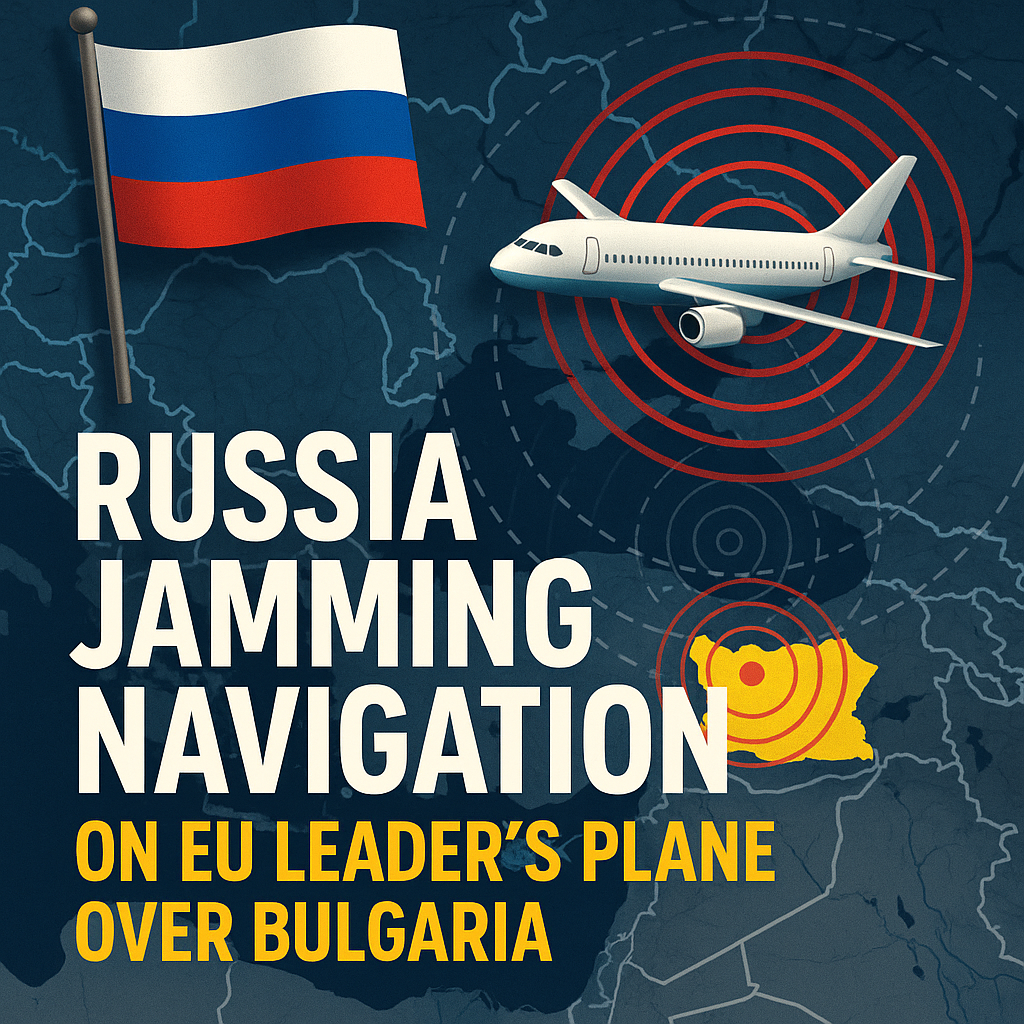
Russia Jamming Navigation on EU Leader’s Plane over Bulgaria

Russia’s Suspected Jamming of Navigation Systems on EU Leader’s Plane Over Bulgaria
Recently, a significant incident has come to light involving Russia’s alleged interference with an EU leader’s aircraft. This action raises serious concerns about aviation safety and international relations, especially given the geopolitical tensions surrounding the region.

Overview of the Incident
Reports indicate that an EU leader’s plane experienced navigation jamming while flying over Bulgaria. This phenomenon is not new, but its direct application against officials from EU nations raises alarms about the potential for escalating conflicts. According to Al Jazeera, experts suspect that this maneuver was deliberate, intended to disrupt the flight and signal discontent with EU stances against Moscow.


The interference reportedly began during the flight’s approach to Bulgaria, leading to emergency communications and a change in course. Aviation safety experts caution that incidents of this nature could have dire consequences, not only for the targeted aircraft but for broader air traffic in the area.


Analysis of Navigational Jamming
Navigational jamming involves disrupting GPS signals, which can mislead aircraft about their locations and potentially lead to dangerous situations. The history of such tactics includes examples from military operations and espionage, where the intention is to create confusion and assert dominance.
In discussions around this incident, a theme of increasing hostility toward Europe from Russia has emerged. As showcased by RT, Moscow has dismissed the incidents, suggesting that the jamming could be a result of technical malfunctions rather than a coordinated action against the EU. This contrast in perspectives underscores the complexities of interpreting events that could have broader geopolitical implications.
The Broader Implications for EU-Russia Relations
The incident over Bulgaria is symptomatic of larger geopolitical dynamics in the region. With ongoing tensions fueled by the Ukraine conflict, the stakes are particularly high. Analysts suggest that this event could mark a notable escalation in confrontations between Russia and EU nations. The European Union has condemned such actions, viewing them as aggressive provocations that threaten not only individual states but the collective security of the bloc.
Diverging Perspectives on Safety and Security
While some experts emphasize the gravity of the situation, warning that such tactics could unsafe air travel and lead to international incidents, others argue that similar accusations have been exchanged back and forth between nations without concrete evidence. This lack of consensus creates uncertainty about the future of diplomatic engagement and the security measures nations might need to adopt in response.
1. Safety Concerns: The safety of air travel is paramount. Navigational jamming poses risks not only to specific aircraft but can cause panic in the aviation system as a whole. Aviation authorities worldwide may need to reassess their monitoring and response protocols to deal with potential threats like these more effectively.
2. Diplomatic Fallout: If Russia is indeed behind these actions, the EU may need to strengthen its diplomatic measures and consider robust responses to what could be viewed as aggressive provocations. Some analysts suggest that the EU should ramp up sanctions or initiate joint military exercises with NATO allies as a show of solidarity.
3. Repercussions for Aviation Technology: If navigational jamming becomes a more widely employed tactic, it may force aviation industries to innovate and adapt technologies designed for safer operations. Consideration of alternative navigation systems could become a priority, taking into account the increasing frequency of cyber warfare tactics.
Conclusion: Navigating Tensions Wisely
As the dust settles on this troubling incident, one clear takeaway is the need for vigilance in international airspace. The jamming of an EU leader’s plane is more than a technical issue; it epitomizes the escalating tension between Russia and Western nations. Whether motivated by military strategy or miscommunication, the implications of this incident are profound.
While immediate responses from the EU and NATO will likely be measured, the necessity for a sophisticated dialogue about safe air travel in contested airspace has never been clearer. Moving forward, both sides appear to have a responsibility to engage constructively, lest misunderstandings spiral into unnecessary hostility. The evolving dynamic suggests a future where aviation, national security, and diplomatic relations must be navigated with utmost care and astute awareness of regional complexities.















