
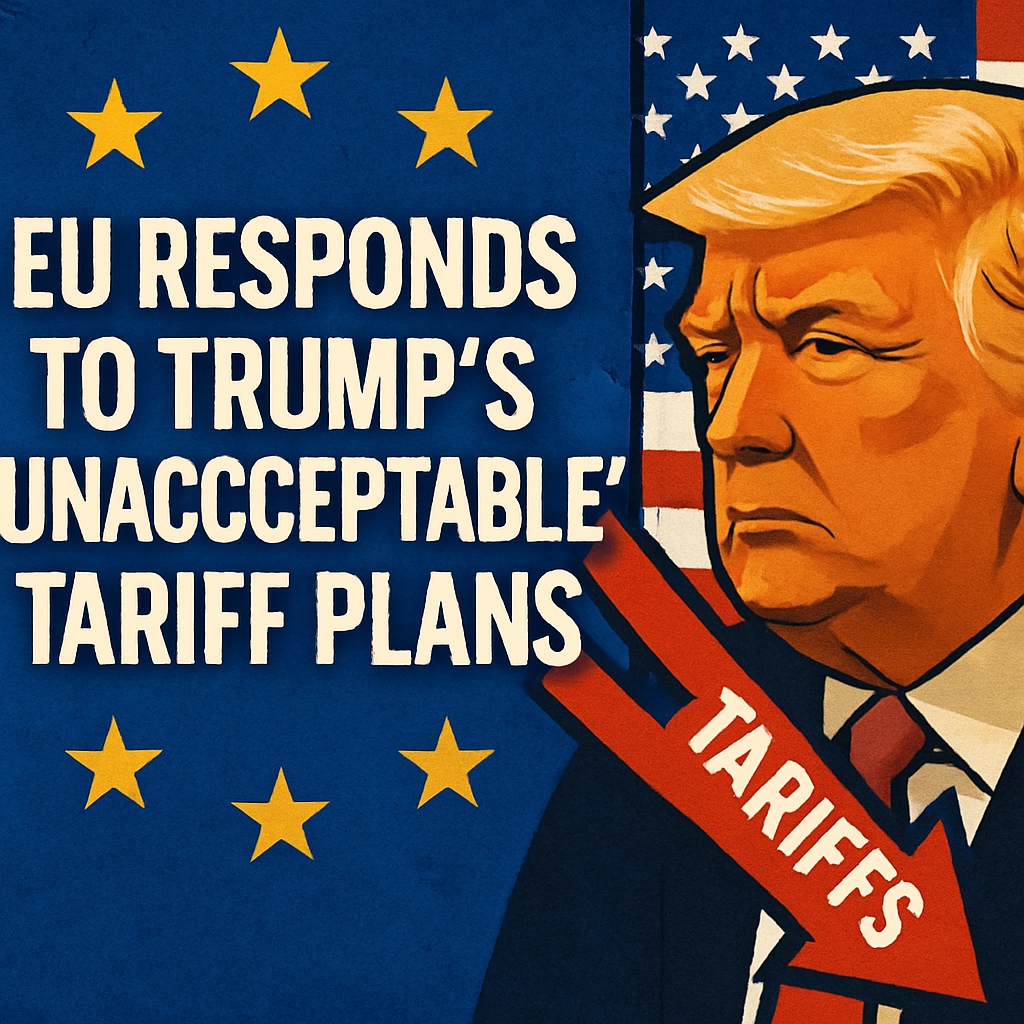
EU Responds to Trump’s ‘Unacceptable’ Tariff Plans

EU Responds to Trump’s ‘Unacceptable’ Tariff Plans
The European Union (EU) has expressed strong opposition to former President Donald Trump’s proposed tariff plans, deeming them “unacceptable.” This contentious issue is indicative of broader trade relationships and reflects ongoing tensions in international commerce.

Understanding the Trade Landscape
Trump’s proposed tariffs, aimed primarily at certain imports, could raise significant concerns for global markets. Import tariffs are taxes imposed on foreign goods, making them more expensive and thus aiming to protect domestic industries. However, such measures can lead to retaliatory actions, complicating trade relations.


The EU’s Firm Stand on Tariffs
In response to Trump’s announcements, EU officials articulated their commitment to defending their interests against what they term “unfair trade practices.” One senior EU official stated, “We will not sit idly by while our interests are threatened.” This sentiment aligns with the EU’s long-standing policy to promote free trade and ensure a level playing field among nations.


Moreover, the EU’s reaction is underscored by prior experiences with tariffs and trade wars. After the initial tariffs imposed by Trump during his presidency in 2018, the EU faced challenges in its export markets, particularly in sectors like agriculture and automotive. The 2018 situation saw the EU imposing retaliatory tariffs on iconic American products, such as bourbon and motorcycles, sending waves through both economies.
Mixed Reactions from Economic Analysts
Economic experts are divided on the potential impact of Trump’s tariff plans. Some argue that imposing tariffs could lead to increased costs for consumers and hinder economic recovery post-pandemic. Others suggest that protecting domestic industries may have short-term benefits, allowing American manufacturers to gain a more competitive edge.
However, the majority tend to agree on the potential for diplomatic strain. As noted by various analysts, if the EU decides to retaliate with tariffs of its own, it could escalate into a more extensive trade war, reminiscent of the 2018–2019 trade conflict. In contrast, some voices from within the EU argue for restrained responses, suggesting that dialogue might yield better outcomes than further escalation.
Potential Implications for Global Trade
The situation is not just a bilateral issue between the US and the EU; it has far-reaching implications for global trade dynamics. Analysts have pointed out that a trade war could disrupt supply chains and lead to higher prices on a variety of goods. The interconnected nature of global markets means that tariffs imposed by one country can reverberate across the world, affecting even those nations with no direct stake in the dispute.
Research indicates that global trade growth has already entered a precarious phase, partly due to the ongoing uncertainties surrounding regulatory changes and geopolitical tensions. A revived trade conflict could stymie this growth further, impacting jobs and livelihoods worldwide.
Conclusion: Navigating Uncertain Waters
The EU’s robust response to Trump’s tariff plans reflects a deeply rooted understanding of the stakes involved in international trade. While there’s a consensus on the need to protect national interests, the methodologies employed—tariffs vs. diplomacy—remain a point of contention among economists and policymakers alike.
As the global community watches these developments closely, it becomes clear that navigating these complex waters will require strategic foresight and a commitment to collaborative solutions, rather than confrontational tactics. The hope is that both the EU and the US recognize the value of mutual cooperation over discord, paving the way for a more stable and prosperous trade environment.
As circumstances evolve, it’s imperative for stakeholders—from policymakers to consumers—to remain engaged and informed about these crucial developments in international trade. The implications of tariff policies extend well beyond borders, affecting the economic fabric that connects nations today.















