
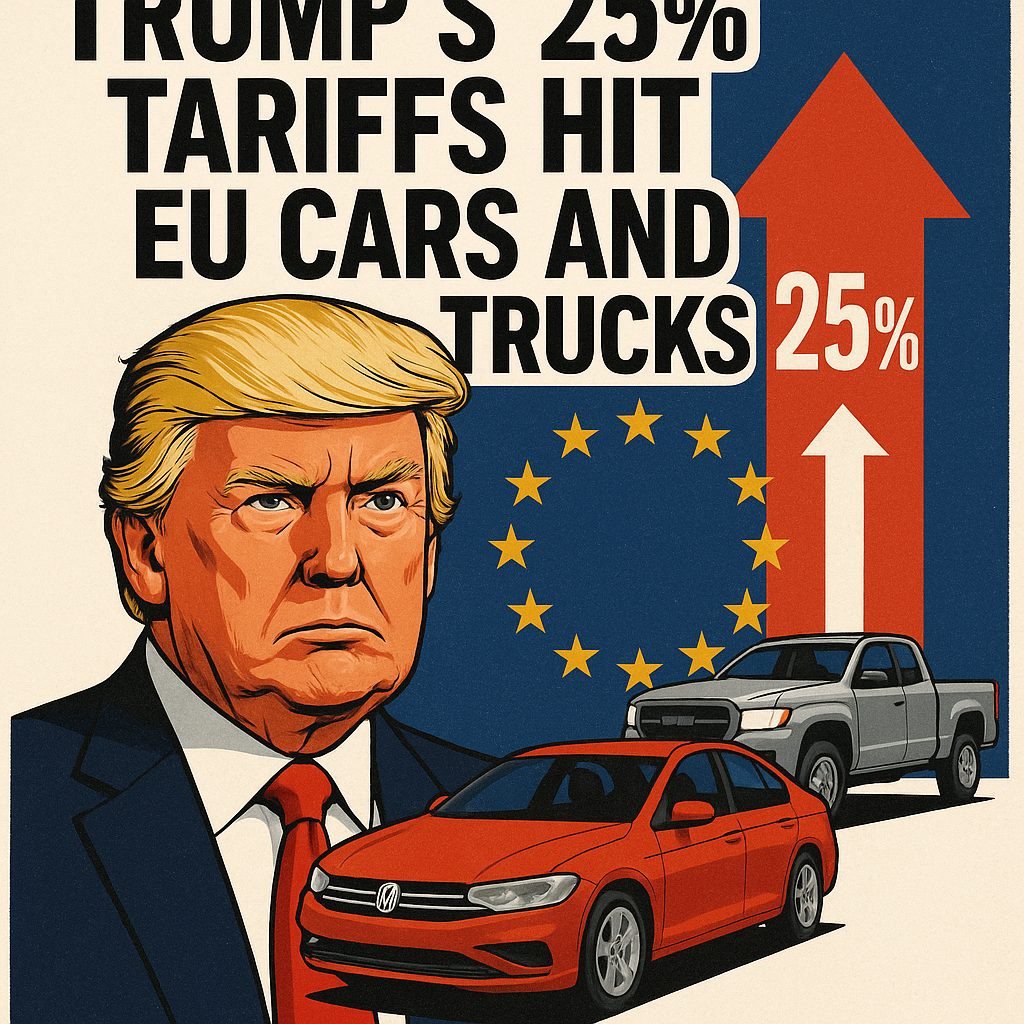
Trump’s 25% Tariffs Hit EU Cars and Trucks

Trump’s 25% Tariffs Hit EU Cars and Trucks: A Complex Economic Landscape
The announcement of a 25% tariff on European Union cars and trucks under former President Donald Trump’s administration has sent ripples across the global automotive landscape. This policy decision sheds light on the intricate web of trade relationships and economic strategies that characterize today’s international market.

Understanding the Impacts
Why the Tariffs?
The imposed tariffs were rooted in long-standing grievances over trade imbalances and perceived unfair practices. According to sources such as Al Jazeera, Trump claimed that European entities benefitted disproportionately from trade with the U.S., particularly in the automotive sector. This sentiment aligns with a broader agenda focused on “America First,” wherein domestic production and jobs were prioritized over international trade agreements.


In stark contrast, critics have pointed out the potential backlash these tariffs could generate. As articulated by various analysts, these duties may lead to increased car prices for American consumers, subsequently stifling the market. A report from RT emphasized that these tariffs might not only impact trade relations with the EU but also strain the automotive supply chain, hurting both American manufacturers who rely on imported parts and consumers seeking affordable vehicles.


Diverse Reactions
The reaction to Trump’s tariff announcement has been multifaceted. Supporters argue that tariffs protect American jobs and stimulate local production, with industry proponents heralding them as a necessary step to address unfair competition. However, experts warn of the unintended consequences such policies can have on innovation and consumer choice. A significant point raised by Sky News involves the risk of retaliatory measures from the EU, which could further escalate into a damaging trade war.
Additionally, the European Commission has expressed strong opposition, signaling potential counter-tariffs targeting American goods. This tug-of-war could destabilize an already intricate trade environment, leading to a scenario where consumer interests and international relations hang in the balance.
The Broader Economic Consequences
Implications for the Global Market
Economically, the tariffs may shift consumer behavior significantly. With rising prices for imported European vehicles, American consumers could pivot towards domestically produced models, thereby altering market demand. However, this shift may not provide a full-fledged solution, as domestic manufacturers might struggle to meet this unexpected surge in demand, leading to production bottlenecks.
There is also a question of employment. While proponents of the tariffs posit that they will revitalize domestic jobs, detractors highlight data suggesting that tariffs can lead to job losses in industries reliant on global supply chains. For instance, the auto parts sector—which includes a considerable number of jobs—could experience layoffs, impacting workers who may not directly benefit from tariffs.
Consumer Sentiment and Market Dynamics
Consumer sentiment plays a crucial role in navigating this new landscape. Surveys indicate a mixed response among American consumers, with some expressing concern over the potential price surge for vehicles while others support the tariffs for the sake of national pride and job preservation. This dichotomy complicates the overall narrative, illustrating a population divided on the merits and drawbacks of such economic decisions.
Moreover, the evolving dynamics between traditional automotive powerhouses and emerging markets mean that other nations are watching closely, potentially adjusting their strategies based on the outcomes witnessed in U.S.-EU trade relations. For instance, countries like Japan and South Korea may see this as an opportunity to capitalize on the shifting automotive landscape if EU automobiles become less competitive due to tariffs.
Conclusion: Navigating Uncertainty
The 25% tariffs imposed by Trump on EU cars and trucks represent just one facet of a complex and evolving trade strategy that raises more questions than it answers. As both the U.S. and the EU prepare for possible retaliation, the implications of these tariffs will reverberate through the global economy.
While supporters hail the move as essential for protecting American interests, critics caution against its potential to ignite a trade war that could undercut job security in various sectors. As both sides grapple with the consequences of such economic measures, the landscape remains fraught with uncertainty, highlighting the intricate dance of global trade politics.
In this evolving narrative, it becomes imperative for policymakers to balance national interests with the realities of a connected, interdependent world. As the situation unfolds, stakeholders must remain vigilant, prepared to adapt to a landscape shaped by both opportunity and challenge.















