
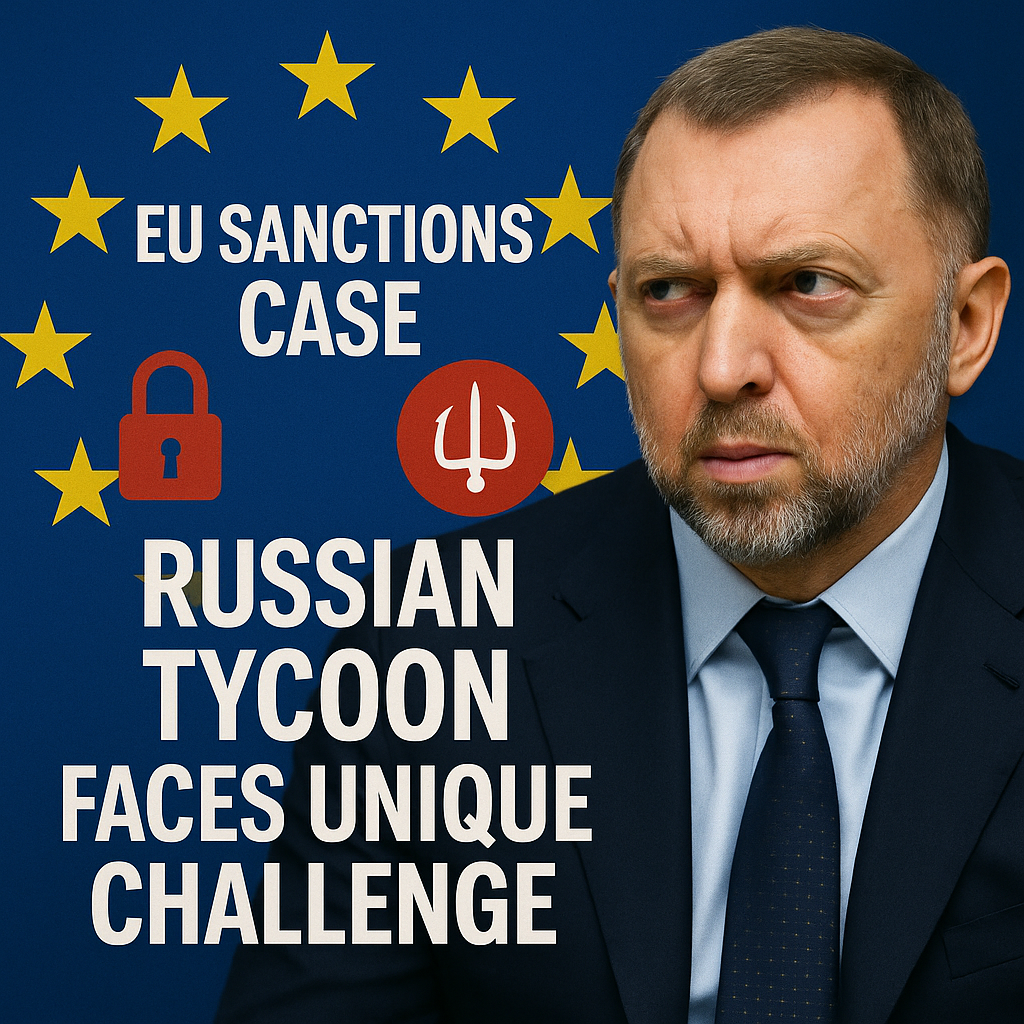
EU Sanctions Case: Russian Tycoon Faces Unique Challenge

EU Sanctions Case: Russian Tycoon Faces Unique Challenge
The ongoing EU sanctions against Russia have become a pivotal issue in global geopolitics, particularly highlighted by a unique court case involving a prominent Russian tycoon. This case not only indicates the complexities surrounding sanctions but also raises profound questions about international law, human rights, and the integrity of European judicial processes.

Background of the Sanctions
Since the onset of the conflict in Ukraine, the European Union has imposed extensive sanctions against a spectrum of Russian individuals, institutions, and sectors. These sanctions aim to exert economic pressure on Russia and curtail the funding for its military operations. In this context, the case of the Russian tycoon—whose identity remains somewhat ambiguous due to ongoing legal proceedings—presents a significant test for the EU’s legal frameworks and decision-making.


As reported by RT, the case represents what they describe as a “landmark” moment in sanctions enforcement, showing how the judiciary can serve as a battleground for issues of international accountability. This tycoon has challenged the EU’s sanctions in court, arguing that the measures imposed lack sufficient evidence and fail to meet the stringent requirements for such actions under European law.


The Judicial Challenge
Legal Grounds for Resistance
The tycoon’s legal argument hinges on the assertion that the EU has not provided robust evidence linking him to activities that would justify sanctions under international law. Al Jazeera notes that this challenge highlights a significant gap between the political motivations driving such sanctions and the evidential standards required in judicial contexts. The case could lead to a precedent that might affect how future sanctions are operationalized and challenged.
The primary legal question revolves around the balance between state sovereignty and individual rights. Proponents of sanctions argue that they are essential tools in holding individuals accountable for their country’s actions, while critics highlight the importance of due process and fair trial rights. In the age of global governance, does the end justify the means?
Implications for EU Policy
Should the court rule in favor of the tycoon, it could prompt a re-evaluation of the EU’s current sanctions framework. Sky News has expressed that such a verdict may not only embolden other sanctioned individuals to challenge their penalties but also raise questions about the legitimacy of sanctions imposed without judicial oversight. This could lead to calls for reform within the EU, prioritizing transparency and judicial scrutiny in sanction decisions to align with European values of fairness and justice.
Diverse Perspectives
While the case has drawn significant attention, opinions on its potential outcomes are polarized. Supporters of the sanctions argue that they serve as critical levers of pressure against adversaries’ actions, framing them as necessary for international peace and security. On the other hand, legal experts fear that overly broad or politically motivated sanctions infringe upon individual rights, potentially fostering an environment where political dissent is stifled, not only in Russia but across various regimes that could advocate similar policies in return.
Both sides of the argument share central concerns about the rule of law, yet emphasize different aspects. Proponents worry about the effectiveness of sanctions without sufficient consequences, while critics caution against the risks of institutional overreach and the erosion of judicial independence.
Conclusion: A Complex Landscape
Ultimately, the EU sanctions case involving the Russian tycoon serves as a microcosm of the broader geopolitical conflicts and legal quandaries that dominate current international relations. It illustrates the delicate interplay between justice, politics, and economic strategy.
As the legal proceedings unfold, the world watches closely, not only for the outcome but for the potential ramifications on how sanctions are instituted and challenged in the future. The unfolding complexity of this case illustrates that when international law and geopolitical interests collide, the resulting landscape can often be murky and contentious. This uncertainty reflects the ongoing challenges facing policymakers, legal experts, and affected individuals alike in navigating this multifaceted issue.
With sanctions continuing to shape global politics, it remains crucial to uphold the principles of justice and due process. The balance between enforcing accountability and respecting individual rights may very well define the future of international law as we know it.















