
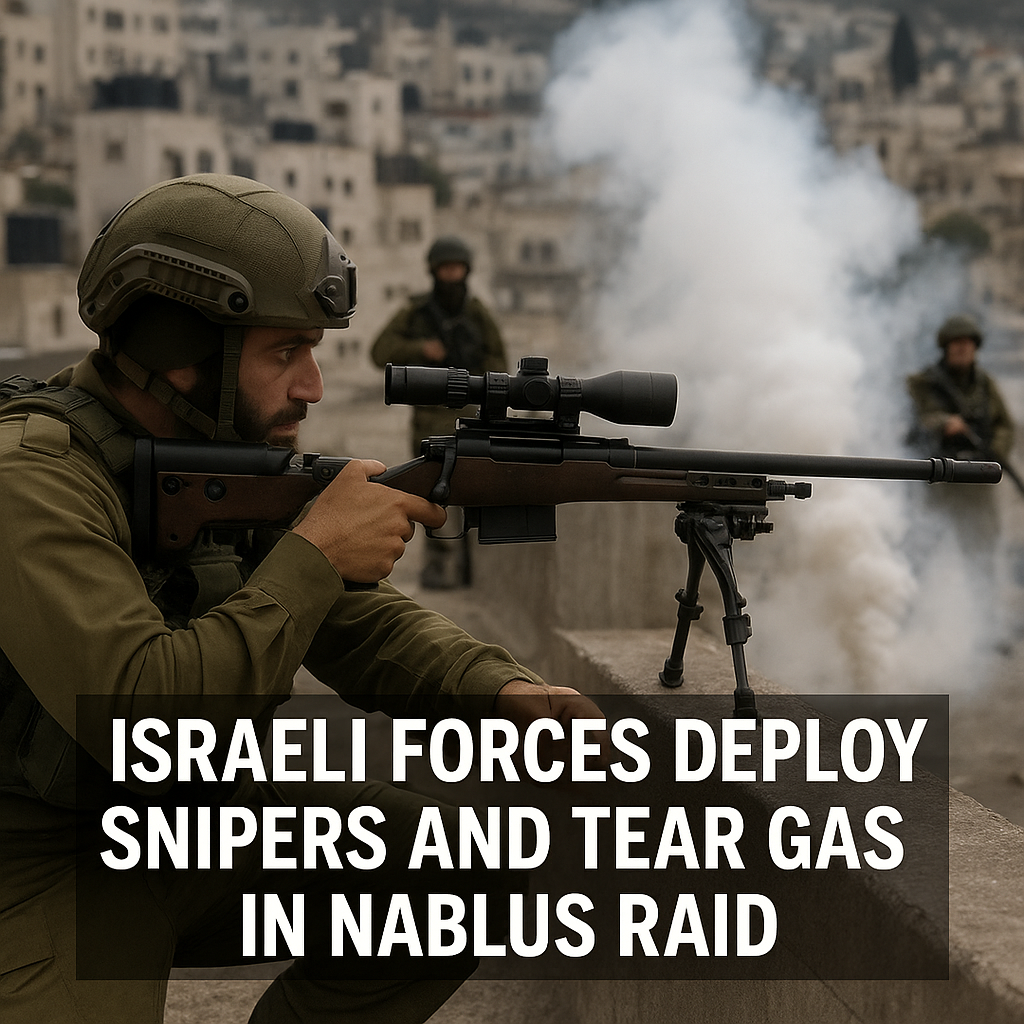
Israeli Forces Deploy Snipers and Tear Gas in Nablus Raid

Israeli Forces Deploy Snipers and Tear Gas in Nablus Raid: A Complex Situation
In recent developments, Israeli forces have deployed snipers and tear gas in a raid on Nablus, a city in the West Bank, sparking intense debate and concern regarding the implications for both Palestinian residents and broader regional stability. This incident highlights the ongoing tensions in the area and the multifaceted nature of the Israeli-Palestinian conflict.

The Context of the Nablus Raid
The Israeli army’s operations in Nablus, which included live gunfire, have been portrayed by the military as necessary responses to rising violence involving rock-throwing and other confrontations. Reports indicate that the incursion is aimed at dismantling alleged radical groups believed to be planning attacks. However, many residents and observers perceive these actions as disproportionate, exacerbating an already tense situation.


Different Perspectives on the Ground
News outlets have presented various viewpoints on the Nablus raid:


– Israeli Government’s Stance: According to officials, the raid is framed as a crucial part of national security efforts. They argue that the Israeli Defense Forces (IDF) are compelled to act against groups that threaten civilians and the state. The military maintains that their actions are justified in the context of maintaining order and security in the region.
– Palestinian Reaction: In stark contrast, Palestinian leaders and citizens express outrage, interpreting the raid as a further example of the systemic violence faced by Palestinians. Eyewitness accounts describe harrowing experiences, with civilians caught in crossfire and extensive property damage. This incident adds to the fears of collective punishment and ongoing oppression.
The schism in how these events are viewed illustrates the complexity of the situation: supporters of the Israeli government argue for the need for decisive action against terrorism, while critics see severe human rights implications that undermine peace efforts.
Impact on Civilians and International Response
The use of tear gas and live ammunition, particularly in heavily populated urban areas, raises significant humanitarian concerns. Activists emphasize that civilians, including women and children, are often the casualties of these military efforts. Reports suggest a notable increase in injuries and hospitalizations during similar raids, which seem to disproportionately affect the local population rather than targeting the alleged perpetrators.
The Broader Implications
International responses to these events have varied. Some Western governments continue to support Israel’s right to defend itself, emphasizing the need for security measures. Conversely, human rights organizations have condemned these actions, arguing that the IDF’s tactics violate international laws related to conflict and civilian safety.
– Calls for Restraint: Many analysts advocate for dialogue over military confrontation, urging both sides to consider the human implications of their actions. As tensions escalate in Nablus, calls for restraint resonate within many communities, hoping for de-escalation rather than cycles of violence.
– Focus on Long-term Solutions: Experts note that military tactics like those used in Nablus can undermine broader peace initiatives. They argue that sustained violence reinforces divisions and makes negotiations for a lasting resolution even more challenging.
In light of these dynamics, it’s evident that any solution demands more than short-term military strategies. The ongoing conflict requires comprehensive diplomatic engagement and a re-evaluation of the approaches taken by both Israeli authorities and Palestinian leaders.
Conclusion: Navigating a Path Forward
The recent raid in Nablus exemplifies the multifaceted challenges of achieving peace in a highly polarized environment. As events unfold, the narratives of all parties involved must be considered critically. Israeli forces assert the necessity of their actions to safeguard national security, while widespread reports of civilian suffering illustrate the human costs of such military strategies.
The road ahead is fraught with complexity. To alleviate tensions and foster an environment conducive to dialogue, stakeholders must prioritize humanitarian considerations and explore pathways that circumvent violence. Only through honest engagement and recognition of each side’s grievances can there be hope for a more peaceful future in the region.















