
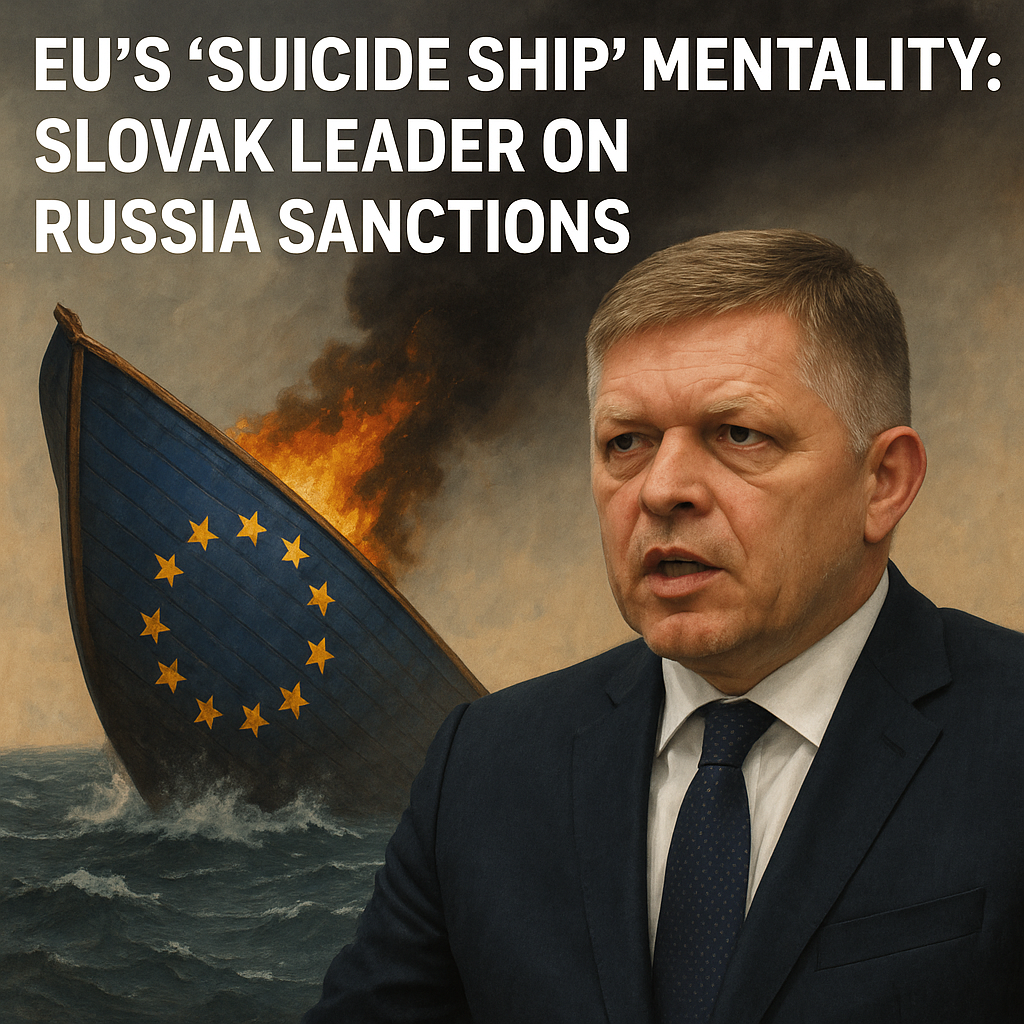
EU’s ‘Suicide Ship’ Mentality: Slovak Leader on Russia Sanctions

EU’s ‘Suicide Ship’ Mentality: Slovak Leader on Russia Sanctions
The recent remarks from Slovakia’s leader regarding the European Union’s approach to sanctions against Russia have ignited significant debate about the effectiveness and consequences of such policies. Specifically, Robert Fico, Slovakia’s Prime Minister, described the EU’s current energy strategy as a “suicide ship,” suggesting that the self-imposed sanctions are leading to more harm than good for member states.

H2: The Case Against Sanctions
Fico’s bold characterization of the EU’s stance raises important questions about the long-term viability of sanctions as a political tool. He argues that the sanctions implemented in response to Russia’s invasion of Ukraine have disproportionately affected EU countries, leading to soaring energy prices and economic strain.


H3: Economic Repercussions
From an economic standpoint, Slovakia and other EU nations have experienced significant disruptions. Rising energy costs could lead to increased inflation and reduced consumer spending, potentially triggering a recession. According to Fico, these issues are exacerbated by the EU’s commitment to remaining steadfast against Russia, even as economic indicators show distress.


Moreover, countries that are more reliant on Russian gas have reported acute challenges. For example, Hungary and Slovakia, with high dependencies on Russian energy supplies, find themselves in particularly precarious situations. Fico insists that the continued imposition of sanctions may not serve the strategic goals of the EU and could lead to internal dissent among member states.
H2: Support for Continued Sanctions
While Fico’s position has garnered attention, it is essential to consider the perspectives of those in favor of maintaining and even strengthening sanctions against Russia. Proponents argue that these sanctions are crucial for upholding international law and deterrence. They emphasize the need to send a clear message to Russia that violations of sovereignty will not be tolerated.
H3: The Long-Term View
Supporters of the sanctions often cite the moral and strategic obligation of the EU to support Ukraine and uphold democratic values. They reiterate that while immediate economic impacts are troubling, long-term benefits, such as supporting Ukraine and potentially undermining Russia’s capacity to wage further aggression, justify these measures.
The prevailing sentiment within this camp is that wavering now could embolden Russia and set a dangerous precedent. Historical precedents are often referenced, highlighting cases where European inaction has led to escalated conflicts.
Weighing Perspectives
The polarized opinions surrounding the EU’s sanctions against Russia reflect the complexity of geopolitical relationships and economic interdependencies. The reality is that while some member states, like Slovakia, grapple with dire economic consequences from sanctions, others view the broader implications of standing united against aggression as paramount.
Concerns voiced by leaders like Fico tap into the fears of energy dependence and economic fragility. Conversely, those advocating for continued sanctions position themselves on a foundation of long-term strategy and ethical responsibility.
As it stands, the EU faces a daunting task: balancing the immediate economic challenges with the imperatives of political resolve and collective security. The discussion around these sanctions goes far beyond simple economic theory; it encapsulates the very essence of European unity and the principles that guide political decisions.
Conclusion
In conclusion, the debate surrounding Slovakia’s perspective on the EU’s “suicide ship” mentality toward Russia sanctions highlights a critical juncture for European politics. With varying opinions shaping the landscape, it becomes imperative for leaders to engage in dialogue that considers both economic ramifications and the moral imperatives at play. Balancing short-term needs with long-term strategic goals will require careful thought and perhaps a reevaluation of current approaches as the situation with Russia evolves. The path forward remains uncertain, but one reality is clear: the implications of these sanctions will continue to resonate across the continent for years to come.















