
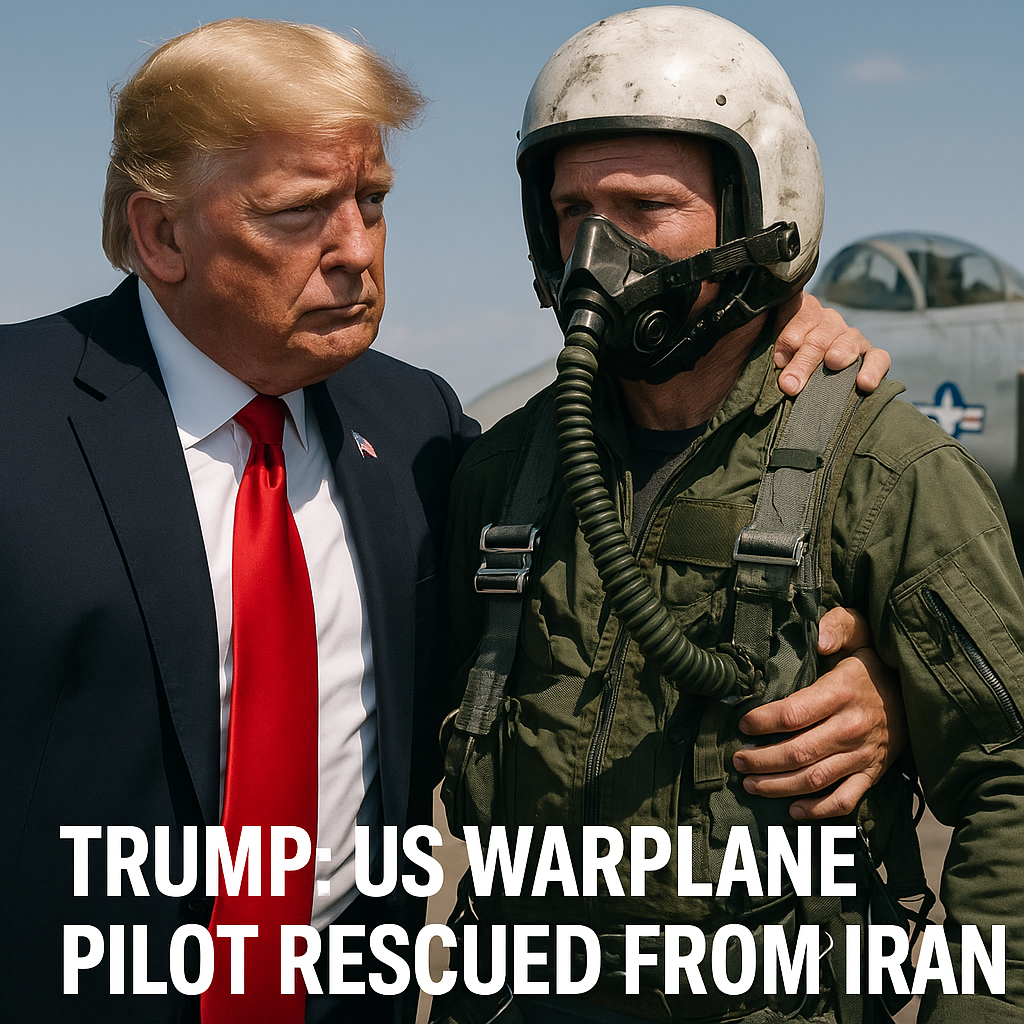
Trump’s US Warplane Pilot Rescued from Iran

Trump’s US Warplane Pilot Rescued from Iran: A Closer Look
The recent rescue of a U.S. warplane pilot from Iran is a significant event that raises questions about international relations, military strategy, and the ever-evolving narrative of conflict in the region. This incident not only highlights the complexities of U.S.-Iran relations but also brings to the forefront the implications of military operations in hostile territories.

The Rescue Operation: A Coordinated Effort
Reports indicate that the pilot, whose identity hasn’t been fully disclosed, was successfully rescued by special operations forces after finding themselves in Iranian territory. Sources from RT suggests that the operation required a meticulous planning approach, showcasing the capabilities of U.S. military strategy in executing such high-stakes rescues.


A Broader Perspective on Military Engagement
While the immediate success of the rescue operation is commendable, various analysts urge caution. Opinions from Al Jazeera point out that such incidents could escalate military tensions between the U.S. and Iran. Tensions in the region are already high due to previous military engagements and political hostilities, making any unilateral action feel like a provocative gesture that may provoke retaliation.


In this context, the danger of miscalculation looms large. The operation could be perceived by Iran as an act of aggression rather than a rescue mission, potentially leading to a tit-for-tat spiral. As one expert noted, “Military operations must always be contextualized within wider diplomatic frameworks to avoid unintended escalation.”
Implications for U.S.-Iran Relations
This incident sheds light on the complexities of U.S.-Iran relations. On one side, supporters of the operation argue that the rescue mission demonstrates U.S. commitment to its military personnel and its operational strength. From Sky News, there is an emphasis on the need for the U.S. to maintain a show of force in a region where U.S. allies, particularly Israel, feel threatened by Iranian influence.
Conversely, critics argue that these military engagements can exacerbate tensions rather than alleviate them. The RT analysis highlights that the Iranian narrative is likely to frame the U.S. rescue as a violation of sovereignty, deepening anti-American sentiment within Iran. This viewpoint advocates for diplomatic resolutions as a preferable path forward, as military interventions could jeopardize long-term geopolitical stability.
The Public Response and Media Characterization
Public opinion is shaped by how media outlets characterize such military actions. The framing by Al Jazeera leans towards highlighting potential risks associated with military action, while Sky News frames the action more positively, emphasizing U.S. strength. This divergence in narrative signifies a broader polarization in media representation of international events.
Furthermore, this incident invites a critical examination of how military success is celebrated versus how the resonating issues of sovereignty and human rights are addressed. The media’s tendency to highlight military triumphs often overshadows the complex ethical and moral implications that these actions entail, such as civilian safety in the affected regions and the long-term consequences for international relations.
The Path Forward: Merging Military Action with Diplomacy
Moving forward, it is imperative to strike a balance between military readiness and diplomatic engagements. As suggested by various experts, the U.S. should engage Iran directly to address underlying tensions, rather than relying solely on military showdowns. Engaging Iran through channels aimed at mutual cooperation—including addressing issues like nuclear enrichment and regional stability—might provide a route to mitigate future crises.
While the rescue operation undoubtedly showcased military prowess, it emphasized the urgency for a comprehensive strategy that integrates both defense and diplomacy. As we reflect on this incident’s ramifications, the question remains: how can nations prioritize peace and foster stability in regions marked by conflict? The answer may lie in a multifaceted approach that respects national sovereignty and prioritizes dialogue alongside defense.
In conclusion, Trump’s recent military operation, while a tactical success, places a spotlight on the intricacies of global diplomacy. As stakeholders transition from immediate successes to long-term solutions, it will be crucial to navigate the delicate balance between military action and diplomacy. Understanding the multifaceted nature of these tensions will be key to shaping a more secure and peaceful future.















