
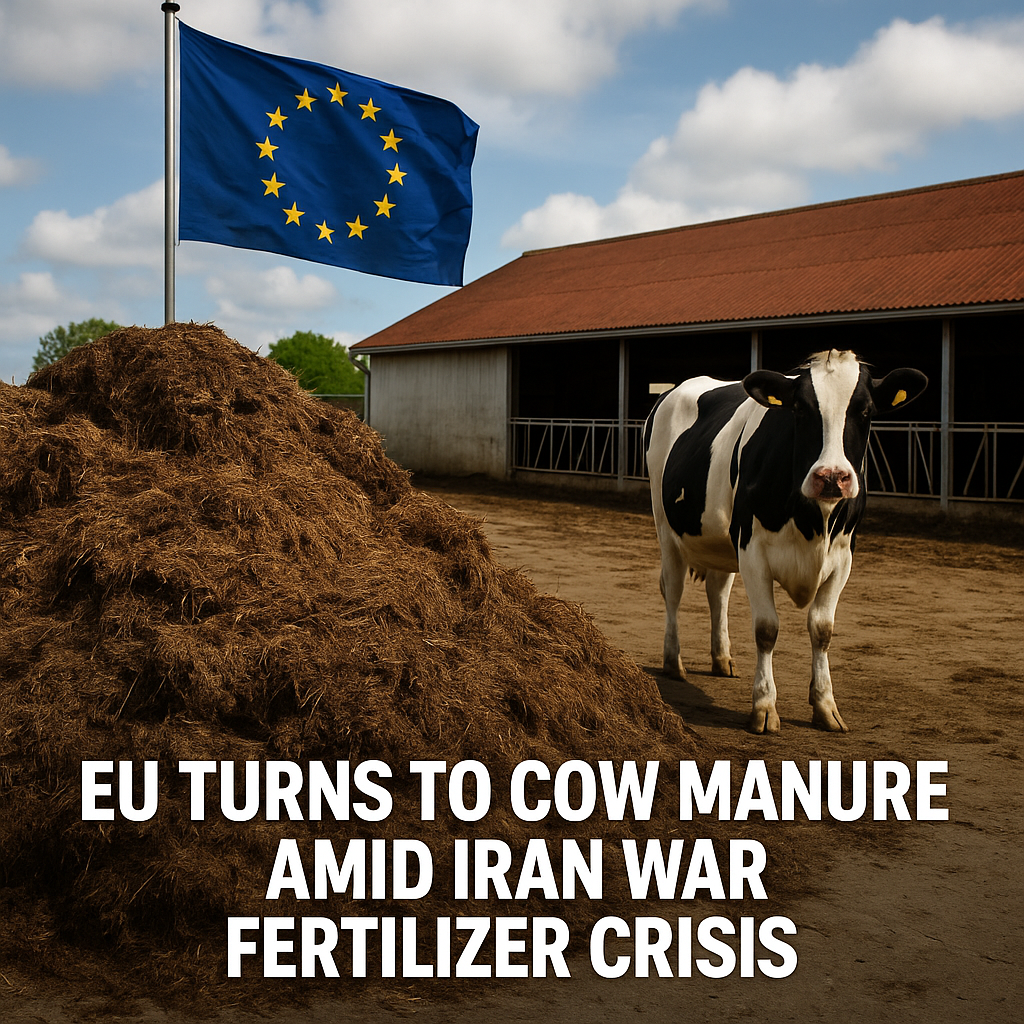
EU Turns to Cow Manure Amid Iran War Fertilizer Crisis

EU Turns to Cow Manure Amid Iran War Fertilizer Crisis
With the ongoing conflict in Ukraine impacting global supply chains, the European Union is now looking toward an unconventional solution in the face of a fertilizer shortage: cow manure. This shift reflects a growing recognition of the ecological benefits of organic fertilizers, as well as the urgent need for food security in Europe amidst a pressing geopolitical crisis.

The Crippling Impact of the Fertilizer Shortage
As the war in Ukraine has disrupted crucial agricultural supply lines, particularly those of nitrogen-based fertilizers, Europe finds itself grappling with potential food shortages. Traditionally reliant on imports of these fertilizers—many of which originated from Russia and Ukraine—the EU is facing unprecedented pressure to ensure that its farming sector remains robust.


According to a recent report from RT, countries across Europe are witnessing skyrocketing prices for synthetic fertilizers, which have nearly doubled in many regions. Farmers are caught between the high costs of production and the need to maintain crop yields. In response to this crisis, the EU has begun to consider alternatives, leading to a renewed interest in organic farming practices—including the use of livestock manure.


Turning Cow Manure Into Gold
Cow manure, often seen as agricultural waste, is now viewed as a potentially sustainable and cost-effective solution. Experts argue that organic fertilizers can not only alleviate the scarcity of traditional fertilizers but also reduce environmental impacts associated with chemical runoff.
Al Jazeera highlights that utilizing cow manure helps improve soil health by enhancing its nutrient content and structure, making it a viable alternative for farmers transitioning away from chemical fertilizers. The practice also aligns with the EU’s broader sustainability goals, which aim to reduce carbon emissions and promote biodiversity within agricultural systems.
In the context of rising energy costs and inflation, the financial benefits of using cow manure are significant. Farmers can reduce input costs associated with synthetic fertilizers while simultaneously fostering a circular economy within their operations. This shift not only promises to stabilize agricultural outputs but also supports the local economies reliant on livestock farming.
Mixed Reactions and Challenges
Despite the benefits, the pivot to cow manure isn’t without challenges. Some agricultural experts express skepticism regarding the scalability of manure as a primary fertilizer source. Concerns over nutrient consistency, application techniques, and the timeframe for producing manure all merit consideration. As noted by Sky News, the logistical hurdles in managing manure—such as storage and transportation—can complicate its viability on a large scale.
Moreover, there is a question of public perception. While some farmers enthusiastically adopt organic practices, others may be reluctant to transition from familiar synthetic fertilizers. The need for education and investment in training programs becomes key to facilitating this change.
Furthermore, as the EU races to implement these strategies, it remains essential to strike a balance between short-term fixes and long-term sustainability. Relying solely on cow manure without reintegrating the use of some synthetic fertilizers could jeopardize crop yields, particularly in regions that depend heavily on high-output farming methods.
Conclusion: A New Era for Sustainable Agriculture
As the EU navigates the complexities of the fertilizer crisis stemming from the Iran war and broader geopolitical tensions, turning to cow manure signifies a pivotal shift in agricultural practices. This move not only addresses immediate food security concerns but also fosters a more sustainable approach to farming.
While challenges exist, the transition to organic fertilizers like cow manure can promote environmental health and resource efficiency. The EU’s willingness to embrace this new strategy highlights a broader commitment to innovation in agriculture. As this paradigm shift unfolds, it will be crucial for policymakers, farmers, and researchers to collaborate and refine practices that maximize food production while preserving the planet.
Ultimately, the transition to cow manure is more than just a response to a crisis; it represents a profound opportunity to redefine the future of agriculture in Europe.















