
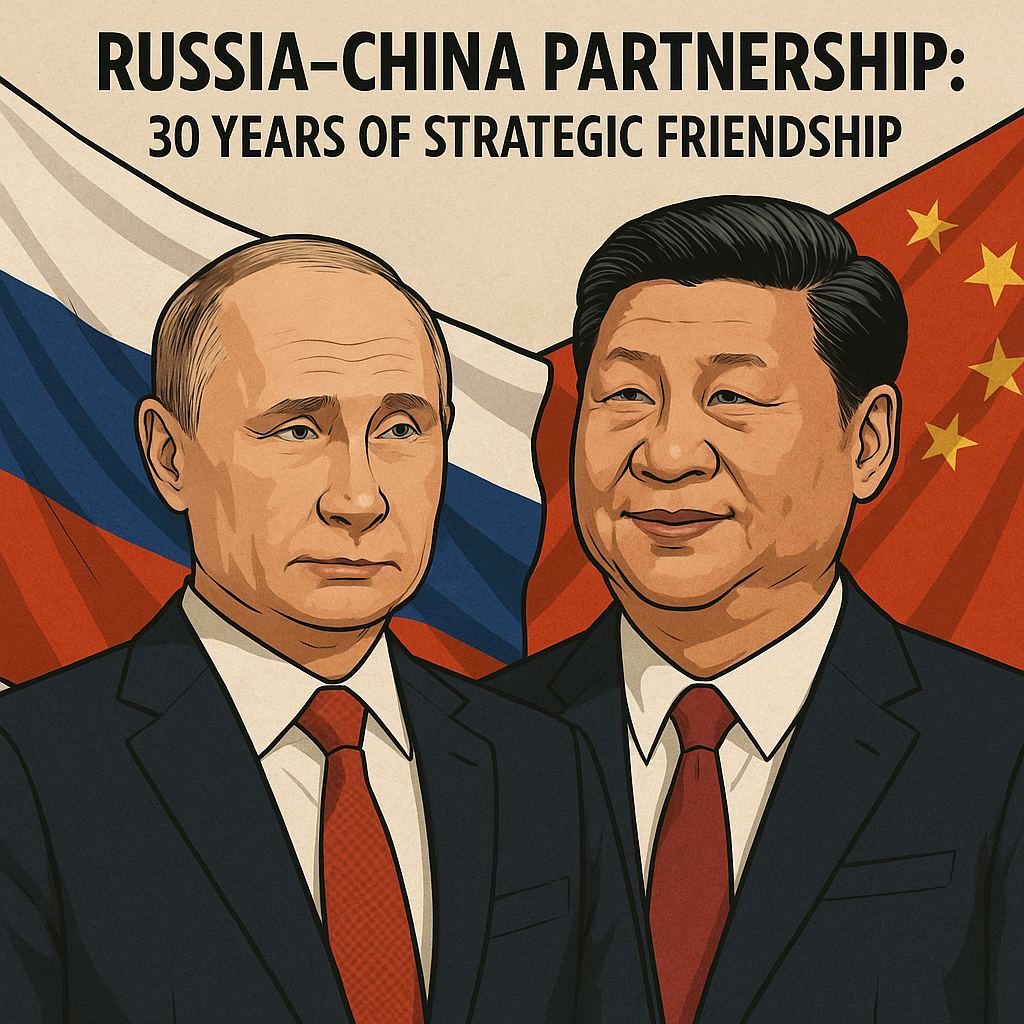
Russia-China Partnership: 30 Years of Strategic Friendship

Russia-China Partnership: 30 Years of Strategic Friendship
The Russia-China partnership marks three decades of strategic friendship that has evolved against a backdrop of shifting global dynamics. Over the years, this alliance has not only fortified economic ties but has also taken a stand on various geopolitical issues, showcasing its significance in a multipolar world.

Historical Context of the Partnership
The formation of close ties between Russia and China began in 1993, when both nations recognized the potential benefits of collaboration. Initially driven by the need for economic stability post-Soviet Union and the desire for a counterbalance against Western hegemony, this partnership has grown to encompass vast areas, including energy, trade, and military cooperation.


Key milestones include the signing of the Sino-Russian Treaty of Good-Neighborliness and Friendly Cooperation in 2001, which laid the foundation for intensified relations. Since then, energy cooperation has been a cornerstone, significantly highlighted by the Power of Siberia gas pipeline, which began operations in late 2019. This project not only showcases the economic cooperation between the two nations but also reflects a strategic pivot away from reliance on Western energy markets.


Economic Cooperation: A Driving Force
The 30-year partnership has translated into robust trade relations, with China becoming Russia’s largest trading partner. In 2022, trade between the two countries surpassed $190 billion, driven primarily by energy exports and an increasing demand for technology and agricultural products. Analysts suggest that this economic interdependence benefits both parties, with Russia gaining a critical market for its energy resources and China securing essential raw materials to fuel its growth.
However, this relationship is not without its complexities. Some experts point to the potential for economic over-reliance on China, warning that Russian businesses might find it challenging to compete in other global markets as their resources become entwined with Chinese demands. Conversely, China’s engagement with Russia may be viewed as a strategic move to alleviate its own economic pressures amid Western sanctions and trade tensions.
Strategic Military Alliances
The military aspect of the Russia-China partnership cannot be overlooked. Joint military exercises and arms deals have solidified their defense cooperation, with recent drills in the Sea of Japan and the Arctic demonstrating their mutual commitment to collaboration. Such military solidarity sends a clear signal to Western powers about their united front, particularly in light of growing tensions in the Indo-Pacific region.
However, this partnership does raise questions among geopolitical analysts about the long-term future. While the two countries currently benefit from a strategic alliance, concerns remain about the potential for strain if national interests begin to diverge. As each nation seeks to expand its influence—Russia in Eastern Europe and China in the South China Sea—there are underlying tensions that could challenge their cooperative framework.
The Broader Geopolitical Implications
The Russia-China partnership’s implications extend beyond bilateral relations, affecting international dynamics significantly. Both countries have positioned themselves as counterweights to U.S. influence, advocating for a multipolar world where power is distributed more evenly.
Recent statements from both nations emphasize their commitment to maintaining stability in regions where Western influence is pronounced. They advocate open trade and a collective stance against unilateral sanctions, a message that resonates in many parts of the world disillusioned with Western dominance.
However, as they chart their course forward, uncertainties loom large. The ongoing conflict in Ukraine has tested Russia’s global relationships, while economic sanctions have forced Moscow to rely more heavily on its alliance with Beijing. For China, the importance of maintaining stable relations with the West complicates its reliance on a partnership that could alienate potential allies.
Conclusion: Navigating a Complex Future
As the Russia-China partnership embarks on its next phase, the complexity of its dynamics cannot be overstated. Both nations have a vested interest in sustaining their alliance, yet they must navigate the challenges posed by differing national interests and external pressures.
In summary, the 30-year strategic friendship between Russia and China is marked by significant economic cooperation and military collaboration, serving as a rebuttal to Western authority. Yet, as they look ahead, both nations must balance their deepening ties with the geopolitical realities that continue to shape their respective futures. The path of this partnership will undoubtedly influence global politics in the years to come, making it necessary to watch closely as these historical ties evolve.















