
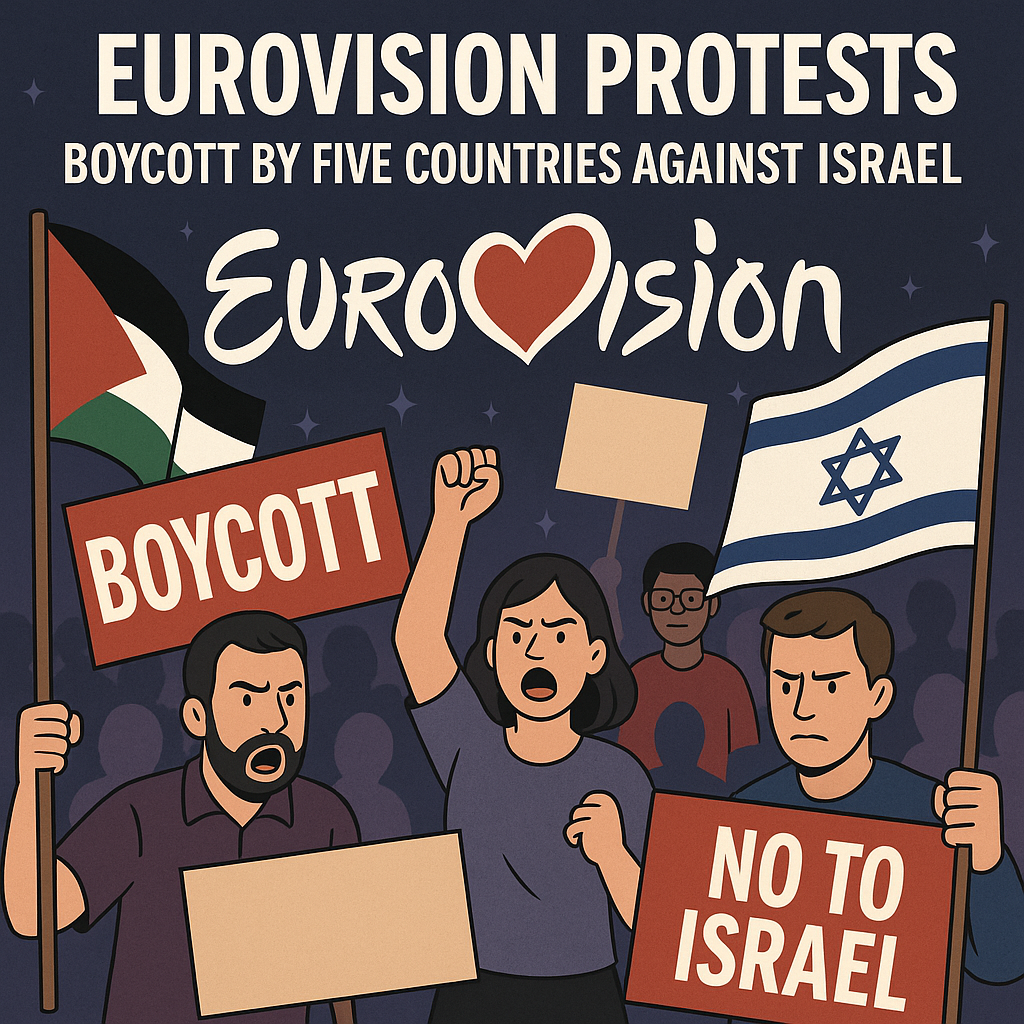
Eurovision Protests: Boycott by Five Countries Against Israel

Eurovision Protests: Analyzing the Boycott by Five Countries Against Israel
The recent Eurovision Song Contest has not only showcased musical talent but also ignited significant protests, primarily stemming from a boycott by five countries against Israel. This boycott reflects growing tensions surrounding Israel’s political stance and its impact on culture and the arts, prompting a deeper examination of the interplay between entertainment and international politics.

Context of the Boycott
The five countries that chose to boycott the Eurovision final include some with longstanding criticisms of Israel’s policies. Reports indicate that the boycott was driven largely by concerns surrounding human rights violations and political conditions within the region. A notable aspect of these protests was the participation of thousands outside the Eurovision venue in Tel Aviv, where demonstrators voiced their objections not only to Israel’s participation in the contest but also to the challenge of hosting such an event amid ongoing geopolitical tensions.


Supporters of the boycott argue that Eurovision, a celebration of inclusivity and unity, should not be held in a country associated with controversial human rights issues. They emphasize the importance of holding nations accountable for their actions, positing that culture should serve as a platform for advocacy. In contrast, the opposing view suggests that art and entertainment can serve as bridges of dialogue and understanding, thus advocating for constructive engagement rather than isolation.


Diverse Perspectives on the Protests
The responses to the protests have been mixed, reflecting a multitude of sentiments from various stakeholders. While some media sources emphasize the legitimacy of the boycott, stressing the need for a critical stance toward nations with controversial records, others argue that such boycotts can inadvertently stifle dialogue and cultural exchange.
A significant point of contention arises from cultural representatives who argue that Eurovision should remain a neutral ground, celebrating diversity regardless of political contexts. They assert that using international platforms to express dissent can detract from the cultural significance of events like Eurovision, potentially alienating audiences who wish for music to transcend politics.
On the flip side, activists are increasingly vocal about how international events can implicitly endorse governing bodies whose rules may contradict the values of human rights and inclusivity. As such, they advocate for the idea that cultural spaces must align with ethical considerations, demanding that events like Eurovision take a firm stand on political issues, rather than avoiding them.
The Role of Art in Political Discourse
The interplay between art and politics is not a new concept, yet the Eurovision protests have highlighted how contemporary issues can infiltrate traditionally apolitical spaces. Critics of the boycott insist that by politicizing such events, artists and participating countries risk alienating audiences from diverse backgrounds, who might view political engagement as unwelcome in their entertainment experiences.
However, history shows that popular culture, including music, can serve as a powerful tool for change. Examples from previous decades demonstrate how artists have addressed social issues through their work, promoting awareness and action. Therefore, the challenge lies in finding a balance between keeping arts and entertainment free from political agendas while recognizing the responsibility that comes with visibility and global platforms.
Conclusion: A Complex Tapestry of Opinions
As the dust settles on the Eurovision protests, the discourse surrounding cultural expression and political accountability continues. The boycott by five countries against Israel serves as a complex case study, illustrating how cultural events can provoke passionate responses that reflect deeply held beliefs and values.
There is no single solution to the dilemma faced by artists, organizers, and audiences. The contrasting viewpoints reveal that the intersection of culture and politics is a nuanced arena where conversations around moral responsibility, artistic freedom, and global engagement will continue to evolve. Reflecting on the outcomes of these protests, it is clear that art will remain a vital conduit for such critical discussions, challenging us to rethink the role culture plays in shaping our political landscapes.















