
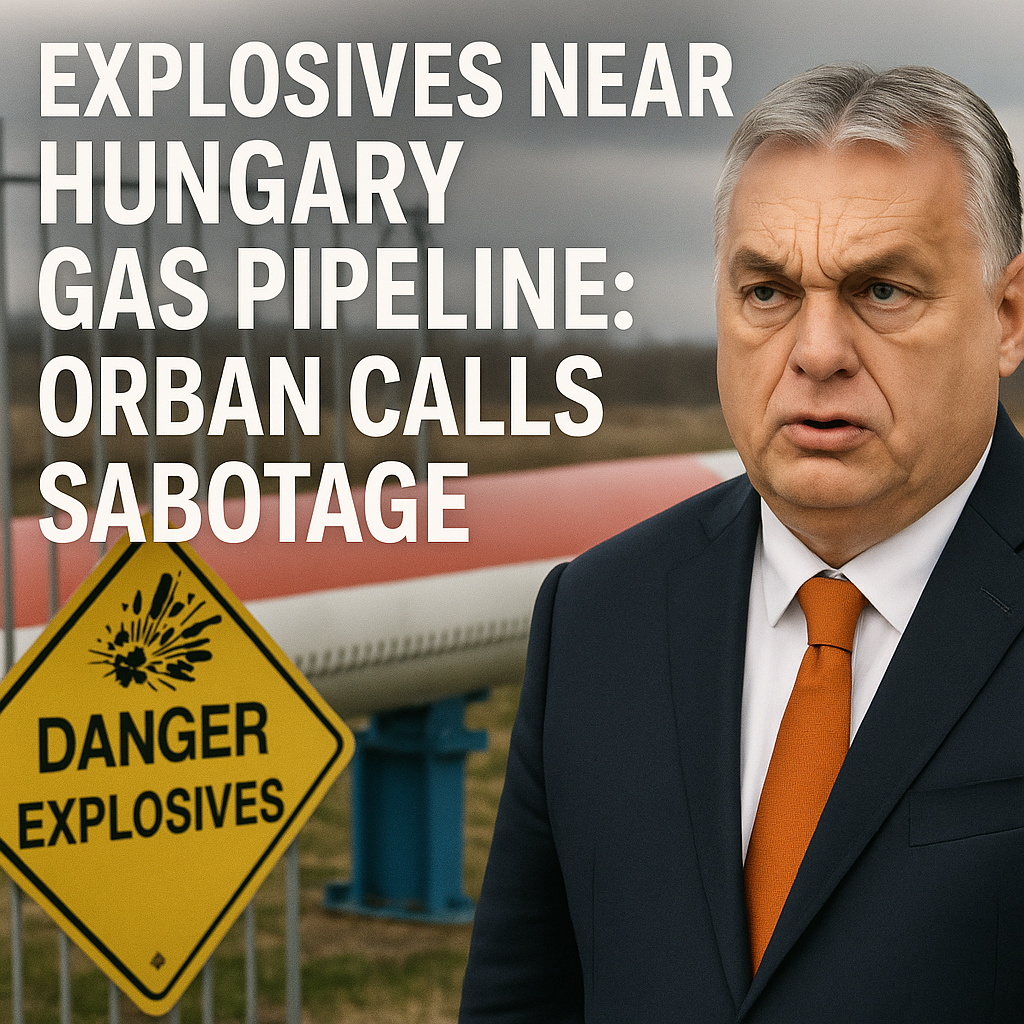
Explosives Near Hungary Gas Pipeline: Orban Calls Sabotage

Explosives Near Hungary Gas Pipeline: Orban Calls Sabotage
The discovery of explosives near a gas pipeline supplying Russian gas to Hungary has sparked alarm and accusations of sabotage from Prime Minister Viktor Orbán. This event highlights ongoing geopolitical tensions and the critical role energy plays in regional stability.

Overview of the Incident
According to reports from multiple news agencies, authorities in Hungary recently uncovered explosives near a major pipeline that facilitates gas supplies from Russia to Hungary and Serbia. The exact nature and intention behind these explosives remain unclear, leading Prime Minister Orbán to label the incident as sabotage. This stance aligns with Hungary’s strategic position in the European energy landscape, particularly amid the ongoing conflict involving Russia, Ukraine, and the West.


Security Concerns and Responses
The Hungarian government has taken immediate steps to investigate the situation. In a statement, Orbán emphasized the need for heightened security measures around critical infrastructure, underscoring the potential consequences of such threats. He remarked, “We must protect our energy security and remain vigilant against any attempts to disrupt it.”


However, the incident also raises questions about the broader implications for regional energy supply and security.
– Increased Vigilance: Following the discovery, Hungarian authorities are reportedly conducting thorough inspections of energy infrastructure. This includes not only pipelines but also storage facilities and distribution networks.
– Regional Tensions: The tension surrounding the incident is exacerbated by existing geopolitical divisions. Hungary’s reliance on Russian gas has drawn criticism from other EU member states, reflective of the continent’s contentious energy policies.
While some analysts argue that the discovery is a direct reflection of heightened sabotage risks in the region, others emphasize the need for caution in how these findings are interpreted.
Diverging Viewpoints: Sabotage vs. Security Failures
Diverse viewpoints emerge on whether this incident genuinely signifies sabotage or a failure of security protocols.
On one side, proponents of the sabotage theory highlight a pattern of incidents across Europe, particularly in regard to energy infrastructure that has faced threats during the ongoing tensions between Russia and the West. Reportedly, an increased number of attacks and attempted disruptions have been documented over the past year, fueling concerns of intentional targeting.
Conversely, critics caution against jumping to conclusions without definitive evidence. They argue that the detection of explosives could stem from vulnerabilities in security rather than a premeditated attack. In their view, focusing solely on the sabotage narrative diverts attention from more systemic issues, such as aging infrastructure and inadequate maintenance protocols.
Broader Implications for Energy Security
Regardless of the motivations behind these explosives, the incident underscores a significant challenge for Hungary and neighboring countries. The reliance on Russian gas has become a double-edged sword, providing energy security while also exposing nations to external vulnerabilities.
Some key implications surrounding energy security in this context include:
– Energy Diversification: There is an urgency for Hungary to diversify its energy sources, with discussions around increasing renewable energy investments and developing alternative supply routes gaining traction.
– Political Alliances: As tensions escalate, Hungary’s relationship with the EU and NATO could be affected. How the nation responds to this threat will likely influence its alliances and trade dealings moving forward.
– Public Sentiment: The public reaction to the incident could further polarize opinions on Hungary’s energy policies. Citizens may demand stronger action regarding energy independence from Russia or call for an investigation into potential security lapses.
Conclusion: Navigating Uncertainties
Hungary’s discovery of explosives near a vital gas pipeline presents a complex picture marked by allegations of sabotage and heightened security concerns. As Prime Minister Orbán calls for vigilance, the situation is emblematic of broader issues surrounding energy security, geopolitical risks, and national policy responses.
While the potential for sabotage exists, an understanding of underlying security challenges is equally crucial. The path ahead demands careful navigation, balancing immediate security needs with long-term strategic energy diversification and regional collaboration. As investigations unfold, the dialogue surrounding Hungary’s energy framework will likely continue to evolve, reflecting the intricate interplay of local and global dynamics.















