
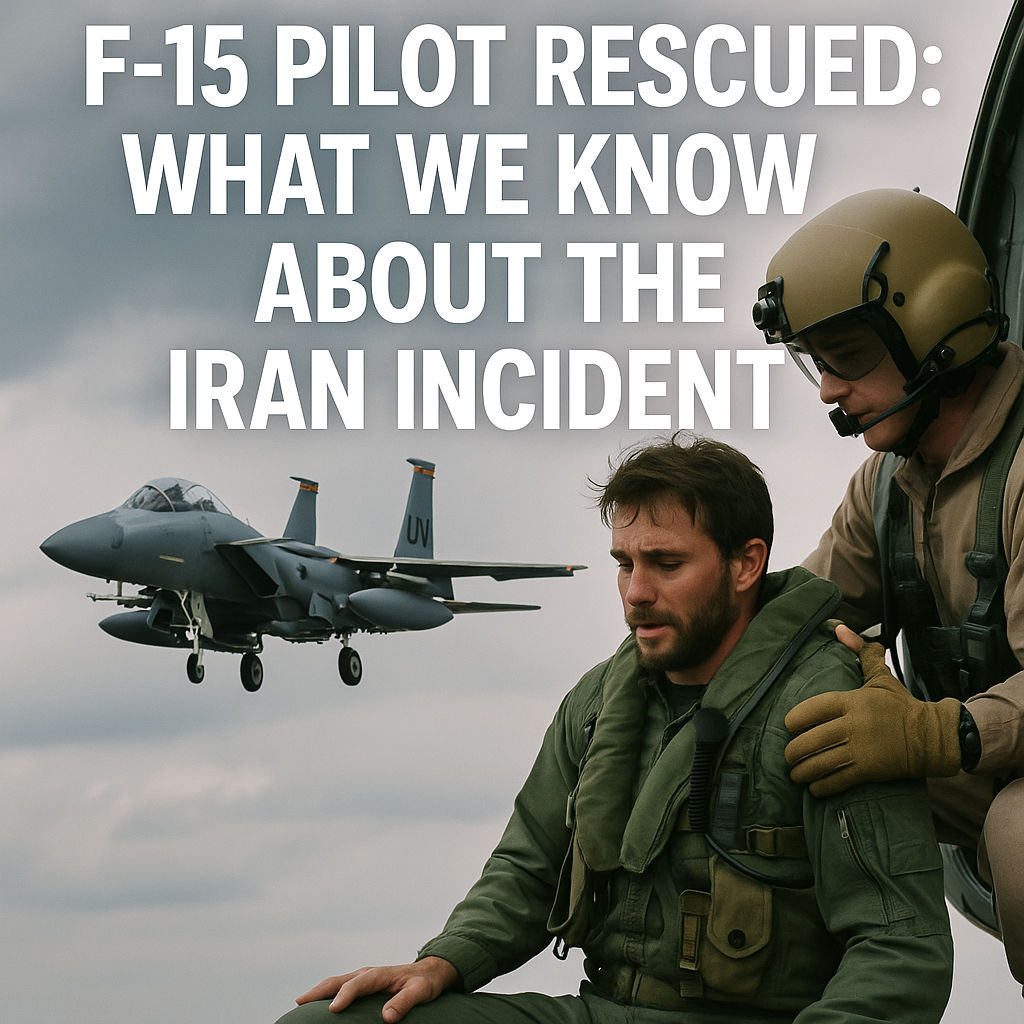
F-15 Pilot Rescued: What We Know About the Iran Incident

F-15 Pilot Rescued: What We Know About the Iran Incident
The recent rescue of an F-15 pilot stranded in the rugged mountains of Iran has unveiled a narrative rich with tension, geopolitical implications, and human courage. As details emerge, various news sources have presented differing perspectives on the incident, highlighting a complex scenario that reverberates beyond just a solitary rescue operation.

What Happened: The Incident Overview
The F-15 pilot, whose identity has not been disclosed for security reasons, crashed during a routine training mission in a remote area of Iran. After spending two nights alone in the desolate landscape, he was reportedly rescued by U.S. military forces with assistance from local sources. Eye-witness accounts describe a harrowing ordeal—a pilot facing extreme weather conditions and rough terrain, utilizing survival skills to stay alive until help arrived.


Initial reports from Sky News indicate that the pilot’s rescue involved a multi-faceted approach, incorporating advanced technologies and intelligence gathering to identify his location. This was no simple extraction; it was a testament to the high stakes involved in military operations, especially in a region laden with historical tension between Iran and the United States.


Diverse Responses: Domestic and International Perspectives
Analysts are closely watching both the U.S. and Iranian responses to this incident. On one hand, news outlets such as Al Jazeera highlight that Iran’s government has expressed outrage at the U.S. military action, viewing it as a violation of sovereignty. Iranian officials stated they were prepared to respond robustly to any perceived aggression and emphasized the need for protocols regarding airspace violations.
Conversely, U.S. media is focusing on the success of the operation and the pilot’s determination to survive under such dire circumstances. The emphasis here tends to be on the bravery displayed by the pilot and the operational effectiveness of the U.S. military. Some commentators suggest this incident could be framed as a success story, showcasing the U.S.’s capabilities in real-time crisis response.
These contrasting perspectives reveal much about the broader narrative at play. While one side views the operation as a necessary response to a military need, the other sees it as potential provocation. The implications of the incident extend into diplomatic relations that have been historically fraught with suspicion and hostility.
Technology in Modern Warfare: The Role of Intelligence
The rescue itself underscores the critical role of advanced military technology and intelligence in contemporary warfare. The U.S. military relied on sophisticated surveillance systems and satellite data to locate the pilot quickly, illustrating how modern warfare is increasingly reliant on technology to address unexpected crises effectively. Analysts from RT News pointed out that such capabilities have allowed militaries to operate in high-risk environments where traditional rescue missions may falter.
However, this heavy reliance on technology raises ethical questions: Does it normalize military interventions under the guise of rescue missions? The utilization of technological advancements for tactical gain may not only influence actions in the field but also shape public perceptions and narratives surrounding military engagements.
Human Resilience Amid Adversity
Beyond the geopolitical implications, the incident spotlights human resilience. The pilot’s survival in harsh conditions for an extended period is a reminder of the extraordinary mental and physical strength present in individuals made to face challenging circumstances. This human element resonates strongly with audiences, emphasizing the importance of individual stories in crisis situations.
There are lessons to be drawn from the pilot’s experience as well. Survival training, adaptability, and mental fortitude are attributes deeply cherished in military culture. As nations turn to technology, the balance between human skills and technological aid becomes increasingly crucial.
Concluding Thoughts: A Complex Intersection of Valor and Politics
As details about the F-15 pilot’s rescue emerge, the mixed responses highlight an intricate tapestry woven from threads of international relations, military strategy, and human bravery. Debates surrounding the event will likely continue as various stakeholders interpret it through their lenses—be it military necessity, national pride, or the ethics of intervention.
While the pilot’s safe return is to be celebrated, the broader implications of this incident will reverberate within diplomatic corridors for some time to come. Engaging thoughtfully with these narratives will help to unpack the complex realities that define contemporary international relations with respect to military operations.
The story serves as a poignant reminder of the fine line between heroism and hostility in the world of military operations, leaving us to ponder not only the details of the incident itself but also its lasting impact on the global stage.















