
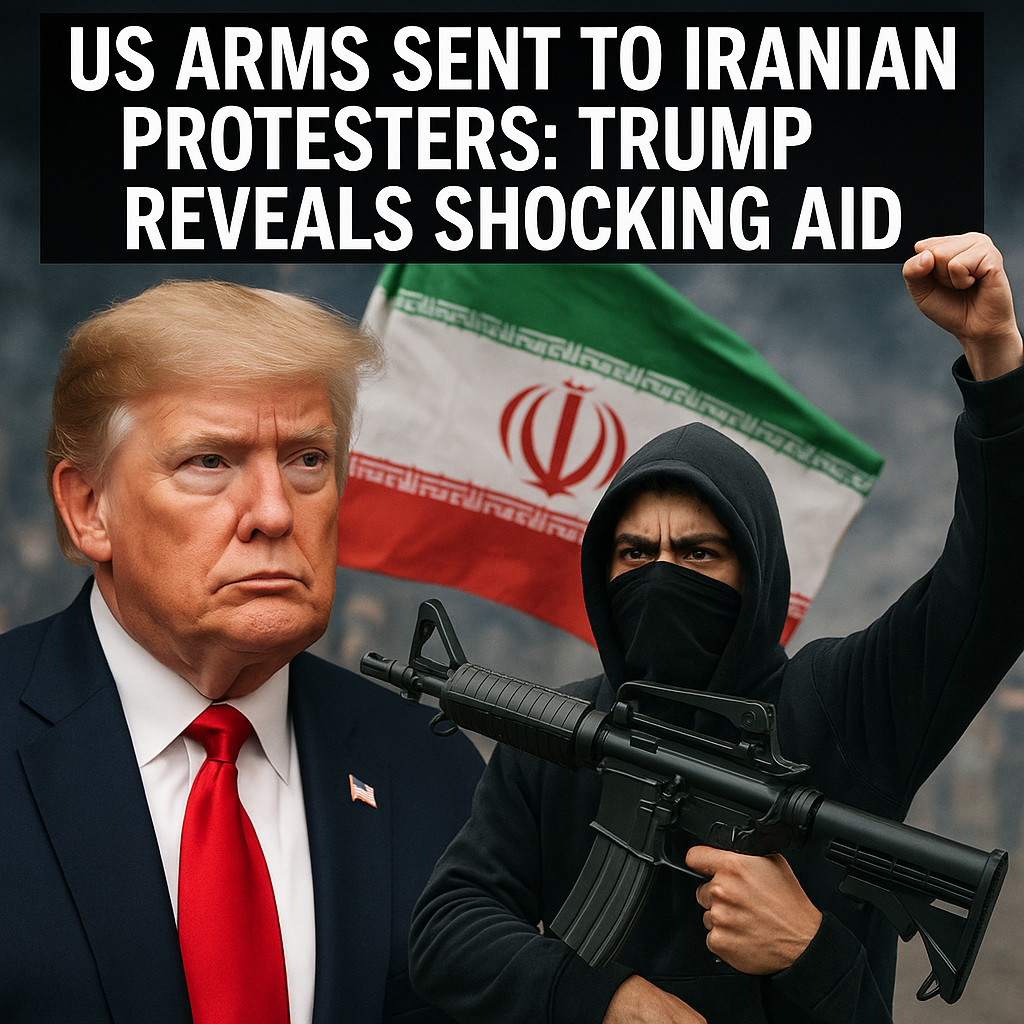
US Arms Sent to Iranian Protesters: Trump Reveals Shocking Aid

US Arms Sent to Iranian Protesters: An Unfolding Controversy
In recent revelations, the topic of US arms sent to Iranian protesters has ignited a complex debate about national security, foreign policy, and human rights. Ex-President Donald Trump has publicly disclosed that military equipment was supplied to those opposing the Iranian regime, raising questions about the implications of such aid.

The Context of US Arms Support
The backdrop of this controversial support lies in ongoing protests within Iran, which have surged since 2022 due to various grievances, including economic instability and demands for political freedom. By disclosing this information, Trump aims to strengthen his narrative that his administration was proactive in supporting democratic movements abroad.


However, while proponents like Trump argue that this military assistance empowers the Iranian people against an oppressive regime, critics are quick to caution against the potential fallout. Historically, arms support in volatile regions has led to unintended consequences, including the exacerbation of conflict and the empowerment of violent factions.


Divergent Perspectives on Military Aid
From the conservative viewpoint, Trump’s stance is framed as a moral obligation to support democracy and human rights. His supporters posit that such actions can help mitigate authoritarian control in Iran. According to Trump, delivering arms to protesters “sends a message” of strength and solidarity from the United States. This perspective finds resonance among those who view the Iranian government as a primary threat to regional stability.
Conversely, critics argue that providing arms could actually jeopardize the very movement it aims to support. Human rights advocates and some foreign policy experts emphasize that arming protesters may lead to an escalation of violence and an increased risk of civil war. The International Crisis Group has expressed concerns over how militarizing resistance could change the dynamics on the ground, ultimately hurting rather than helping dissidents.
The Risks and Rewards of Military Intervention
Although Trump’s revelation has rekindled discussions on US foreign policy, the ramifications of military aid in sensitive geopolitical conflicts remain a critical consideration. The complexity of Iran’s social fabric and the multifaceted nature of its protests must not be overlooked.
Several analysts caution that indiscriminately supplying arms can tilt the balance of power in unpredictable ways. For instance, the potential for arms to fall into the wrong hands could lead to the rise of more extremist factions, thus compromising the original intent of supporting democratic movements.
Additionally, the reaction from the Iranian government can lead to intensified crackdowns on activists and protestors, necessitating a closer examination of tactical support versus direct military intervention. Such actions could trigger retaliatory measures not only against protestors but against the U.S. as well.
A Complicated Human Rights Debate
A further layer of complexity appears when discussing human rights implications. While there is broad agreement that the Iranian regime has committed grave human rights violations, the provision of arms raises ethical questions about complicity in broader geopolitical struggles.
For instance, organizations like Amnesty International have argued that interventions must prioritize human rights over military strategies. Their position highlights the need for a nuanced approach that considers non-violent means of support, such as diplomatic outreach or humanitarian aid, rather than escalating tensions.
Thus, the conversation around US arms sent to Iranian protesters cannot be reduced to simplistic binaries of support or opposition; rather, it must reflect the multifaceted realities and potential consequences involved.
The Future of US-Iran Relations
As tensions between the US and Iran remain fraught, the recent revelations have revitalized discussions about America’s role in supporting dissent abroad. The diplomatic ramifications could further complicate an already intricate relationship marked by decades of mistrust.
Some experts predict that the disclosure of arms support could lead to heightened tensions, resulting in a reassessment of US strategy in the Middle East. As the situation evolves, stakeholders are urged to consider how any military aid aligns with long-term goals of stability and peace.
Conclusion: A Call for Caution
The idea of arming Iranian protesters is fraught with implications that deserve careful contemplation. While the intentions behind such aid may stem from a desire to promote democracy and human rights, the historical context suggests a need for caution.
As discussions unfold, the need for a balanced approach that prioritizes diplomatic engagement and human rights over militarization should take precedence. The situation is far from black and white, requiring nuanced understanding and a careful examination of potential outcomes. In the face of escalating global tensions, our choices must reflect a commitment to sustainable solutions rather than reactionary measures.















