
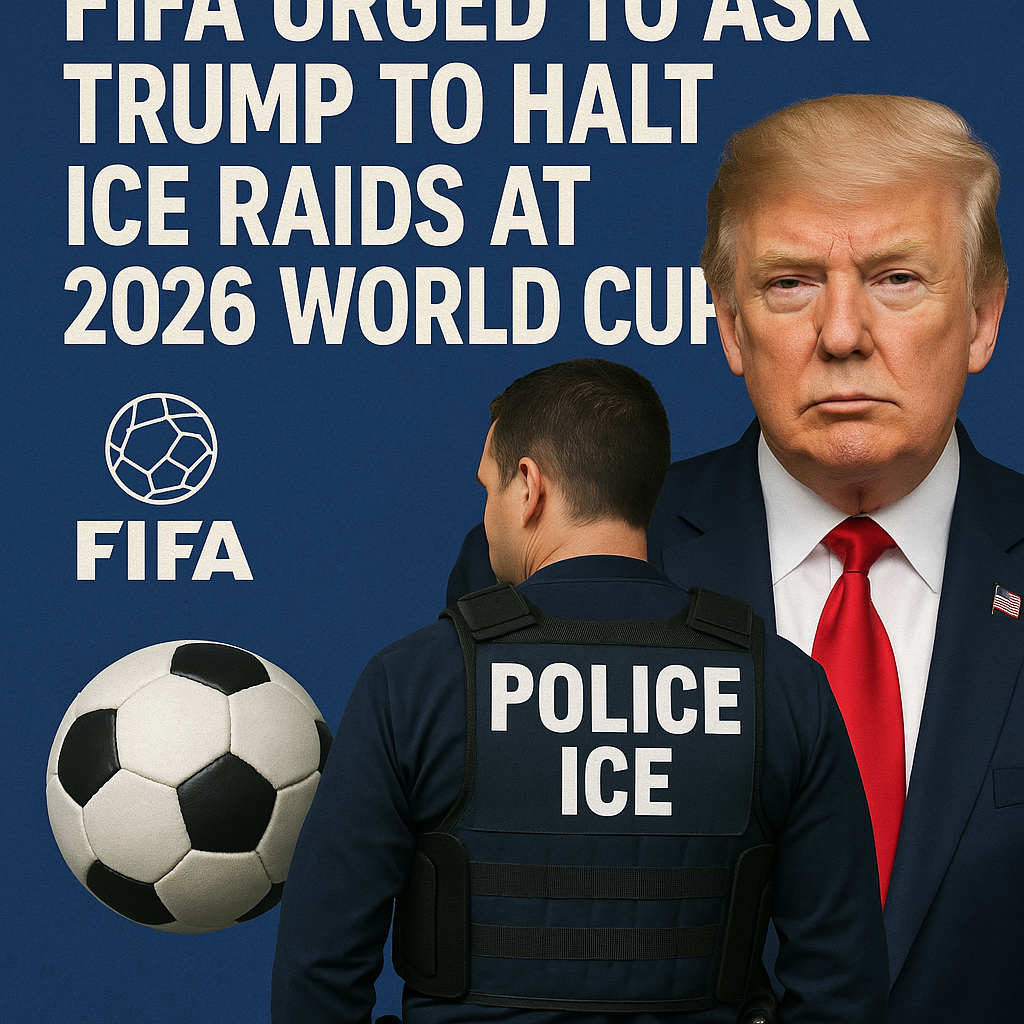
FIFA Urged to Ask Trump to Halt ICE Raids at 2026 World Cup

FIFA Urged to Ask Trump to Halt ICE Raids at 2026 World Cup
As the 2026 World Cup approaches, the spotlight is not just on the host cities or the participating teams but also on the potential implications of U.S. immigration policies during the tournament. The call for FIFA to intervene and persuade the Trump administration to cease ICE (Immigration and Customs Enforcement) raids has raised questions regarding the balance between sporting events and humanitarian concerns.

The Context of the Request
The 2026 FIFA World Cup, set to take place across the United States, Canada, and Mexico, is expected to be a monumental global event, attracting millions of visitors and fans. However, as reported by Al Jazeera, critics are concerned that the current U.S. administration’s immigration policies, particularly ICE raids targeting undocumented immigrants, create an atmosphere of fear that could deter fans from attending the tournament.


Advocates for stopping ICE raids argue that such actions not only threaten the safety and well-being of immigrant communities but also undermine the inclusive spirit of sporting events, which are meant to celebrate unity and diversity. With the tournament likely drawing a multicultural audience, the message sent by ongoing raids could be detrimental to the World Cup’s image.


FIFA’s Role in Addressing Social Issues
FIFA, the governing body of international football, has often positioned itself as an organization committed to social causes. Those urging FIFA to take a stand against ICE raids highlight that the World Cup should be an event that promotes peace, inclusion, and respect for human rights. Some advocates have even proposed that FIFA take proactive measures to ensure that immigrant communities do not face discrimination or harassment during the event.
Moreover, organizations and community groups have mobilized to call attention to this issue, emphasizing that FIFA should leverage its influence to advocate for humane immigration practices. They argue that the pressure from such organizations may spur additional dialogue on a national level, bridging the gap between sports and civic responsibility.
Diverse Views
While there is significant support for FIFA to intervene, the landscape is far from uniform. Critics of the proposal express concerns about the politicization of sports, arguing that sporting events should remain separate from political controversies. They contend that international sports events can become platforms for various political agendas, potentially overshadowing the essence of the games. As expressed in reports from RT and Sky News, opinions diverge on whether FIFA should engage in such advocacy actions, with some suggesting these issues are better suited to local governments and community organizers.
Furthermore, there are complexities regarding the Trump administration’s stance. While some support the administration’s immigration policies as crucial for national security, others portray them as harmful for community relations and economic growth. This divide has made it challenging to reach an overarching conclusion, illustrating the delicate balance between governance and sports.
Weighing Evidence and Sentiments
The nuances surrounding this issue highlight an important tension: how to honor the integrity of a global sporting event while also addressing pressing social implications. Proponents for intervening argue that the potential backlash from immigrant communities and advocates could overshadow the joy and celebration associated with the World Cup, diminishing its global appeal.
Conversely, those advocating for a separation of sports and politics reinforce that many people view sports as a means of escape from political dilemmas. They stress that FIFA’s focus should remain on ensuring a fair and competitive tournament rather than engaging in broader socio-political issues.
Conclusion: A Call for Balanced Engagement
As FIFA faces this complex situation, the path forward will require careful consideration of the event’s wider impact and the community’s needs. The upcoming World Cup is an opportunity to showcase unity, and how FIFA navigates these calls for action may define its legacy in international sports and its responsibility toward global humanitarianism.
While there is no easy answer to whether FIFA should formally request the Trump administration to halt ICE raids, the conversation underscores the interconnectedness of sport and society. As the countdown to the World Cup begins, both advocates and critics will be watching closely to see how these dynamic issues unfold leading into one of the most celebrated events in the world of sports.















