
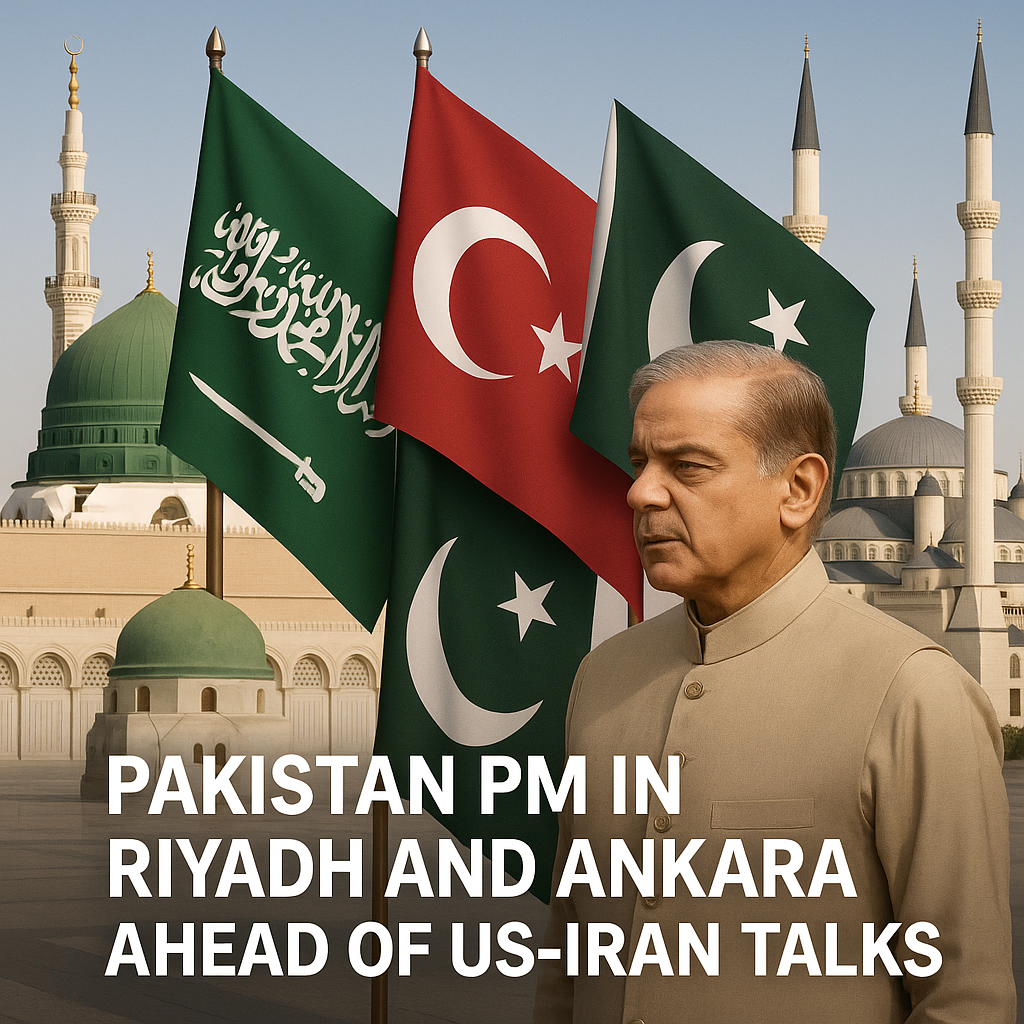
Pakistan PM in Riyadh and Ankara Ahead of US-Iran Talks

Pakistan’s PM Visits Riyadh and Ankara Amid Ongoing US-Iran Dialogue
Pakistan’s Prime Minister is currently on a diplomatic mission to Riyadh and Ankara, an endeavor closely tied to the ongoing discussions between the United States and Iran. This visit underscores Pakistan’s strategic role in regional dynamics and its function as a mediator in complex geopolitical situations.

The Context of the Visit
With the backdrop of evolving US-Iran talks, the Pakistani Prime Minister’s engagements in Saudi Arabia and Turkey come at a crucial time. The Iranian-American relationship has been tumultuous over the years, characterized by tension and occasional openings for dialogue. Recent reports indicate that both nations may be inching closer to collaborative discussions, and Pakistan aims to play a significant role in facilitating this process.


Perspectives from Riyadh
In Saudi Arabia, the dialogues have emphasized the Kingdom’s interest in a stable Middle East. According to Al Jazeera, Riyadh has expressed its support for any negotiated agreement that could alleviate tensions and enhance regional security. Saudi Arabia’s Crown Prince has welcomed the prospect of renewed talks between Washington and Tehran, framing them as essential for regional stability. The Kingdom’s strategic interests align with the idea that positive developments in US-Iran relations could foster a more secure environment, not just for the Gulf, but for the broader Middle Eastern region.


News from RT also showcases that Saudi Arabia’s engagement in these talks is informed by its historical role as a leader in Sunni Islam and a counterbalance to Iran’s influence in the region. As the prime minister meets with Saudi leaders, the discussions likely revolve around mutual concerns over security threats and economic cooperation in light of these potentially shifting dynamics.
Turkey’s Role in the Diplomatic Landscape
Turkey’s position in this scenario is also pivotal. As a NATO ally of the United States with a complex relationship with Iran, Turkey has voiced a nuanced stance favoring dialogue over escalation. Sky News reports that Turkish leadership has, in the past, sought to balance its relations with both Washington and Tehran, recognizing that stability can only be achieved through engagement rather than isolation.
In Ankara, the Pakistani Prime Minister’s meetings are expected to highlight not just the importance of bilateral relations between Pakistan and Turkey but also the broader implications of US-Iran talks on the regional chessboard. Both countries have expressed their commitment to working together to address pressing security challenges. The Turkish perspective leans towards fostering dialogue and encouraging all parties to participate constructively.
The Balancing Act
The confluence of Pakistan’s diplomatic efforts with Saudi and Turkish involvement illustrates a complex web of alliances and interests. As the US and Iran approach negotiations, the role of regional players cannot be overstated. Pakistan, with its geographic and cultural proximity to both nations, positions itself as a potential mediator, capable of facilitating conversations that could lead to de-escalation.
Support for this mediation can be gleaned from various sources. While Al Jazeera notes the speculative nature of these discussions, it also highlights the backing Pakistan has received from its allies, who perceive its involvement as vital. RT reinforces this notion, suggesting that Pakistan’s unique positioning allows it to be a more balanced mediator—bridging gaps between differing regional priorities.
Implications for US-Iran Relations
The mixed sentiments around the potential outcomes of US-Iran talks indicate a broader skepticism. While some analysts are hopeful about a breakthrough, others caution that entrenched positions on both sides may hinder progress. Sky News addresses this ambivalence, noting that although there is optimism linked to these recent discussions, past failures in negotiations have left many wary of proclaiming a lasting rapprochement.
Moreover, the inclusion of Pakistan in this dialogue reflects an acknowledgment of its strategic significance. The country’s historical ties with both Saudi Arabia and Turkey, combined with its intricate relationship with Iran, enable a unique lens through which the situation can be viewed. The PM’s journey signifies more than just a series of bilateral talks; it is emblematic of a larger strategy aimed at fostering regional peace.
Conclusion: Prospects for Peace
As the Pakistani Prime Minister continues his mission in Riyadh and Ankara, the eyes of the world are on the evolving US-Iran discussions. While the path toward resolution is fraught with challenges, the emphasis on dialogue reflects a collective understanding among regional players that lasting change often comes through negotiation. Pakistan’s involvement could indeed serve as a vital component in the larger quest for stability in a region marked by division and conflict.
In an age where geopolitical alliances are constantly shifting, the efforts of leaders to engage in constructive dialogues can pave the way for a more peaceful future. Only time will tell if these talks bear fruit, but the combination of Pakistan’s diplomatic mission with the potential thawing of US-Iran relations suggests that avenues for peace may indeed be opening.















