
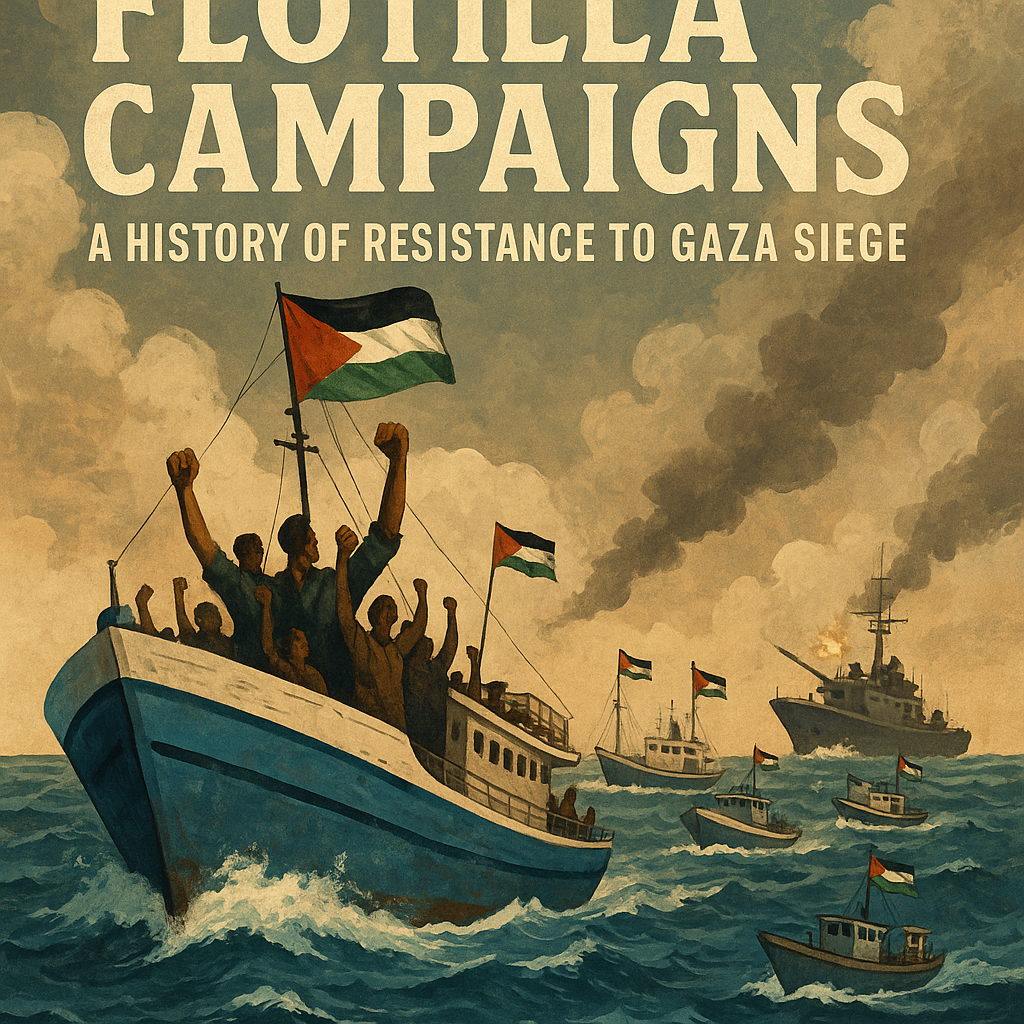
Flotilla Campaigns: A History of Resistance to Gaza Siege

Flotilla Campaigns: A History of Resistance to Gaza Siege
The flotilla campaigns serve as a poignant symbol of resistance against the Gaza siege, illuminating complex narratives that encapsulate geopolitical tensions, humanitarian concerns, and civil activism.

The Origins of the Flotilla Campaigns
The genesis of the flotilla campaigns can be traced back to the early 2000s when public outcry surged over the humanitarian impacts of the Israeli blockade on Gaza. The blockade, imposed by Israel in 2007 following Hamas’s rise to power, has significantly restricted movement and access to essential goods, including food, medical supplies, and construction material. Critics argue that this siege constitutes a form of collective punishment, disproportionately affecting civilians.


One notable response to the blockade was the launch of the first major flotilla in 2010, known as the Freedom Flotilla. This mission, which sought to deliver humanitarian aid directly to Gaza, became infamous when Israeli forces boarded one of its ships, the Mavi Marmara, leading to a violent confrontation that left nine Turkish activists dead. This incident not only drew international condemnation but also ignited widespread protests against Israeli policies and actions.


Diverse Perspectives on Flotilla Campaigns
Various viewpoints exist regarding the effectiveness and implications of these flotilla campaigns. Proponents, such as humanitarian organizations and activists, argue that the flotillas serve as crucial lifelines for the people of Gaza, drawing global attention to their plight. Al Jazeera highlights that these efforts are not merely aid missions; they represent a challenge to an entrenched policy viewed by many as oppressive and inhumane. Supporters assert that the flotilla campaigns embody moral responsibility and the right to resist unjust conditions.
Conversely, critics contend that the flotilla campaigns could exacerbate tensions or provoke violent confrontations, thus undermining peaceful resolutions. For example, some analysts caution that escalating provocations could lead to retaliatory actions that endanger not only those involved but also the broader peace process. RT News has articulated concerns that while the campaigns aim to raise awareness, they may inadvertently reinforce military responses from Israel, complicating diplomatic efforts.
Engaging with these narratives requires an understanding of the historical and sociopolitical contexts that shape them. The maritime protests are often framed within the broader Israeli-Palestinian conflict, where escalating incidents can serve as flashpoints for both local and international turmoil.
The Humanitarian Impact and Future Directions
While the flotilla campaigns have aimed to alleviate the humanitarian crisis in Gaza, they have also spotlighted wider issues of international law and human rights. The United Nations and various NGOs have documented severe humanitarian consequences arising from the blockade, emphasizing the need for sustained international dialogue and intervention. The ongoing blockade has led to deteriorating living conditions for Gazans, characterized by high unemployment rates, limited access to clean water, and insufficient medical care.
Future flotilla initiatives might evolve based on lessons learned from past encounters. Activists could focus on fostering discussions around diplomatic solutions rather than solely emphasizing confrontational strategies. Bureaucratic complexities surrounding international waters and naval rights will necessitate careful planning and coordination to ensure safer missions without compromising their objectives.
Navigating a Balanced Perspective
In weighing the histories and narratives surrounding flotilla campaigns, it remains crucial to approach the subject with a balanced lens. There are valid claims on either side of the debate: the humanitarian urgency articulated by advocates and the security concerns raised by opponents. Additionally, the impact of such interventions must be carefully measured against the broader political landscape.
As each incident garners media attention, the narratives surrounding flotilla campaigns continue to evolve. International responses fluctuate, illustrating the often intricate interplay between activism, diplomacy, and regional stability. The potential for mutual understanding may lie in a collective effort to address the ongoing humanitarian crisis while acknowledging the legitimate security fears of neighboring states.
In conclusion, the flotilla campaigns are emblematic of persistent resistance against the Gaza siege, encapsulating undercurrents of advocacy, tension, and complicity in the face of complex geopolitical realities. As the situation evolves, ongoing dialogues that respect diverse viewpoints will be essential in paving pathways toward meaningful changes and long-term solutions for the people of Gaza and the broader region.















