
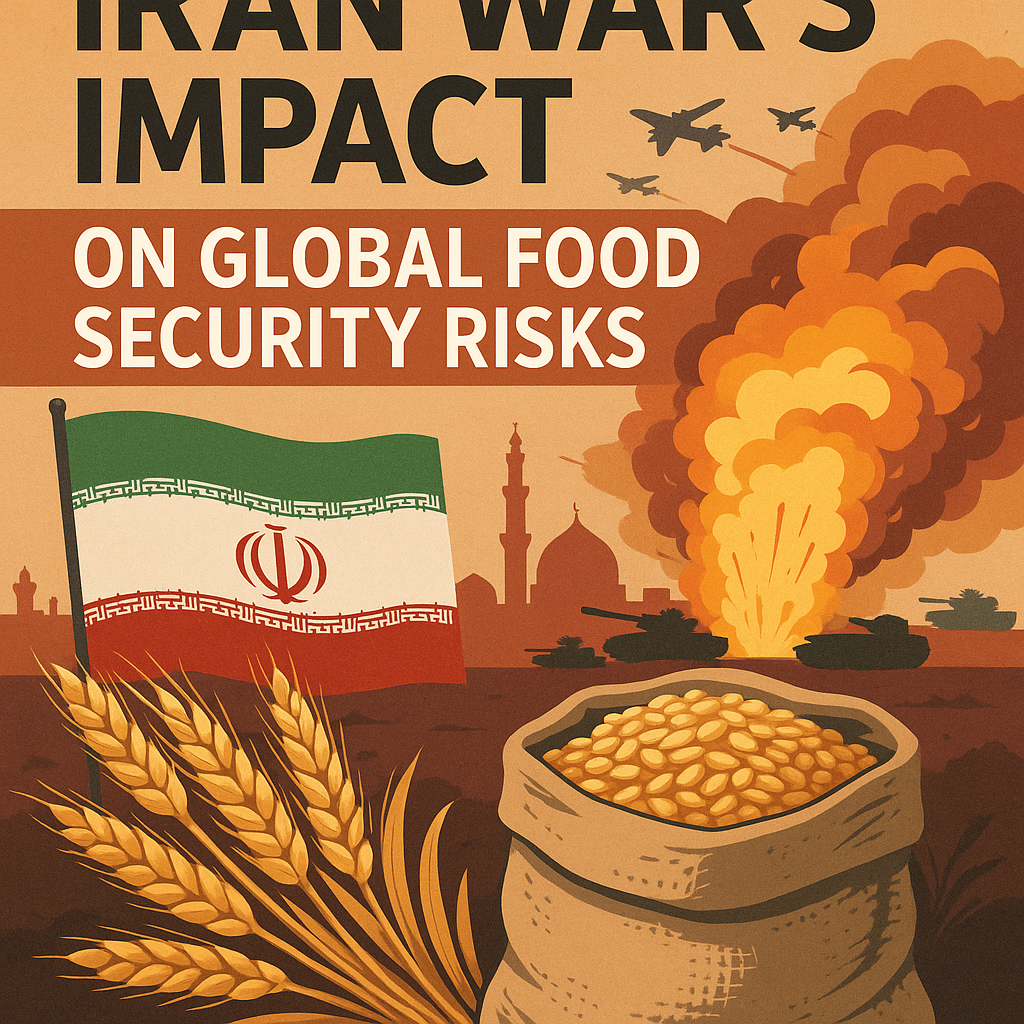
Iran War’s Impact on Global Food Security Risks

The Iran War’s Impact on Global Food Security Risks
As the conflict in Iran intensifies, the underlying repercussions on global food security are becoming increasingly apparent. The war has the potential to disrupt essential supply chains and alter agricultural production across regions, igniting debates about the long-term repercussions on food availability.

The Connection Between Conflict and Food Security
Wars have historically led to food insecurity, and the ongoing situation in Iran is no exception. Various experts argue that the conflict may disrupt both local and international agricultural practices, affecting the availability of crucial staples. In Iran, a country reliant on both domestic agriculture and imports, the war could hamper production due to military operations, displacement of farmers, and damage to infrastructure.


Moreover, Iran’s geopolitical importance cannot be overlooked. The nation is situated next to strategic shipping routes and is a key player in the global oil supply. According to Al Jazeera, tensions in the region could lead to escalated energy prices, which could directly impact food prices globally due to increased transportation costs and reduced supply chain efficiency. Countries already struggling with food insecurity may find themselves in a precarious position as costs rise.


Regional Effects and Global Markets
The ramifications of the Iran conflict extend beyond its borders, influencing global markets and regional agriculture. The war could disrupt food exports from neighboring countries, particularly if they become embroiled in the conflict or implement policy changes in response to heightened tensions. For instance, if countries in the Gulf or the broader Middle East impose sanctions on Iran, the ripple effects could destabilize trade relationships that are essential for food imports and exports.
RT highlights that countries heavily dependent on imports for grain and other staples, especially those in the Middle East and North Africa, may face challenges as supply chains are disrupted. Iran itself imports a significant percentage of its wheat and other grains. If Iranian ports are compromised, food supply chains could face unprecedented interruptions, exacerbating local food shortages.
Additionally, the global markets may begin to anticipate these disruptions even before they fully materialize, leading to price hikes as countries stockpile essential goods in anticipation of shortages. This behavior can contribute to a vicious cycle of inflation affecting food prices worldwide, ultimately hitting the poorest populations the hardest.
Challenges in Agricultural Production
Another layer of complexity is added by the impact of war on agricultural production techniques. The conflict may necessitate the redirection of resources that would typically support agricultural innovation and sustainability. As financial resources are diverted to military spending, less funding will be available for investment in agriculture.
Furthermore, in times of conflict, land becomes contested and unsafe for farming. Displacement of the rural population can lead to the abandonment of arable land, thereby reducing the capacity for food production in both the short and long term. Sky News has pointed out that the historical context reveals how wartime agriculture suffers; the smaller the harvest, the more significant the risk to food security.
While some countries may attempt to increase their own production to counter these deficits, the question remains whether global agricultural entities possess the resilience to absorb such shocks. Those nations with robust infrastructure and adaptive practices may fare better, while others could find themselves crippled by increased inputs and declining outputs.
Weighing the Perspectives
While the consensus around the potential impact of the Iran conflict on global food security is stark, there are varied perspectives on the extent and immediacy of the risks involved. Some experts argue that while disruptions will occur, the global agricultural system has shown a remarkable ability to adapt to unforeseen circumstances. They suggest that technological innovations in farming and logistics may mitigate the worst impacts.
However, others are less optimistic and advocate for increased international cooperation to establish more resilient food systems. They emphasize that nations must work together to forecast these risks and adopt measures that can address the vulnerabilities exposed by the conflict.
As discussions surrounding the Iran war continue to evolve, the intersection of military conflict and food security cannot be ignored. The stakes are not only local but global, impacting millions who depend on stable food supplies. Governments, NGOs, and international coalitions must engage in dialogue now to anticipate future challenges, fostering resilience in the face of uncertainty.
In summary, the Iran war illustrates the intricate interdependencies between conflict and food security. As the situation unfolds, monitoring these dynamics will be critical for global leaders and stakeholders involved in food production and distribution. The opportunity for impactful change lies in proactive strategies designed to buffer against the cascading effects of war on food supplies worldwide.















