
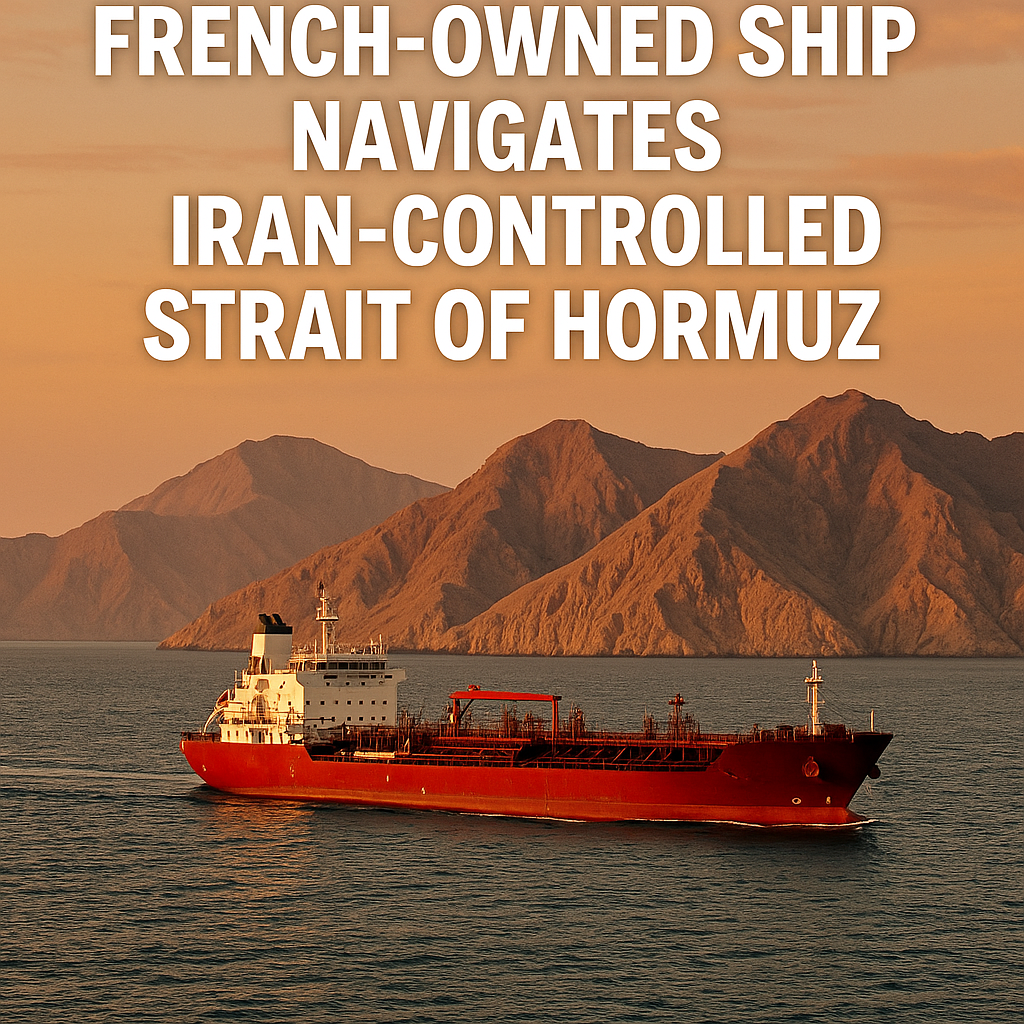
French-Owned Ship Navigates Iran-Controlled Strait of Hormuz

Navigating Tensions: The Journey of a French-Owned Ship Through Iran-Controlled Strait of Hormuz
The Strait of Hormuz serves as a crucial maritime passage, connecting the Persian Gulf to the Gulf of Oman. Recently, a French-owned ship successfully navigated this strategically important waterway, highlighting not only the complexities of international maritime operations but also the ebb and flow of geopolitical tensions in the region.

The Significance of the Strait of Hormuz
The Strait of Hormuz is often referred to as the world’s most vital oil transit chokepoint. Approximately 20% of the world’s crude oil passes through these waters, making it a critical artery for global energy supply. With Iran’s influence over the strait, the area is frequently at the center of international scrutiny and conflict.


In recent reports, the transit by the French-owned vessel has rekindled discussions about maritime security in the region. While some sources framed the event as a sign of resilience against Iranian control, others emphasized the potential for escalated tensions between Western nations and Iran.


Diverse Perspectives on the Transit
According to a report from Sky News, the successful navigation of the French-owned ship represents a bold assertion of civil maritime activity amid rising regional tensions. The ship, which has not been publicly identified, demonstrated the ongoing commitment of European nations to maintain their commercial interests in the Gulf despite threats from Iran. Sky News noted that this event could be indicative of a shifting paradigm in relationships between Western powers and the Iranian government, suggesting that European countries might pursue more robust actions to ensure safe passage through the strait.
Conversely, Al Jazeera highlighted the Iranian government’s perspective, which cautioned against the implications of increased Western military presence in the region. Iranian officials reiterated their control over the maritime routes, framing the transit as a potential provocation. According to Al Jazeera, Iran has maintained a stance that any undue influence from Western nations would not be taken lightly and could lead to military confrontations.
The contrasting narratives relay the tightrope walk that nations navigate in the Strait of Hormuz, with each side weighing their economic and security priorities against a backdrop of historical animosities.
Global Implications and Future Outlook
As the world watches, the implications of the French-owned ship’s passage extend beyond immediate geopolitical concerns. The reality is that any military or commercial miscalculation in the strait could have consequences for global oil prices and regional stability. Various analysts point to rising tensions between Iran and Western nations, particularly following recent escalations in military maneuvers and when responding to perceived threats to maritime freedom in the Gulf.
Moreover, the incident has sparked discussions about the security strategies employed by nations that rely on the Strait for energy supplies. With countries like the United States and its allies enhancing naval patrols, there is a growing argument for a unified international framework to safeguard this pivotal global passage.
Navigating Uncertainties
Despite the assertive stance taken by the French ship’s owners and their supporters, the reality of navigation through the Strait of Hormuz remains fraught with uncertainties. Enhanced military presence represents a more aggressive approach, but it also escalates the risk of confrontation. Iranian officials have continually warned that they will deem foreign military vessels as potential threats, leading to a delicate and volatile environment.
There’s a shared understanding among international observers that navigating the Strait of Hormuz is not merely a matter of physical transit—it is heavily infused with political signaling. The challenge lies in ensuring the region remains a safe passage for commercial vessels while diffusing rising tensions, particularly between Iran and Western powers.
Conclusion: A Path Through Complexity
The successful transit of the French-owned ship through the Iranian-controlled Strait of Hormuz symbolizes more than mere maritime navigation; it encapsulates the complexities of global geopolitical dynamics. As categories of control, freedom of navigation, and military engagement converge in this critical waterway, stakeholders must remain vigilant and collaborative in their pursuits. While the immediate situation may seem navigable, the broader geopolitical undertones remind us of the intricate ballet that nations engage in when balancing sovereignty, security, and trade.
The challenge ahead will not just be about maintaining routes for commercial vessels but also about finding pathways to common ground that prevent escalations—before one misstep results in an outcome none can afford.















