
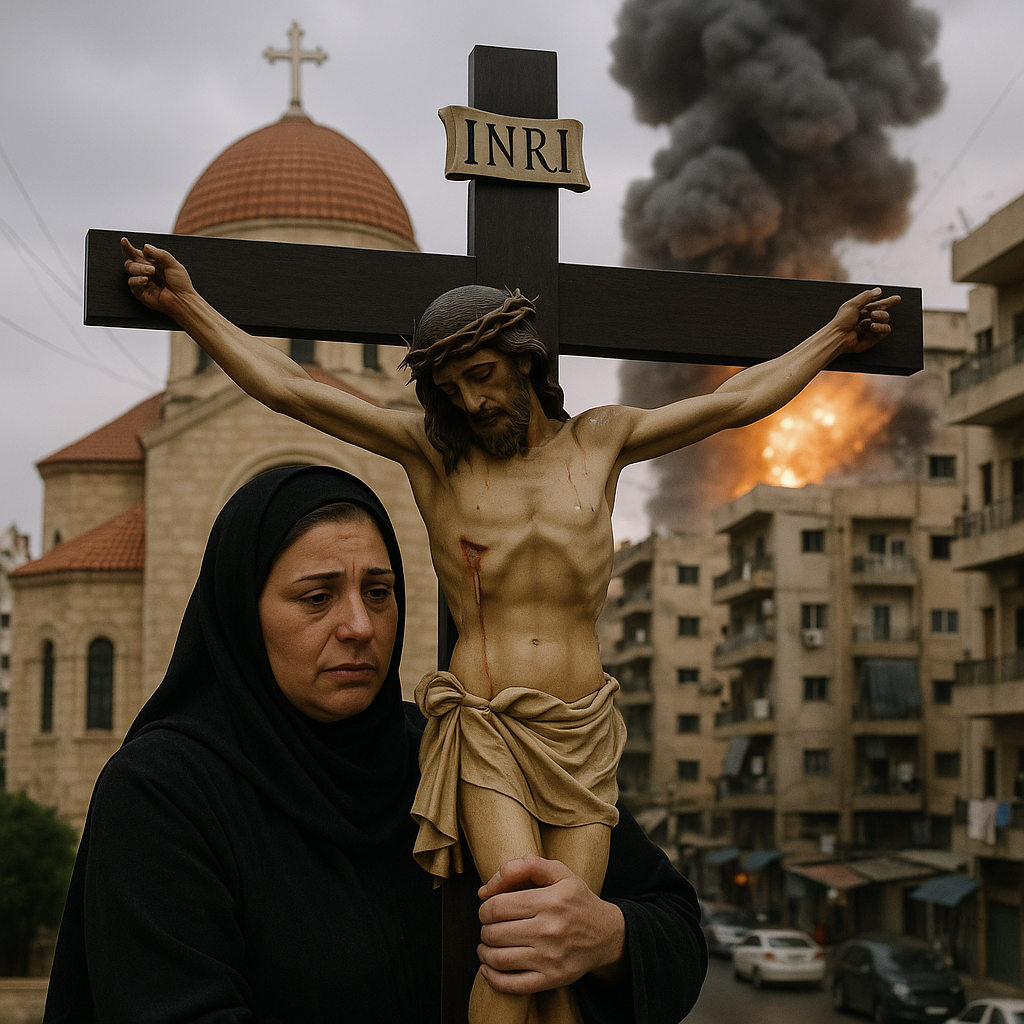
Good Friday for Christians in Lebanon Amid Israeli Attacks

Good Friday for Christians in Lebanon Amid Israeli Attacks
This year’s Good Friday witnessed a poignant juxtaposition for Christians in Lebanon, who found themselves marked by both solemn reflection and a backdrop of unrest due to ongoing Israeli attacks. The tension surrounding the religious observance has elicited various reactions, from calls for resilience to fears of escalating violence in the region.

The Context of Strife
Lebanon’s historical and cultural fabric has been woven with threads of religious diversity, with Christians comprising a significant portion of the population. However, the ongoing Israeli-Palestinian conflict has periodically cast a shadow over such observances, reigniting fears and laying bare tensions that often permeate the broader socio-political landscape.


In the days leading up to Good Friday, multiple casualties were reported as Israeli airstrikes intensified, targeting areas in southern Lebanon. According to Al Jazeera, these strikes were part of a larger concern over rockets being fired into Northern Israel from Lebanon, prompting defensive military action. The strikes have drawn condemnation from various international and local factions, highlighting a complex scenario where military actions often intertwine with religious significances.


Responses from Christian Communities
In the face of adversity, Christian communities in Lebanon have demonstrated resilience. Despite the loud echoes of explosions in the background, many gathered in churches across the nation to commemorate Christ’s crucifixion. The faithful turned to traditional rituals, marking the day with liturgies that focus on reflection and renewal. As reported by outlets like Al Jazeera, the juxtaposition of celebrating a holy day amidst violence rendered a profound narrative; the faithful sought comfort in their shared beliefs and community solidarity.
Many church leaders have expressed the urgent need for peace and stability, calling on both local and international entities to prioritize dialogue over violence. In an emotional statement, a local bishop emphasized, “In this time of conflict, we are reminded that love must triumph over hate.”
Conversely, some critics argue that religious observances in Lebanon are too frequently marred by political strife, suggesting that rather than a time of faith, these periods have become a stage for political maneuvering. For instance, commentators from various media platforms have highlighted how the intertwinement of religion and politics often complicates the spiritual experiences of the faithful.
An Uncertain Future
As the Good Friday observances wrapped up, the question of what lies ahead remained heavy in the air. Could the escalating violence lead to further tensions in Lebanon? Or might there be avenues for peace driven by the very faith that unites the Christian communities? Reports suggest that while short-term escalations could provoke greater local distress, there’s also an emerging consensus among peace advocates that interfaith dialogues hold the key to an enduring reconciliation process.
In summary, the observance of Good Friday in Lebanon was not merely a religious ritual but a complex intersection of faith, politics, and community resilience. As local Christians prayed for peace amid conflict, their resilience continues to symbolize hope. The diverse voices—ranging from church leaders to political analysts—highlight the intricate narratives that arise when faith is set against a backdrop of geopolitical struggle. The challenge remains not only to navigate the current violence but to foster a climate where spiritual observances can take place in peace, free from the shadow of war.
In this rich yet troubled landscape, the modern Good Friday experience serves as both a reminder of the Israeli-Palestinian conflict’s impact on daily life and a call for understanding and dialogue. As Lebanon’s Christians face these immense challenges, their faith may prove to be a source not just of solace, but also of strength in advocating for a more harmonious future.















