French Presidential Hopeful Slams ‘Erratic’ Trump

French Presidential Hopeful Slams ‘Erratic’ Trump
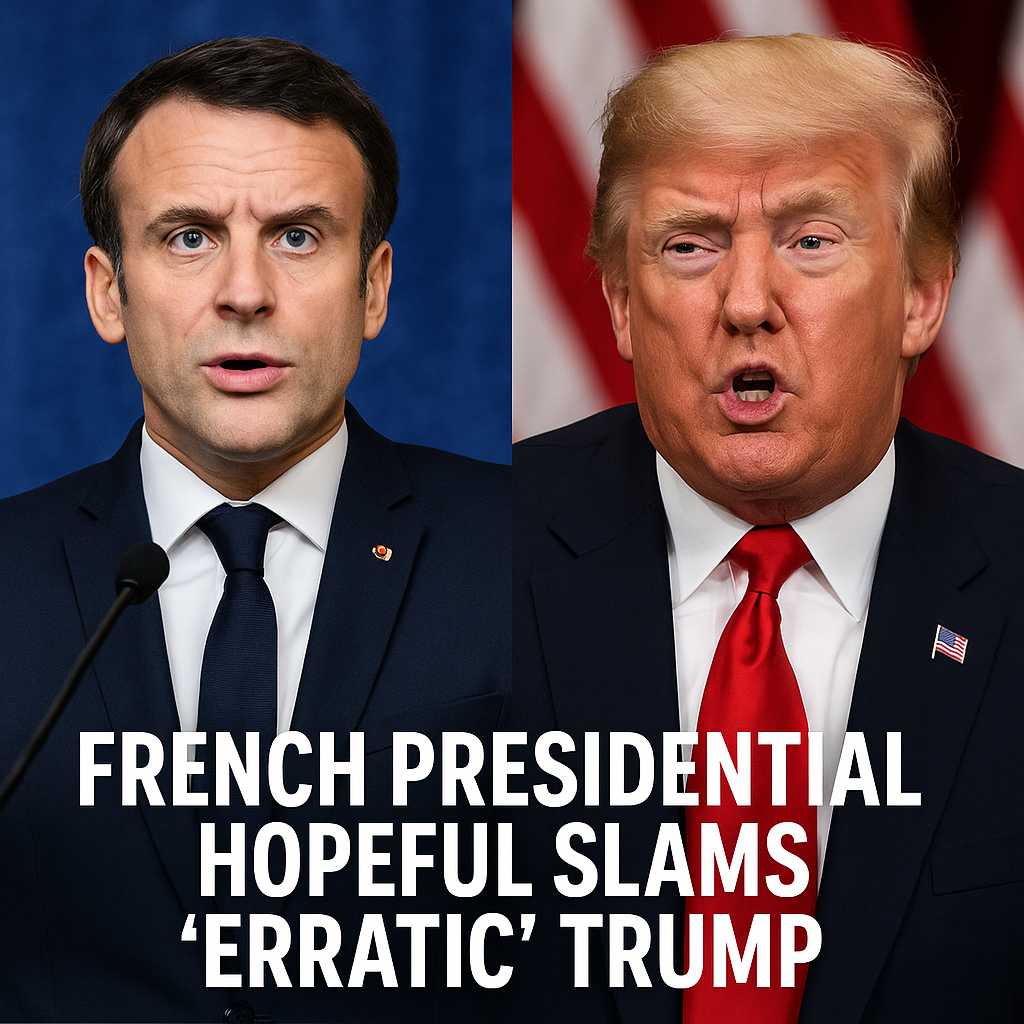
In the current global political landscape, the perception of leadership is often a reflection of both national stability and international diplomacy. The recent comments from French presidential hopeful Jordan Bardella regarding former U.S. President Donald Trump have brought renewed scrutiny on the evolving dynamics between European and American politics. Describing Trump as “erratic,” Bardella’s remarks highlight the tensions and complexities in transatlantic relations.

A Candid Critique of Leadership
Jordan Bardella, a key figure in France’s National Rally party, has been gaining traction in his pursuit of the presidency. His critique of Trump was not merely an offhand remark; it comes within the context of wider concerns regarding leadership styles impacting global stability. Bardella stated that Trump’s unpredictability poses risks not just for America, but also for its allies, particularly in Europe, where diplomacy is often grounded in consistency and reliability.


Bardella’s stance resonates with certain factions in Europe that view Trump’s policies—specifically those on climate change and NATO—as detrimental to collective security and environmental efforts. A growing sentiment across various European nations is that erratic leadership could cultivate a more chaotic international environment, potentially emboldening authoritarian regimes.


Varied Perspectives on Trump’s Impact
Responses to Bardella’s comments reveal a spectrum of views. Supporters of Trump might argue that unpredictability can spur innovation and lead to breakthroughs in diplomacy, while critics maintain that it undermines long-established international norms. For instance, a previous analysis from Al Jazeera points out that Trump’s abrupt policy changes often left allies scrambling to recalibrate their strategies, illustrating the kind of uncertainty that Bardella referenced.
Conversely, some political analysts caution against overly simplistic narratives about Trump’s impact. They argue that while his leadership style is indeed controversial, it also reflects deeper currents within American society—factors such as disillusionment with traditional political structures and a yearning for more direct, populist forms of governance. This complexity suggests that while Bardella’s criticisms may resonate in some quarters, they do not encapsulate the entire landscape of global opinion.
Walking a Tightrope: Europe’s Response
As Bardella positions himself as a serious contender in French politics, his remarks might signal a broader trend among European leaders to distance themselves from Trumpism. The challenge lies in balancing criticism of American leaders with the necessity of maintaining a strategic partnership.
In this light, Europe is at a crossroads, needing to address how to navigate a potentially shifting landscape should Trump regain influence, as suggested by the buzz around his potential 2024 candidacy. Calls for a more independent European approach to foreign policy have echoed amid criticisms, including those voiced by Bardella, emphasizing the dire need for Europe to strengthen its own governance and international standing regardless of who sits in the Oval Office.
The Uncertain Future of U.S.-European Relations
Despite Bardella’s sharp critique, uncertainties remain about the future of U.S.-European relations as the U.S. political scene continues to evolve. If Trump were to return to power, reactions from European leaders—including Bardella—would be crucial. The debate over Trump’s legacy is ongoing, and Bardella’s remarks may serve as a litmus test for other European leaders contemplating how to position themselves.
As we watch this political saga unfold, it’s clear that the complexity of leadership—both in the U.S. and across Europe—demands nuanced understanding and strategic foresight. Leaving aside individual personalities, the pathway to improved diplomatic relations requires more than mere critiques; it needs a concerted effort towards collaboration while being mindful of the diverse views that underpin these relationships.
Ultimately, Bardella’s critique encapsulates both a warning and a call to action for Europe. The necessity of resilient and consistent leadership must be at the forefront of discussions, as the world seeks stability amid unpredictability, particularly from nations that wield significant influence on the global stage.