
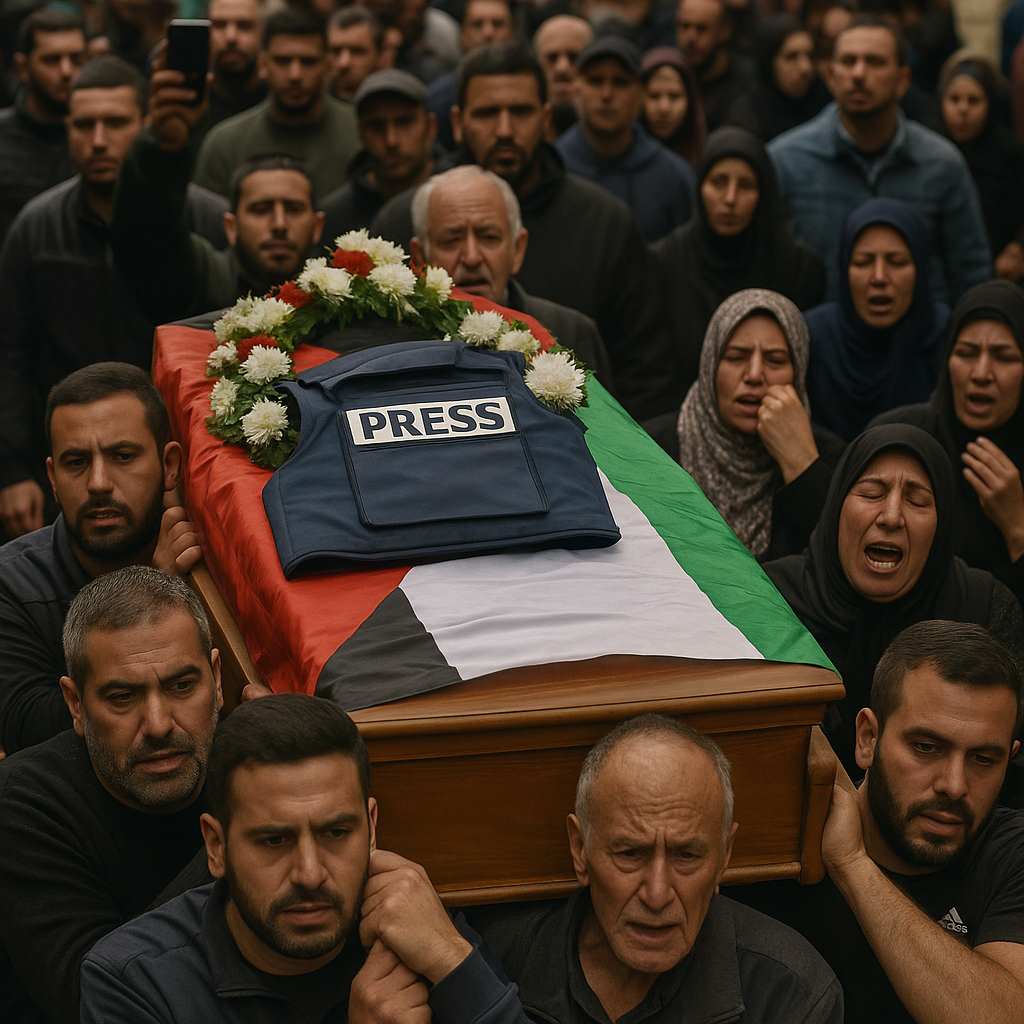
Funeral for Journalist Killed in Targeted Israeli Strike

Funeral for Journalist Killed in Targeted Israeli Strike: A Reflection on Freedom of the Press
The funeral for journalist killed in a targeted Israeli strike has stirred emotions and conversations surrounding the safety of reporters in conflict zones. This tragic event exemplifies the complex interplay between war, journalism, and the pursuit of truth in areas rife with political tension.

The Circumstances Surrounding the Journalist’s Death
The journalist, reportedly struck during a military operation, was covering a volatile situation that has seen escalating violence in recent weeks. Al Jazeera described the incident as part of a broader pattern of targeted attacks on media personnel in conflict areas, asserting that this represents a blatant disregard for press freedom and human rights. The death marks another grim chapter in the perilous environment that journalists face while striving to inform the world.


Witnesses at the funeral spoke of the profound loss felt within the community, highlighting not just the death of an individual but the silencing of a voice dedicated to uncovering truth. “This was not merely about one journalist,” said a local reporter at the funeral. “It symbolizes the struggle for freedom of expression in the most challenging circumstances.”


Contrasting viewpoints arise regarding the circumstances of the strike. Israeli military officials argue that the attack was part of a legitimate operation against militant targets, maintaining that any civilian casualties are regrettable but unavoidable in the context of combat. Critics, including various human rights organizations, counter that such justifications cannot absolve state actors of their responsibilities to protect non-combatants, including journalists who put themselves in harm’s way to report.
Voices of Dissent and Call for Accountability
The targeted killing has incited calls for accountability across the globe. Prominent media organizations have united to demand a thorough investigation into the incident, reaffirming their commitment to safeguarding the rights of journalists. A joint statement issued by Reporters Without Borders and the Committee to Protect Journalists emphasized, “The world must see that attacks on journalists have consequences, not only for individuals but for the integrity of information worldwide.”
In various international forums, discussions have also surfaced regarding the broader implications of such strikes on free speech and journalistic integrity. As more journalists are caught in the crossfire of conflicting national narratives, the question arises: how can the press remain impartial and continue to fulfill its role in society? The ongoing violence against journalists illustrates a perilous trend where the lines between combatants and civilians are increasingly blurred.
Moreover, the journalist’s death has drawn attention to the systemic challenges faced by media professionals in the region, including ethical dilemmas and the necessity for thorough risk assessment when reporting in dangerous zones. There is a growing consensus that media organizations need to improve their safety protocols and invest in training that emphasizes situational awareness and emergency preparedness.
The Call for Change
As global discussions unfold, it is essential to advocate for stronger protections for journalists. The United Nations has previously called for a reevaluation of protocols regarding the safety of media personnel in conflict zones, asserting that these individuals are peaceful actors in society—and must be treated as such. Continued dialogue on this topic reinforces the need for nations to abide by international laws concerning the protection of journalists in armed conflict.
Furthermore, there has been an increasing push towards creating more robust frameworks for accountability. Initiatives that promote transparency in military operations and clearer definitions of the responsibilities of state actors during conflict could help mitigate future tragedies. Advocacy groups are mobilizing public sentiment to press governments into action, emphasizing that silent complicity in such attacks will have lasting implications for democracy and free speech.
Conclusion: A Shared Responsibility
The funeral for the journalist slain in a targeted Israeli strike stands not only as an occasion of mourning but as a rallying point for advocacy regarding press freedoms. It serves as a stark reminder of the risks faced by those who forcefully bring the truth to light amid tumultuous conditions. As society grapples with the complexities surrounding warfare, journalism, and personal safety, the onus is upon both governments and media organizations to forge a world where freedom of expression is cherished, and the lives of journalists are fiercely protected.
This somber event invites us all to reflect on the nature of truth and the sacrifices made to uphold it. In a world where information is often weaponized, the commitment to journalistic integrity and the protection of those who dedicate their lives to it should remain unwavering.















