
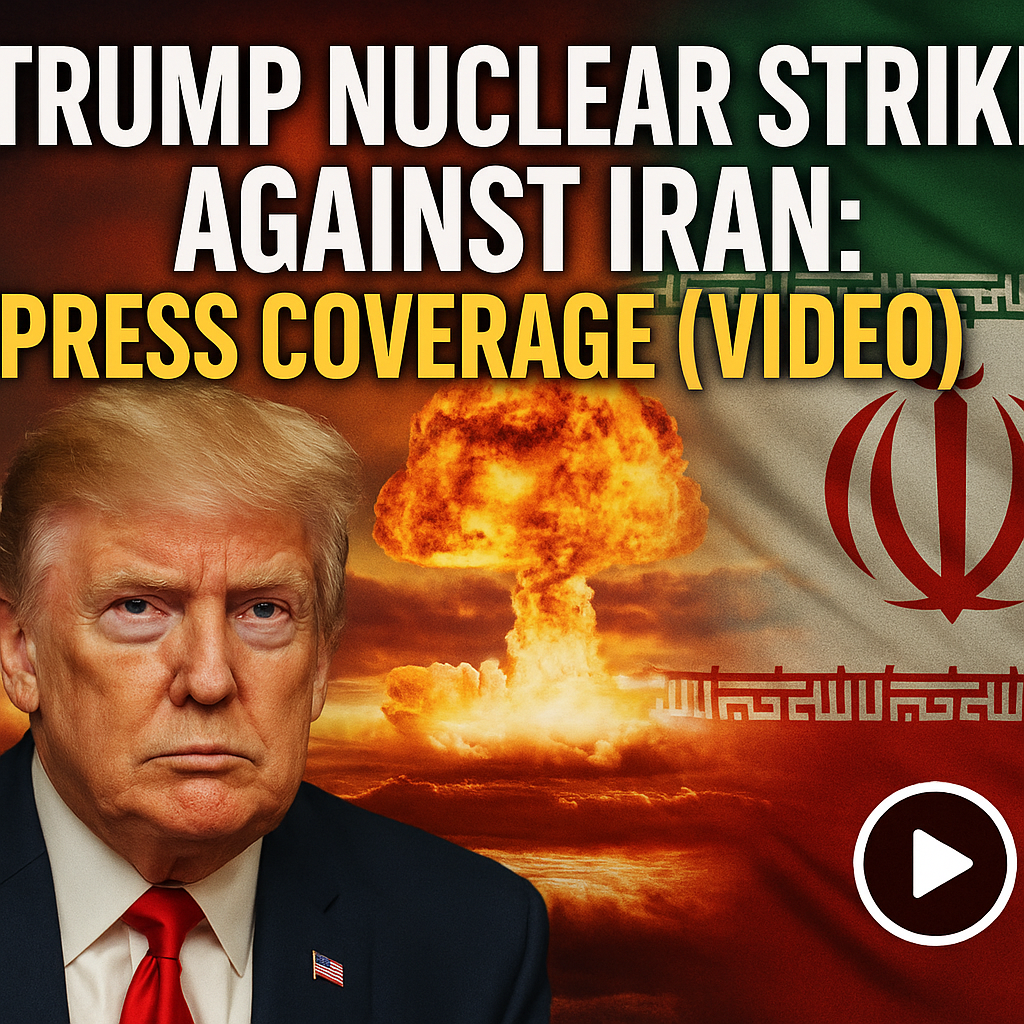
Trump Nuclear Strike Against Iran: Press Coverage (VIDEO)

The Complex Landscape of Trump’s Nuclear Threat Against Iran
The recent press coverage surrounding former President Donald Trump’s remarks about potentially using nuclear weapons against Iran has ignited heated discussions across various platforms. As perspectives range from alarm to skepticism, it’s essential to dissect what has been said, how it reflects current geopolitical tensions, and the implications for U.S.-Iran relations.

Understanding the Context
The backdrop of Trump’s controversial statement stems from the long-standing adversarial relationship between the U.S. and Iran. Tensions reached a boiling point after the U.S. withdrew from the 2015 nuclear deal, formally known as the Joint Comprehensive Plan of Action (JCPOA), and consequently imposed heavy sanctions on Iran. Many experts fear that such an atmosphere could lead to severe miscalculations, potentially dragging the region into conflict.


Diverse Reactions in the Media
In response to Trump’s rhetoric, media outlets have varied in their portrayal. For instance, RT highlighted the former president’s provocative language as a “throwback” to a time when military options were considered first before diplomatic discussions. They noted that Trump’s comments could inflame existing tensions, labeling the statements as reckless.


Conversely, Al Jazeera provided a more analytical viewpoint, stating that while Trump’s comments raise valid concerns about nuclear proliferation, they also reflect a broader political strategy aimed at galvanizing his base. Analysts suggested that Trump’s fiery rhetoric often serves dual purposes—both as a rallying cry for supporters and as a distraction from domestic issues.
Moreover, in reaction to Trump’s statements, Sky News focused on the potential international ramifications. They warned that such threats could embolden hardliners in Iran, leading to escalated military posturing. Analysts warned, “The danger lies in the possibility of misinterpretation or miscommunication at a time when both nations may be looking for opportunities to flex their military muscles.”
The Risks of Escalation
The implications of such incendiary comments are manifold. For one, the risk of a military confrontation—however unintended—could escalate quickly. When dealing with nuclear options, even casual remarks can lead to serious diplomatic fallout. Experts from various backgrounds express concern that the normalization of nuclear threats diminishes the gravity of their significance.
Nuanced Perspectives on Military Rhetoric
In an environment where political discourse often sees exaggerated claims, the normalization of military threats can desensitize the public to the severity of nuclear issues. Political analysts suggest that political leaders must approach discussions of nuclear weaponry with a heightened sense of responsibility. As global stability is at stake, critics urge that rhetoric should lead toward de-escalation rather than confrontation.
In the midst of this controversy, Trump’s staunch supporters may interpret his comments as a demonstration of strength, which can appeal to those who resonate with his past foreign policy stances. However, it’s worth noting that not all Republicans back this approach. Moderates within the party caution against adopting an overly aggressive stance toward Iran, advocating instead for diplomatic measures and international cooperation.
Navigating the Complexity of U.S.-Iran Relations
As the world grapples with a multitude of pressing issues, the relationship between the U.S. and Iran remains a complicated saga that defies simple categorization. Trump’s comments about nuclear weapons represent not just a threat but also a lens through which to examine broader geopolitical dynamics. Both nations must consider the wider repercussions of their words and actions.
Looking Ahead
The chilling prospect of nuclear conflict is not to be taken lightly. While media coverage continues to capture audience attention, it’s paramount to foster dialogue that leads toward peace and understanding. The challenge lies not just in addressing the immediate fallout from Trump’s statements but in re-engaging with Iran through diplomatic channels that highlight shared interests over hostile threats.
In summary, the current media landscape surrounding Trump’s nuclear threats serves as both a warning and a call to action. As policymakers and citizens alike reflect on the implications of military rhetoric, it becomes increasingly evident that diplomacy, negotiation, and a commitment to conflict resolution are essential for moving toward a more peaceful future.















