
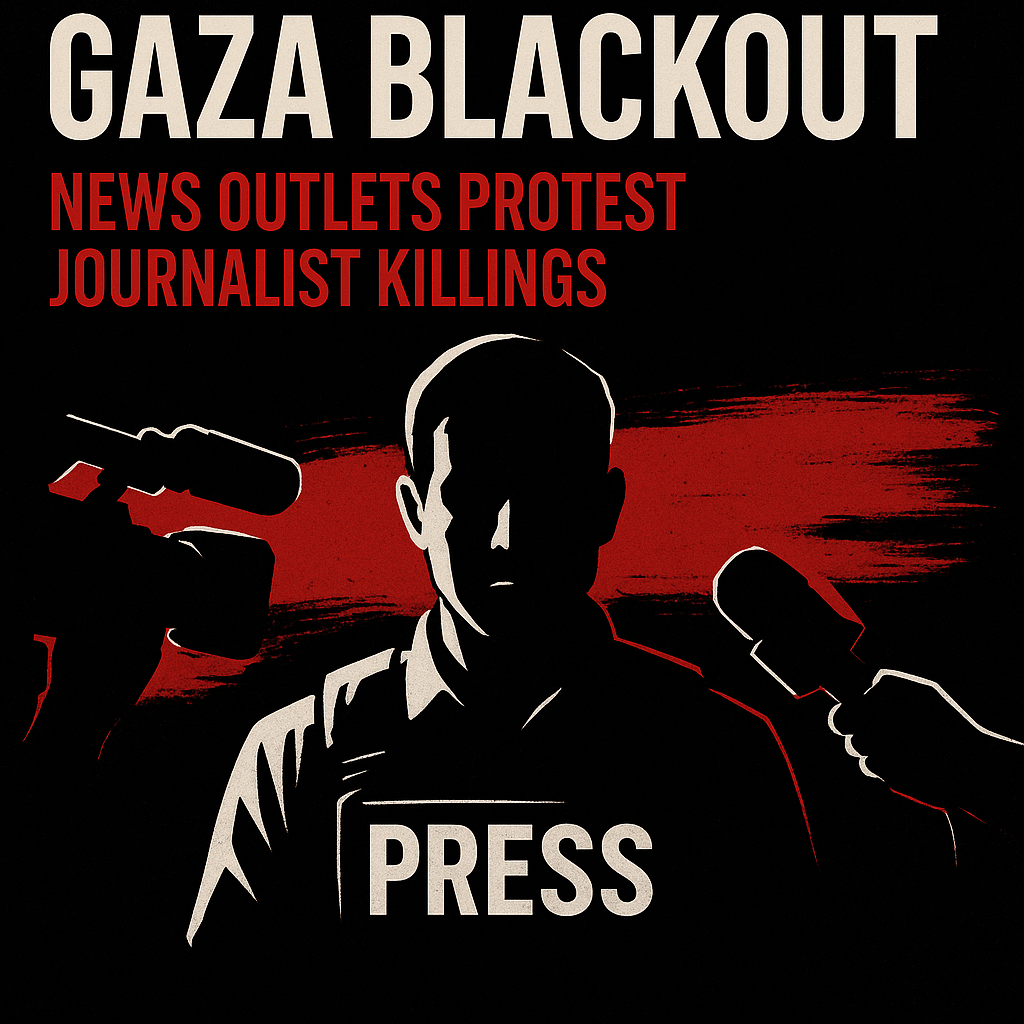
Gaza Blackout: News Outlets Protest Journalist Killings

Gaza Blackout: News Outlets Protest Journalist Killings
In recent weeks, the ongoing conflict in Gaza has cast a spotlight on the perilous conditions faced by journalists reporting from war zones. Outlets worldwide came together in solidarity to protest the alarming number of journalists killed while covering the crisis, opting for a dramatic blackout to amplify their message. This act was not merely a reflection of rising tensions but a clarion call to uphold the rights of journalists amid escalating violence.

The Dark Reality for Journalists
The landscape for journalists stationed in conflict zones like Gaza has dramatically deteriorated over the past few months. The escalating violence has resulted in numerous deaths, with several journalists reported killed or injured while on duty. This has raised concerns regarding freedom of the press and the protection of those who strive to inform the world of ground realities.


An Outpouring of Solidarity
News outlets across the globe participated in the blackout, thus emphasizing the gravity of the situation. According to Al Jazeera, outlets such as Sky News and RT joined in this silent protest, highlighting the grief and outrage felt by those in the journalistic community. The blackout served to unify voices that have been fraught with fear and grief, conveying a powerful message: the safety of journalists must be prioritized.


The impact of this collective action generated immediate reaction across social media platforms, rallying support for the campaign. Hashtags advocating for journalist safety trended widely, resonating with both the public and industry professionals. In an increasingly polarized media landscape, this act of solidarity stood out as a rare moment of unity in journalism, transcending geographical boundaries and differences in editorial stances.
The Complex Narrative Surrounding the Killings
While the blackout sheds light on the issue of journalist safety, it also opens a broader conversation about the complexities that define modern warfare and the role that media plays within it. Journalists often find themselves caught in the crossfire of conflict, reflecting both the stakes at hand and the inherent risks of their profession.
Several sources, including those providing commentary on RT, have pointed out that the growing threat to journalists in war zones can be attributed to various factors, including political unrest and social upheaval. In contexts where media narratives clash with state agendas, journalists face heightened risks—this is painfully visible in regions where dissent is met with violent repression.
Despite the dangers, the profession endures, underscoring its vital role in informing the public and holding those in power accountable. As reported on Sky News, the continuing attacks not only erode journalistic freedoms but also threaten the public’s right to receive impartial news coverage.
A Call for Action and Accountability
In light of these threats, numerous organizations, including the Committee to Protect Journalists (CPJ), have called for international bodies to take concrete steps to protect journalists. They emphasize the urgent need for accountability, urging nations at war to recognize the essential function that a free press performs in any democratic society.
While many voices echo the sentiment that journalists should be shielded from the cacophony of war, practical measures are still needed. Improved protocols for the security of reporters in conflict zones and international pressure on governments to safeguard reporters is essential. In response to the protests, some commentators emphasize the role of grassroots activism in bringing about change, suggesting that public awareness campaigns can drive meaningful actions by policymakers.
Conclusion: A Nuanced Perspective on Press Freedom
The recent blackout undertaken by news outlets about journalist killings in Gaza emphasizes an undeniable truth: the fight for press freedom is ever more urgent. The collective action serves not only as a protest but also as a stepping stone toward broader discussions about the protection of journalists in conflict areas.
While the wave of solidarity showcases a commendable unity among journalists, it also reveals a harsh reality that not all conflicts come with clear narratives or solutions. The killing of journalists is not simply a statistic; it underscores profound ethical challenges and the consequent risks faced by those in the pursuit of truth.
As we strive for a future where freedom of the press is upheld as a fundamental right, it is essential to recognize that this issue is rooted in a larger context of political and social turbulence. While the blackout was a striking and necessary protest, it must also serve as a catalyst for ongoing dialogue and action to protect those who risk their lives to inform the world.















