
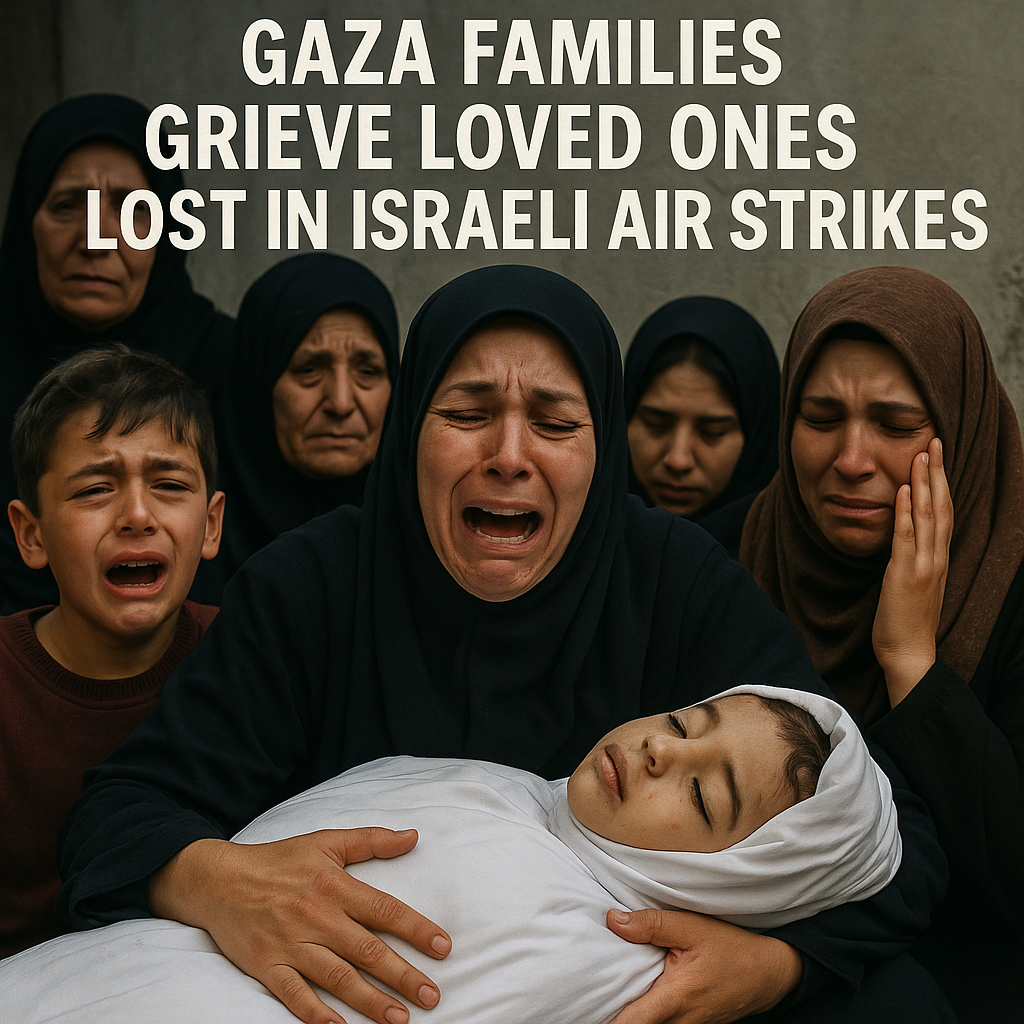
Gaza Families Grieve Loved Ones Lost in Israeli Air Strikes

Gaza Families Grieve Loved Ones Lost in Israeli Air Strikes
The ongoing conflict between Israel and Hamas has left a profound and tragic mark on the lives of families in Gaza, as communities mourn loved ones lost in recent Israeli air strikes. This escalating situation raises critical questions about civilian safety, the complexities of international law, and the psychological toll on those caught in the crossfire.

The Human Cost of Conflict
Reports indicate a staggering toll on civilian lives, with many families fractured by the violence. Last week, Israeli air strikes targeted areas in Gaza believed to harbor Hamas militants, yet the consequences have overwhelmingly impacted innocent civilians. According to Al Jazeera, families lament the loss of their loved ones, with many children among the deceased. These heart-wrenching images and narratives underscore the profound grief felt across Gaza.


Witness statements reveal a deep sense of despair as families sift through the rubble of their homes, searching for remnants of their past lives. One mother recounted the night when she lost her two children—her pain reflective of countless other families who now face a future without their loved ones. The emotional and psychological burdens of such losses are unfathomable, as the community grapples with mourning amidst ongoing conflict.


Perspectives on Responsibility
The discourse surrounding responsibility in this situation is multifaceted and highly polarized. Different news sources discuss the implications of military actions taken by Israel in the context of self-defense against Hamas. RT News reports that Israeli officials justify air strikes as necessary to thwart future attacks, yet this stance has drawn significant international criticism.
Conversely, advocates for Palestinian rights emphasize that such military actions disproportionately affect civilians and violate international humanitarian laws. Reports suggest that the targeting of residential areas raises questions about the ethics of military engagement in dense urban settings. Amidst such contrasting viewpoints, one recurring theme is the fundamental need for accountability—both in terms of military strategy and humanitarian impact.
The International Response
The response from the international community has varied widely. Some nations express solidarity with Israel, asserting its right to defend itself from acts of aggression. For instance, Israel’s supporters cite the persistent threat posed by Hamas as justification for its military campaign. On the other hand, numerous humanitarian organizations and activists urge for an immediate ceasefire, emphasizing the moral obligation to protect civilian lives.
Sky News highlights calls for international intervention and increased humanitarian aid to Gaza, pointing to the crippling blockade and ongoing blockade conditions that have exacerbated the plight of civilians. Many organizations argue that without a coordinated global response, the cycle of violence will only perpetuate further grief and suffering.
The Role of Media Narratives
The media plays a pivotal role in shaping perceptions of the conflict. Each source filters the events through its ideological lens, impacting public opinion. Al Jazeera often emphasizes the humanitarian crisis unfolding in Gaza, showcasing personal stories of loss and despair. Meanwhile, RT tends to highlight the geopolitical dimensions, focusing on the regional implications of the conflict.
Such varied narratives can lead to confusion and polarization, as audiences grapple with contrasting accounts of the same events. It raises the question of how best to communicate the complexities and human toll of ongoing conflict, urging consumers to seek nuanced understandings rather than succumb to oversimplified portrayals.
Conclusion: A Stalemate with Human Costs
The ongoing violence in Gaza demonstrates the complexities surrounding military conflict, particularly regarding civilian casualties. Families grappling with profound loss serve as a stark and tragic reminder of the human cost in global conflicts. While opinions vary widely on accountability and response, the unifying thread is the urgent need for compassion and accountability.
In considering the heartbreak faced by these families, it becomes essential to reflect on the broader implications of continued violence, and the possible paths toward a more just and peaceful resolution. Until political solutions are prioritized over military responses, the cycle of grief and loss will likely continue to resonate through the lives of those living in Gaza. As the world watches, the hope remains that a more equitable future can emerge from the ashes of tragedy.















