
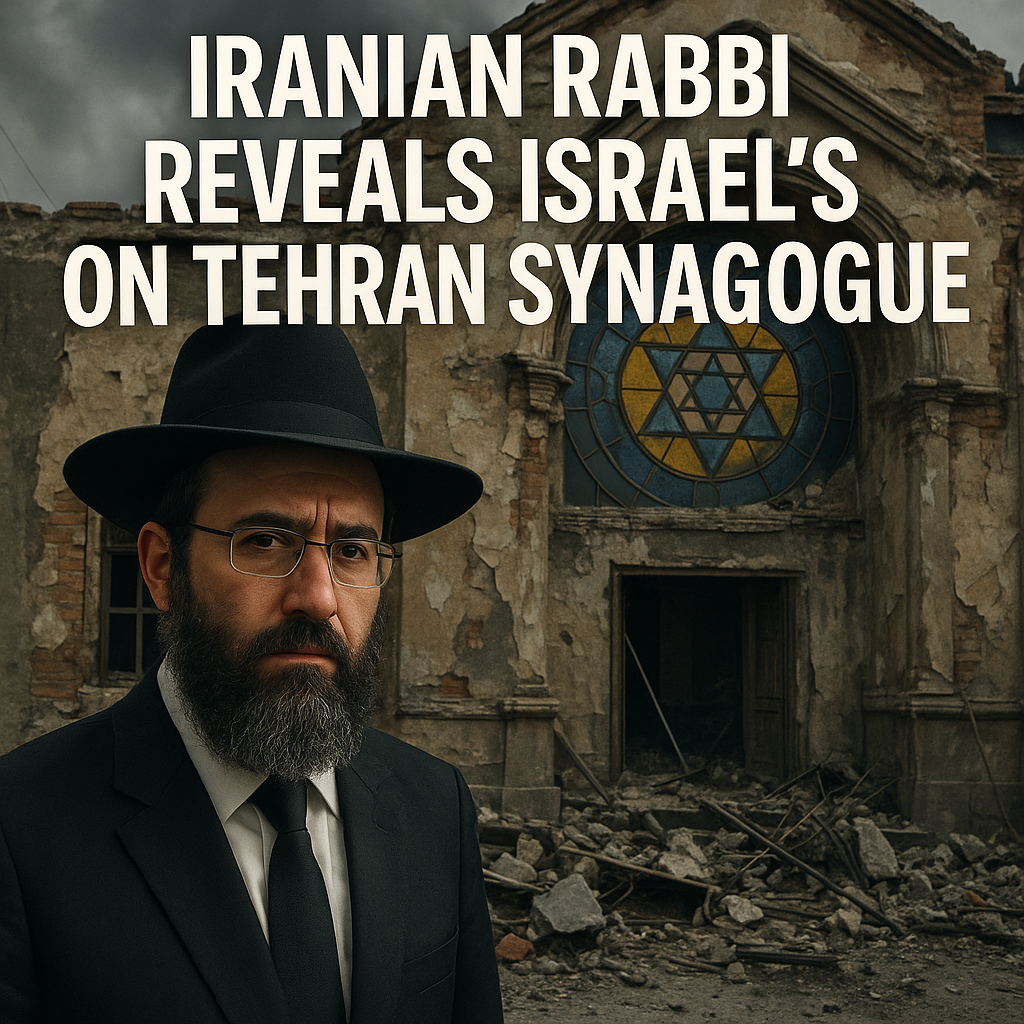
Iranian Rabbi Reveals Israel’s Attack on Tehran Synagogue

Controversy Surrounding Israel’s Alleged Attack on Tehran Synagogue
In a recent and alarming revelation, an Iranian Rabbi has come forward with claims pertaining to Israel’s purported assault on a synagogue in Tehran. This incident raises critical questions about regional tensions and the broader implications for Iran-Israel relations.

Claims of an Attack: The Rabbi’s Perspective
According to reports from various news outlets, including Al Jazeera, the Rabbi described harrowing details regarding Israel’s military operation, which allegedly targeted the synagogue amid ongoing conflicts. The Rabbi has stated that the attack was aimed at instilling fear in the local Jewish community, suggesting a calculated effort to leverage religious and cultural infrastructures in the escalating conflict between Iran and Israel.


This statement reflects a broader sentiment of vulnerability among minority communities in Iran, particularly in light of rising geopolitical tensions. The Rabbi emphasized that the Jewish community in Iran has historically coexisted peacefully with the Muslim majority, but such attacks put that fragile peace at risk.


Diverse Reactions from the International Community
The incident has sparked a wide range of reactions both within Iran and internationally. Proponents of the Iranian government argue that such tactics are part of Israel’s ongoing campaign to destabilize the region and undermine Iran’s governmental and social fabric.
Conversely, some Western analysts argue that Israel’s military operations are often preemptive measures aimed at countering perceived threats from Tehran, particularly concerning Iran’s nuclear program and its support for militant groups across the Middle East. This perspective frames the attack as part of a broader security strategy rather than a direct assault on religious minorities.
While Al Jazeera highlights the Rabbi’s distress over the attack, articles from RT focus more on the implications of such incidents for future Iranian-Israeli relations. The rhetoric varies significantly depending on the source, raising questions about media portrayal and the motives behind different narratives.
Nuanced Implications for Minority Communities
The implications of this alleged attack extend beyond the immediate physical threat. For Iran’s Jewish community, such events have the potential to exacerbate fears and uncertainties. Historical context is crucial to understanding their current situation. Iran has been home to a Jewish population for centuries, often coexisting peacefully, yet events like these can lead to increasing isolation and vulnerability.
A closer look at the community’s dynamics reveals a mix of apprehension and resilience. While the Tehran synagogue attack reignites fears about safety, local Jewish leaders remain steadfast in expressing their commitment to stay and preserve their cultural identity.
On the other hand, the attack can also serve as ammunition for detractors of the Iranian regime, who may use it to highlight perceived failures in protecting minority rights. The situation emphasizes the delicate balancing act faced by Iranian authorities in managing both domestic dissent and international relations.
The Bigger Picture: Iran-Israel Tensions
While the incident at the synagogue raises pressing questions about minority safety, it must be situated within the larger geopolitical tension between Iran and Israel. The two nations have been engaged in a shadow war for years, encompassing cyber-attacks, missile strikes, and proxy battles across the region.
Supporters of Israel argue that the nation’s actions against perceived threats are essential for its survival in an increasingly hostile environment. This narrative portrays Israel as a state under siege, acting defensively against an aggressive Iran, which is accused of supporting terrorist organizations and pursuing nuclear ambitions.
However, critics argue that such a militarized approach often leads to collateral damage, endangering civilian lives and inciting further hostility. This cycle of blame and retaliation perpetuates a climate of fear and tension, with acts like the alleged attack on the Tehran synagogue becoming flashpoints in a long-standing conflict.
Conclusion: A Complex Landscape Ahead
The Rabbi’s revelations regarding Israel’s alleged attack on the Tehran synagogue underscore the complexity of Middle Eastern geopolitics. While it sheds light on the vulnerabilities faced by minority communities in Iran, it also serves as a reminder of the ongoing struggle between state actions and community safety.
As international observers navigate this sensitive landscape, it remains crucial to approach each incident with nuance and understanding. The diversity of perspectives illustrates that there are no simple answers in the ongoing Iranian-Israeli conflict, leaving much uncertainty about the future. The interplay of fear, resilience, and geopolitical maneuvering will continue to shape not only the fates of religious minorities but also the course of international relations in the region.















